In the quiet corners of Burlington, Vermont, photographer and designer Jon Testa has spent the better part of a decade interrogating the fragility of domesticity. His latest project, Wading, is not merely a collection of photographs; it is a profound, archival excavation of family, memory, and the inevitable erosion of the structures we call "home." By weaving together his own contemporary observations of suburban landscapes with the long-lost negatives of his late father, Testa has created a visual meditation on what remains when the people who anchored our world are gone.
Wading serves as a poignant bookend to the lives of Testa’s parents, documenting the period following the sudden passing of his mother in the autumn of 2017 and his father in the summer of 2025. Through this intimate work, Testa explores the complex architecture of grief, transforming the act of photography from a tool of documentation into a vessel for healing and reconciliation.
The Chronology of a Disappearing World
To understand Wading, one must view it as a project defined by two distinct temporalities: the sudden rupture of loss and the slow, deliberate process of archival reconstruction.
The Autumn of 2017: The First Fracture
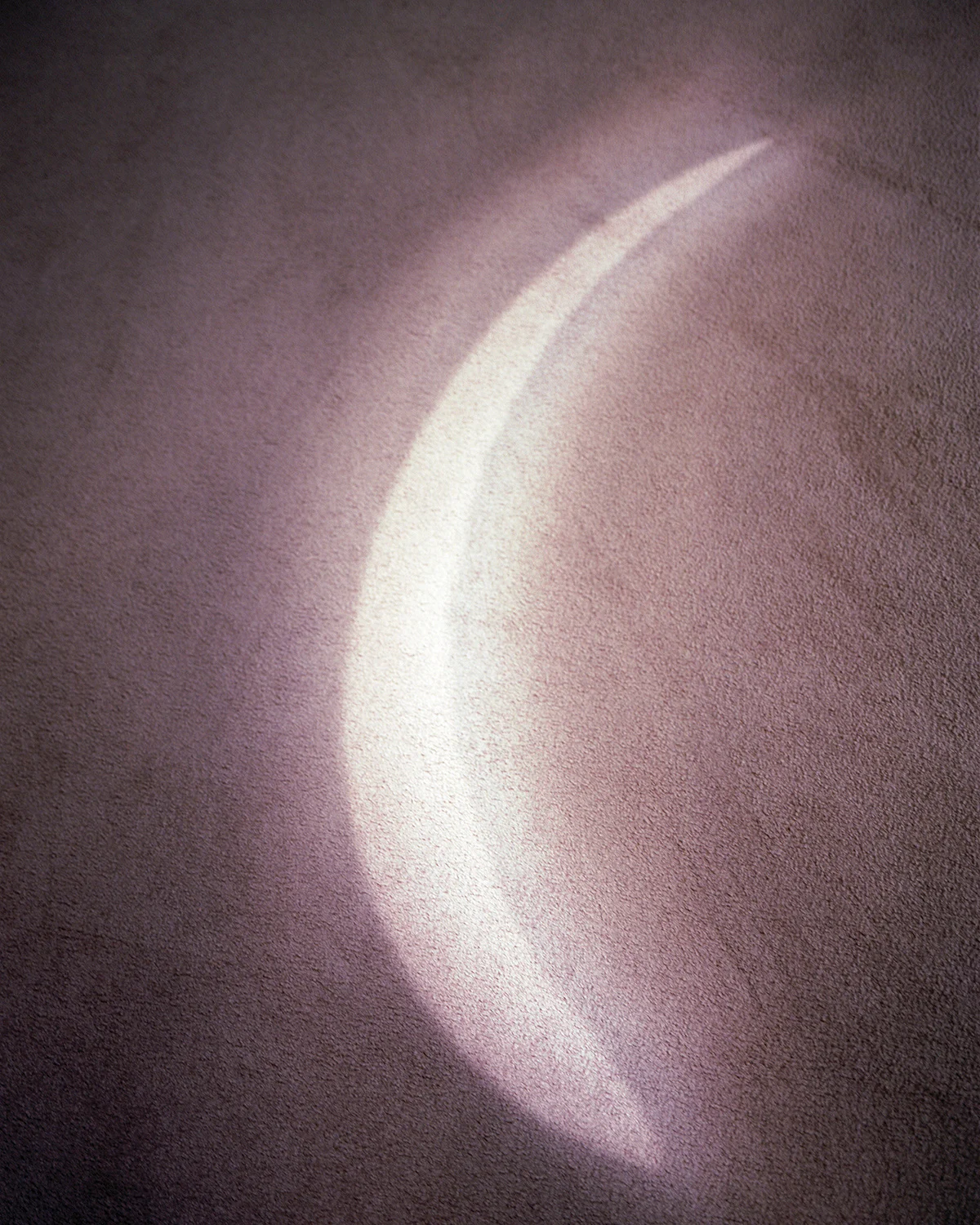
The catalyst for the project occurred in late 2017. The sudden loss of Testa’s mother created an immediate shift in the domestic environment. For the photographer, the home was no longer a static backdrop of childhood, but a site of active transition. In the immediate aftermath, Testa began to photograph the "well-lived in spaces" of his family home, focusing on the neglected structures and the lingering physical presence of his mother—an object left on a counter, the slant of light in a hallway, the quietude of a garden chair.
The Summer of 2025: The Final Archive
Following the death of his father in the summer of 2025, the project underwent a radical transformation. While clearing out his father’s estate, Testa discovered a multi-decade archive of negatives. This treasure trove of film—untouched, forgotten, and teeming with the ghosts of the past—provided the missing pieces of the puzzle. The discovery shifted the focus of Wading from a solitary exploration of grief to a collaborative dialogue between father and son.
The Intersection of Documentary and Narrative
Jon Testa’s professional identity has always sat at the crossroads of documentary realism and subjective narrative. Based in Burlington, his work frequently interrogates the relationship between people and their environments. In Wading, this stylistic signature is pushed to its emotional limit.
Archival Sequencing as Narrative
Testa’s decision to sequence his father’s negatives alongside his own work is a masterful exercise in narrative construction. Without the benefit of his parents’ firsthand stories, Testa uses the photographs as a linguistic substitute. He treats the negatives not as mere historical artifacts, but as active characters. By juxtaposing the high-contrast, grain-heavy aesthetics of his father’s mid-century film with his own crisp, contemporary compositions, Testa creates a visual bridge across generations.
The "Stagnant Feeling"
A central theme in the project is the physical and emotional alteration of a home after the death of one partner. Testa describes this as "animating the stagnant feeling"—a phrase that captures the uncanny experience of walking through a house that has been frozen in time, yet is simultaneously decaying. The house becomes a palimpsest; the new layers of grief written by the son are superimposed over the decades of domestic joy recorded by the father.
Supporting Data: The Sociology of Domestic Loss
While Wading is deeply personal, it resonates with broader sociological trends regarding how families process loss in the 21st century.
- The Archive Effect: Research in visual sociology suggests that the "curation of the deceased" is an increasingly common method of grief processing. Testa’s methodology aligns with modern archival practices where the descendants of the "Kodak generation" use digital scanning and re-sequencing to regain agency over their family narratives.
- Environmental Portraiture: Testa’s focus on "neglected structures" is supported by environmental psychology, which posits that humans imbue inanimate objects with emotional significance (the "attachment theory" of spaces). When a primary occupant dies, the space itself can become a source of "environmental grief," where the physical layout of a room no longer matches the internal mental map of the bereaved.
- Suburban Landscapes: By choosing to focus on the suburban, Testa taps into the universal experience of the American Dream—a dream that, in his photos, is shown to be as fragile and temporary as the lives lived within it.
Perspectives and Official Reflections
In recent interviews and statements regarding the project, Testa has been candid about the vulnerability required to share such a private archive.
"After my father’s passing, I discovered a multi-decade archive of his negatives," Testa noted. "I sequenced these photographs to understand my parents better and construct a portrait of their lives in the absence of firsthand stories. By pairing them with my own work, I aim to showcase how a home can change both physically and emotionally."
Critics and peers in the photography community have lauded the project for its restraint. Unlike many projects that focus on the theatricality of grief, Wading is quiet. It avoids the melodramatic, opting instead for the "documentary" approach that has defined Testa’s career. It is this refusal to over-dramatize that gives the work its weight; the tragedy is not in the death itself, but in the slow, inevitable peeling away of a life that once filled a space.
The Implications of "Wading"
The implications of Testa’s work reach beyond the art gallery or the photo book. Wading challenges us to reconsider how we treat the "well-lived in" spaces we inhabit.
Redefining Home
The project posits that "home" is not a fixed point, but a process. Testa demonstrates that when we lose our loved ones, we do not just lose people; we lose the version of the home that existed when they were present. The home becomes a different entity, requiring us to re-learn how to navigate its halls and rooms.
The Role of the Photographer as Archivist
For professional photographers, Wading serves as a case study in the power of the "found archive." It encourages artists to look toward their own family history as a source of material, suggesting that the most profound stories are often those buried in the dusty boxes of a garage or attic. By digitizing and contextualizing these images, Testa saves his family’s history from oblivion, effectively performing a labor of love that honors both his parents.
A Meditation on Impermanence
Ultimately, Wading is a profound reminder of the transience of suburban life. The "neglected structures" Testa photographs—a fence with peeling paint, a garden overgrown with weeds—are metaphors for the body and the life cycle. The project does not seek to provide easy answers or a resolution to grief. Instead, it invites the viewer to "wade" through the remnants of a life, acknowledging that the process of accepting loss is never finished.
As Testa continues his work in Burlington, his project stands as a testament to the idea that photography is, at its core, an act of preservation. By daring to look at the "bookends" of his parents’ lives, he has provided a roadmap for others to process their own losses, proving that even in the absence of a voice, a photograph can speak volumes about the love that once occupied a space.
In an era defined by ephemeral digital content, Wading demands that we slow down. It asks us to look closer at the walls around us, the negatives in our drawers, and the people who fill our rooms—before, as Testa’s work poignantly illustrates, the tide eventually turns.