

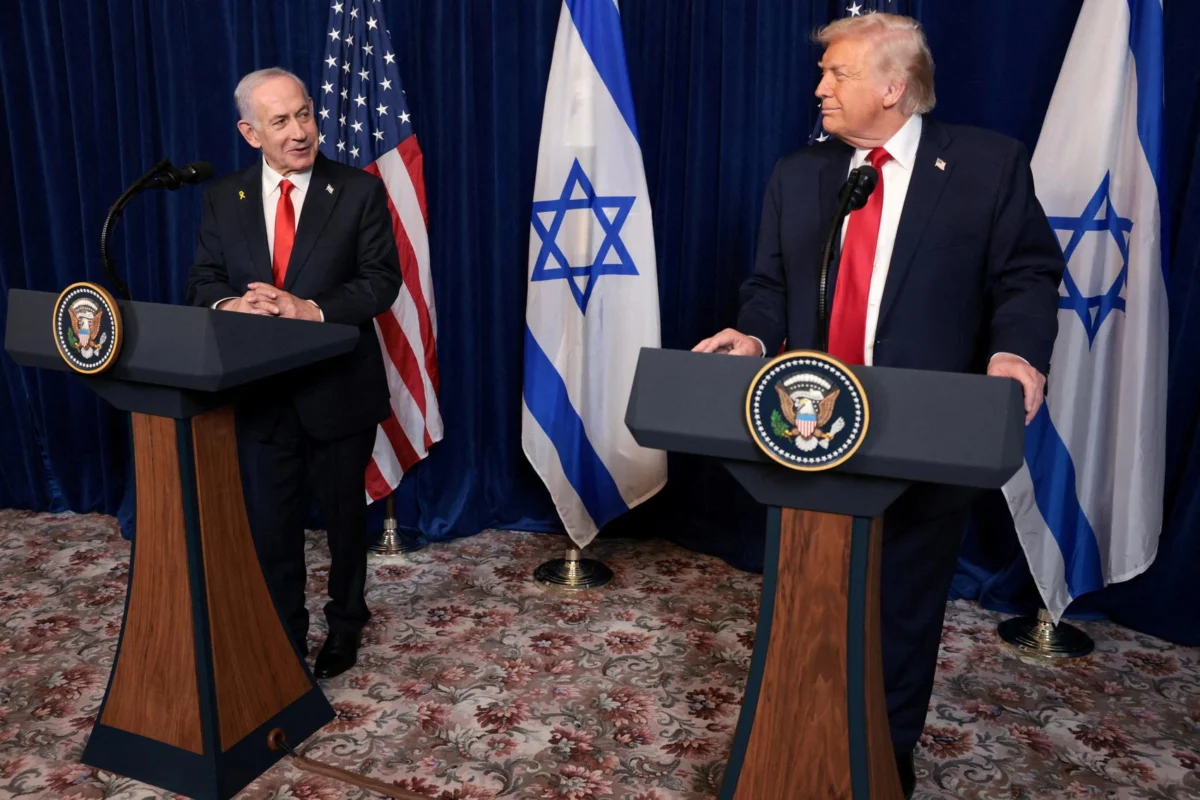
In a candid and explosive admission that has sent shockwaves through Washington and Jerusalem, U.S. President Donald Trump confirmed on Wednesday that he used profanity-laced language during a recent telephone call with Israeli Prime Minister Benjamin Netanyahu. The exchange, which reportedly devolved into a heated confrontation, centered on Israel’s ongoing military operations in Lebanon and the broader, delicate U.S. strategy to negotiate a cessation of hostilities with Iran.
The confirmation comes on the heels of an investigative report by Axios, which alleged that the President told the Israeli leader, "You’re f***ing crazy," while questioning his gratitude and suggesting that Netanyahu’s political survival was tethered entirely to U.S. intervention.
The Nature of the Exchange
During an appearance on the "Pod Force One" podcast, President Trump addressed the report directly. When pressed by the host on whether he had berated the Israeli Prime Minister, Trump offered an unvarnished confirmation.
"I did," Trump stated, appearing to dismiss the notion that he was merely angry, opting instead to characterize his emotional state as "perturbed." The President’s frustration, he explained, was rooted in what he described as Netanyahu’s "constant fighting" with Lebanese forces, a strategy that the White House views as a complicating factor in its high-stakes diplomatic maneuvering with Tehran.
According to sources cited by Axios, the call on Monday was far more vitriolic than the President’s calm post-facto description suggested. The alleged transcript of the call paints a picture of a strained alliance: "You’d be in prison if it weren’t for me. I’m saving your ass. Everybody hates you now. Everybody hates Israel because of this."
A Chronology of Escalating Tensions
To understand the gravity of this outburst, one must look at the timeline of the current regional conflict, which has been defined by a volatile mix of military action and behind-the-scenes diplomacy.
- Late February: President Trump and Prime Minister Netanyahu initiate a coordinated military pressure campaign against Iran, citing the necessity of preventing the Islamic Republic from achieving nuclear breakout capabilities.
- March: Following the initial escalation, Israel launches a ground invasion into southern Lebanon. The stated objective is to dismantle the infrastructure of the Iran-aligned Hezbollah militia, which had been conducting cross-border strikes in solidarity with Tehran.
- Early April: As the war of attrition intensifies, the United States begins mediating a potential de-escalation deal. However, Iran sets a strict condition: any ceasefire with the U.S. must also encompass the Lebanese front.
- Monday: A U.S.-mediated agreement is announced, ostensibly leading to a pause in attacks on the southern suburbs of Beirut.
- Wednesday: Despite the fragile agreement, the violence persists. Israeli drone strikes hit targets in southern Lebanon, resulting in at least six casualties, while Israel reports intercepting hostile aircraft launched by Hezbollah.
- Wednesday Afternoon: The Axios report breaks, leading to the President’s subsequent confirmation of his heated rhetoric toward Netanyahu.
The Nuclear Dilemma and the Shadow of 2015
At the heart of the friction between the two leaders lies a fundamental disagreement over nuclear containment strategy. Trump, who withdrew the United States from the 2015 Joint Comprehensive Plan of Action (JCPOA) during his first term in 2018, remains steadfast in his belief that the original accord was a failure.
"I’m the one that started it," Trump asserted on the podcast, referring to the current pressure campaign. "I started because we can’t let them have a nuclear weapon."
Critics of the President’s policy, however, argue that the 2018 withdrawal provided Iran with the pretext to accelerate its enrichment programs. Tehran is currently stockpiling near-weapons-grade uranium, a development that complicates any attempt by the Trump administration to negotiate a new, more restrictive deal. Trump maintains that without his intervention, Israel would have been the first target of an Iranian nuclear strike, declaring, "If there wasn’t me, there would be no Israel right now."
Official Responses and Diplomatic Spin
Despite the severity of the reported comments, the official response from the Israeli government has been one of practiced equanimity. Prime Minister Netanyahu, appearing on CNBC shortly after the controversy erupted, refused to divulge the specifics of his private conversations with the President.
Instead, Netanyahu leaned into the rhetoric of a "special relationship," characterizing the friction as a mere family dispute. "We have common goals," Netanyahu said. "Sometimes we have, as in the best of families, these tactical disagreements."
The Prime Minister underscored the strength of the bilateral ties, calling Trump "the greatest friend that Israel has ever had in the White House." This strategic downplaying of the rift is intended to reassure domestic and international observers that the U.S.-Israel axis remains fundamentally intact, despite the apparent personal animosity currently being exhibited by the U.S. President.
Implications for Regional Stability
The public airing of such deep-seated frustration between the leaders of the U.S. and Israel creates a precarious environment for regional diplomacy. The primary implications include:
1. The Fragility of the Lebanon Ceasefire
The persistence of drone strikes and cross-border hostility suggests that the U.S.-brokered agreement of Monday is failing to hold. If the President’s perception of Netanyahu is that he is acting recklessly, the U.S. may be less inclined to provide the diplomatic cover Israel requires at the United Nations or in other international forums, potentially emboldening Hezbollah.
2. Iranian Leverage
Tehran has proven adept at exploiting fissures in the U.S.-Israel relationship. By linking a broader nuclear agreement to the cessation of hostilities in Lebanon, Iran has forced the U.S. to choose between restraining Israel or risking an open-ended regional conflict. Trump’s public berating of Netanyahu signals to the Iranian leadership that the U.S. may be willing to exert significant pressure on its ally to reach an exit strategy.
3. Domestic Political Fallout
In the United States, the President’s language has ignited a debate regarding the nature of his foreign policy. While his supporters view his bluntness as a strength—a sign that he is willing to prioritize U.S. interests over traditional diplomatic niceties—his critics see a reckless temperament that could jeopardize long-term alliances. The fact that the President used similar, profane language regarding both Israel and Iran last year suggests that his irritation is not limited to his adversaries but extends to those he claims to protect.
Conclusion
As the conflict in Lebanon continues to claim lives, the "tactical disagreements" mentioned by Prime Minister Netanyahu appear to be evolving into a significant strategic divergence. Whether this public spat is merely a brief tremor in a solid alliance or the beginning of a broader reassessment of the U.S.-Israel partnership remains to be seen. For now, the administration’s focus remains locked on the looming nuclear challenge posed by Iran—a challenge that, according to the President, justifies the use of any language necessary to keep his allies in line.
The coming weeks will be critical. If the violence in Lebanon continues to escalate, the "perturbation" expressed by President Trump may well translate into tangible policy shifts that could permanently alter the landscape of Middle Eastern geopolitics. For the moment, however, the world is left to watch as two of the world’s most powerful leaders navigate the thin line between cooperation and open hostility.












No comments yet. Be the first to join the conversation!