Introduction: A Return to the Ancient Weave
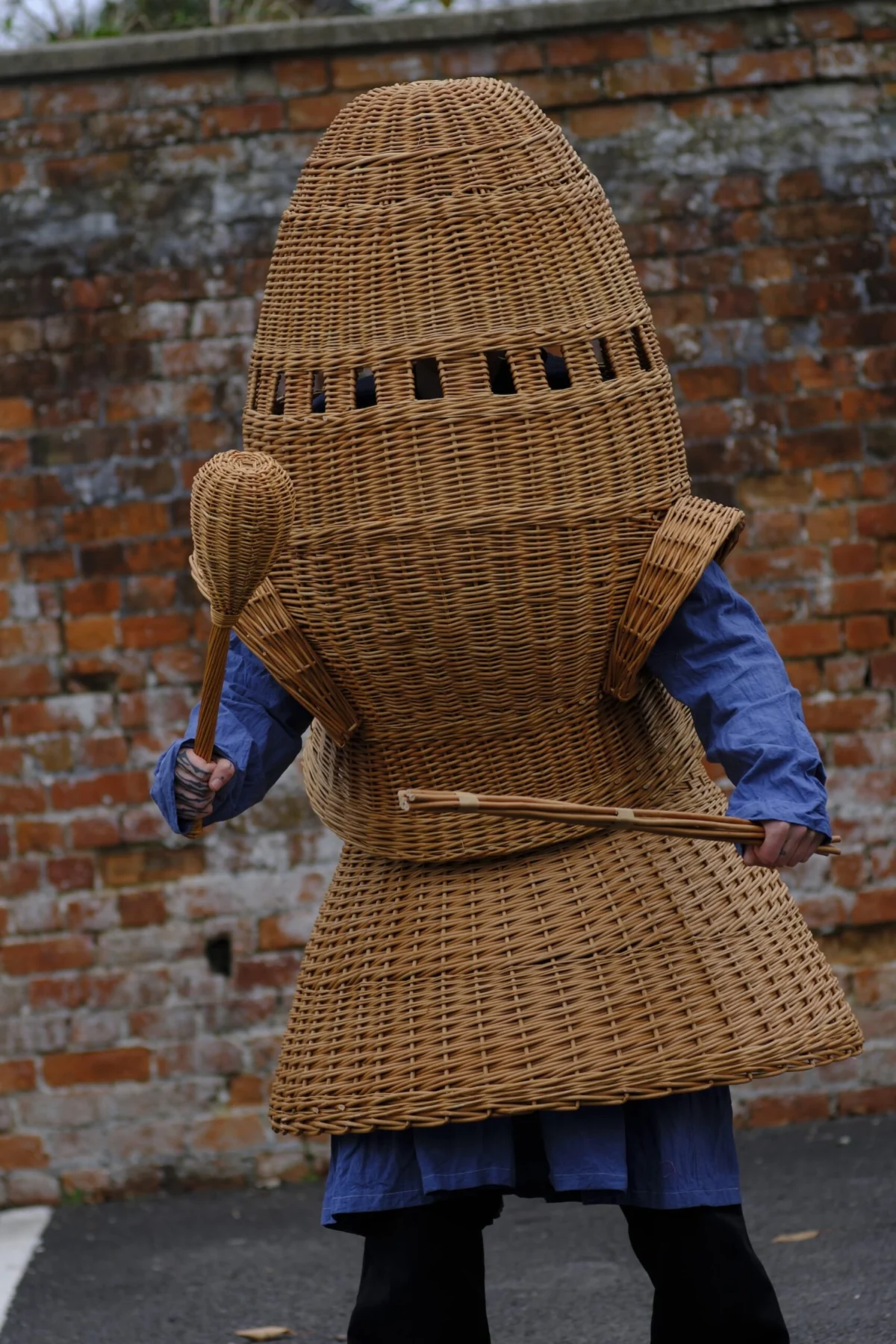
In an era dominated by the ephemeral convenience of plastic and the detached efficiency of mass production, the humble basket—a vessel that once defined the rhythm of human survival—has largely faded into the background of modern life. Yet, for Cardiff-based artist Lewis Prosser, the basket is not merely a utilitarian container; it is a profound repository of cultural memory, regional identity, and human history. As a self-described "absurdist basketmaker," Prosser is leading a quiet revolution, transforming traditional weaving techniques into avant-garde, sculptural costumes and performance art that bridge the chasm between medieval folklore and contemporary practice.
Prosser’s work operates at the intersection of anthropology and fine art. By reviving the intricate, labor-intensive methods of the medieval and Renaissance periods, he challenges the spectator to reconsider the relationship between craft and identity. His practice serves as a visceral reminder that the skills of our ancestors are not just dusty relics, but living, breathing components of our shared human experience.
The Roots of the Craft: Folklore and Cultural Identity
To understand Prosser’s work, one must first appreciate the historical significance of basketry. Before the ubiquity of industrial packaging, the basket was a versatile companion to everyday life. From handled carriers for market produce to decorative vessels for domestic tasks and massive, woven rucksacks for labor, the basket was ubiquitous. It was a craft that required an intimate knowledge of materials—willow, rush, hazel—and a deep connection to the local landscape.

Ceremonial Traditions and Masking
Prosser’s practice is deeply rooted in the storytelling traditions of Wales and southwestern England. He draws significant inspiration from ancient festivals that continue to pulse through the veins of local communities.
One such inspiration is the Mari Lwyd, a Christmas-time tradition that traces its roots to Celtic origins. In this hauntingly beautiful ritual, men adorned in ribbons and rosettes parade through villages, accompanying a figure who wears an eerie, articulated horse skull—a practice that blurs the lines between the living and the spirit world. Similarly, the "Hunting of the Earl of Rone," an annual tradition in Combe Martin, North Devon, provides a window into pre-Christian festivities that have miraculously survived the encroachment of modernity.
By integrating these elements into his sculptural baskets, Prosser does not just replicate the past; he "activates" it. His wearable sculptures function as masks, transforming performers into conduits for ancestral spirits and folk narratives.

Chronology of an Artistic Evolution
The trajectory of Prosser’s career demonstrates a methodical deepening of his craft and conceptual focus.
- Early Explorations: Initially, Prosser focused on the mastery of traditional basketry techniques, viewing them as a necessary foundation for his more abstract interpretations.
- The Making Merrie Project: A turning point in his career, this project saw Prosser synthesizing music, dance, and basketry. By reinterpreting English "mummers’ plays"—dramatic performances traditionally held during holidays depicting the combat between opposing forces like winter and spring—Prosser brought the static art of weaving into the dynamic realm of performance art.
- Archival Preservation: Recognizing the fragility of his work, Prosser collaborated with the Folk Preservation Society in Teignmouth, Devon. His costumes are now part of their permanent collection, ensuring that these vessels remain part of the living performance tradition.
- Current Endeavors (2026–2027): Prosser is currently engaged in an ambitious, pan-European collaboration entitled The Baskets Between Carnival and Lent. This project marks a shift toward historical dialogue, as he recreates 24 specific objects from Pieter Bruegel the Elder’s 1559 masterpiece, The Fight Between Carnival and Lent.
Supporting Data: The Craft as a Human Essential
Prosser’s philosophy is anchored in a sobering realization: we are on the verge of losing a "foundational human skill." His work functions as an act of preservationist resistance.
The Mechanics of the Weave
The basketry techniques Prosser employs—often involving complex interlocking and structural reinforcement—were once common knowledge. Today, these skills are sequestered in the workshops of a few master artisans. By translating these techniques into contemporary costume design, Prosser elevates the status of the basketmaker from a craftsman to a sculptor.

Data regarding the decline of traditional rural crafts suggests that the loss of these skills leads to a corresponding loss in "place-based" knowledge. When the method of creating a vessel is lost, the relationship with the natural resources used to create that vessel—and the ecosystem that provides them—is often severed. Prosser’s work acts as a bridge, reconnecting the public to the material world.
Official Responses and Perspectives
The art world has responded to Prosser’s work with both intrigue and critical acclaim. Curator testimonials from the Oriel Myrddin Gallery in Carmarthen, where his work is slated for exhibition in spring 2027, emphasize the "urgent relevance" of his practice.
In a recent statement, Prosser noted, "Basketry is an essential human skill we’re at risk of forgetting—a skill that, if lost, means losing part of what it is to be human." This sentiment has resonated with folklore societies and galleries alike, who see his work as a way to engage younger generations with history. The Folk Preservation Society has particularly championed his ability to make "archival history" feel dangerous, playful, and contemporary.

Implications: The Future of "Hornball" and Beyond
As Prosser looks toward the Burgos Biennial 2026, his work is entering a new, more experimental phase. He is currently developing "hornball" (cuerno pelota), a sport that serves as a synthesis of his life’s work.
The Synthesis of Sport and Ritual
"Hornball" is not merely a game; it is an "elaborate new basket-based sport" that incorporates ritual harvest celebrations, competitive athletics, and the use of his signature wearable sculptures. By framing his art as a sport, Prosser is inviting the public to engage with his work not as passive observers, but as active participants. This democratization of the art form marks a significant shift in how folk-inspired sculpture can be presented to the world.
A Legacy in the Making
The implications of Prosser’s work are manifold:

- Cultural Sustainability: By documenting and practicing these weaving techniques, he ensures they remain a living part of the cultural tapestry rather than becoming a dead footnote in a museum catalog.
- Multidisciplinary Innovation: Prosser proves that traditional crafts can be the engine for contemporary, multidisciplinary art, spanning performance, sculpture, and even game design.
- Human Connection: In a world of digital isolation, his work demands physical presence. Whether it is a performance or a gallery exhibit, the sheer scale and texture of his basketry force the viewer to engage with the tactile reality of the object.
Conclusion: The Persistence of the Weaver
Lewis Prosser’s "absurdist basketry" is far from a joke. It is a rigorous, deeply researched, and profoundly moving exploration of what it means to belong to a place and a tradition. As he prepares to bring his basket-based sport to Spain and his Bruegel-inspired exhibition to Wales, it is clear that Prosser is not just weaving willow; he is weaving a narrative that binds the past to the future.
In his hands, the basket becomes a mask, a costume, a ball, and a building block—a reminder that while technologies change, the human impulse to weave, to perform, and to tell stories remains as constant as the cycle of the seasons. For those interested in following the progress of these projects, his ongoing work is meticulously documented through his digital presence, inviting us all to watch as he crafts the future out of the fragments of the past.