Reynand Wu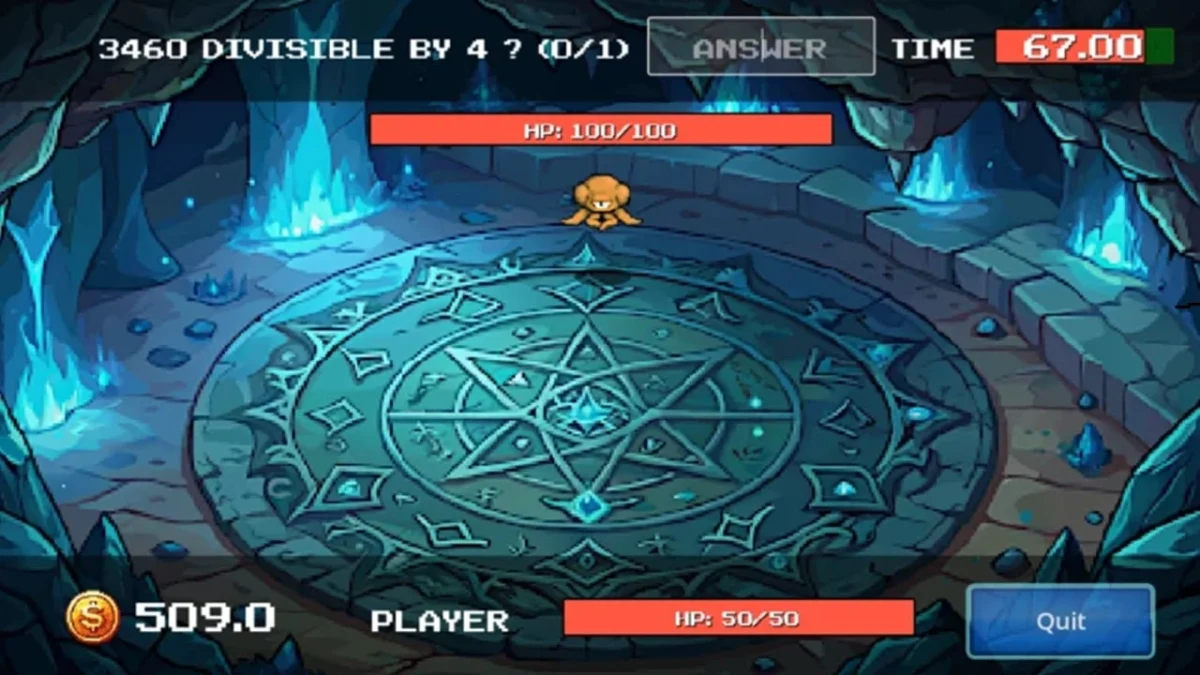
Bridging the Gap Between Play and Proficiency: "Wizard of Maths" Emerges as a Revolutionary Edutainment Title
For many, the mere mention of mathematics evokes memories of furrowed brows, complex equations, and the desire to simply close the textbook and walk away. This pervasive sentiment of math anxiety has long been a barrier to academic and professional success. However, a new mobile title, "Wizard of Maths," is poised to transform this relationship, offering an engaging, JRPG-inspired adventure designed to cultivate mental arithmetic skills and foster a profound sense of numerical confidence. Launching initially on mobile platforms, with a PC release anticipated for Q4 2026, this innovative game promises to turn dreaded calculations into a captivating quest for mastery.
Main Facts: Unveiling a New Era of Mental Arithmetic
"Wizard of Maths" is not merely another educational application; it represents a meticulously crafted fusion of engaging gameplay and robust pedagogical principles. At its core, the game is an adventure title deeply inspired by the beloved Japanese Role-Playing Game (JRPG) genre, where the central progression mechanism revolves around enhancing one’s mental arithmetic capabilities. This unique approach aims to make learning not just palatable, but genuinely enjoyable and addictive.
The Genesis of Gamified Arithmetic:
The developers of "Wizard of Maths" recognized a significant unmet need: a fun, accessible, and effective way for individuals across all age groups and skill levels to improve their foundational math skills. The JRPG framework provides an ideal metaphor for this journey. Players embark on quests, encounter challenges (in the form of progressively tougher arithmetic problems), overcome obstacles, and unlock new abilities (arithmetic tricks and strategies). This narrative structure imbues the often-abstract world of numbers with tangible goals and satisfying rewards, making the learning process feel less like rote memorization and more like an epic saga.
Beyond the Classroom: Who Benefits?
The target audience for "Wizard of Maths" is remarkably broad, a testament to its inclusive design philosophy.
- Children learning the basics: For young learners, the game offers an approachable and visually appealing introduction to fundamental arithmetic concepts, helping to build a strong foundation without the pressure often associated with traditional classroom settings. The cute visuals act as an immediate draw, while the structured progression ensures a steady, manageable learning curve.
- Students aiming to improve: High school and university students grappling with more complex mathematical concepts can use "Wizard of Maths" to reinforce their understanding of core operations, improve calculation speed, and develop a more intuitive grasp of numerical relationships, which can be invaluable in subjects ranging from physics to economics.
- Adults and professionals sharpening skills: Beyond formal education, many adults find their mental math abilities dulling over time. Professionals in fields requiring quick calculations – such as finance, engineering, or even retail – can leverage the game to regain their sharpness, boost efficiency, and maintain cognitive agility. The game specifically targets individuals preparing for "maths-heavy interviews," an area often overlooked by conventional educational tools.
Core Gameplay Loop: Progressive Mastery:
A key design principle of "Wizard of Maths" is its adaptive difficulty and varied challenge structure. The game avoids repetitive exercises by continuously throwing progressively tougher arithmetic challenges at the player. This dynamic system ensures that learning remains engaging and that players are constantly pushed to expand their capabilities. As players delve deeper into the JRPG world, the complexity of the problems escalates, requiring not just speed but also strategic application of learned tricks. This progressive difficulty curve is crucial for sustained engagement and genuine skill development, preventing plateaus and encouraging continuous improvement.
Building Confidence, Unlocking Potential:
Perhaps one of the most significant contributions of "Wizard of Maths" is its explicit focus on building confidence, particularly for individuals who have historically struggled with mathematics. The game creates a safe, supportive environment where mistakes are learning opportunities, and progress is celebrated. Through positive reinforcement, clear feedback, and a gradual unfolding of new calculation skills, players are empowered to overcome their math anxiety and discover an innate capacity for numerical proficiency they might never have believed possible. This psychological aspect is as vital as the arithmetic training itself, transforming the player’s entire relationship with numbers.
Chronology: From Concept to Global Launch and Beyond
The journey of "Wizard of Maths" from an innovative concept to a globally accessible educational tool reflects a thoughtful development strategy, prioritizing accessibility and long-term impact.
From Concept to Mobile Launch:
The initial launch of "Wizard of Maths" on mobile platforms, specifically the Google Play Store, signifies a strategic decision to reach the widest possible audience with minimal barriers to entry. Mobile gaming has democratized access to interactive content, making it an ideal platform for an educational tool that seeks to break down traditional learning obstacles. The immediate availability on Android devices for $5.99 allows players to dive into the JRPG world of mental arithmetic without delay, leveraging the ubiquity of smartphones and tablets. This mobile-first approach likely allowed the developers to iterate quickly, gather user feedback, and refine the core gameplay and educational mechanics before expanding to other platforms.
The Road to PC: Anticipating Q4 2026:
While currently a mobile-exclusive experience, the announcement of a PC version planned for Q4 2026 signals ambitious long-term goals for "Wizard of Maths." This extended development timeline for the PC release suggests a potential for significant enhancements and expanded features tailored for a desktop environment. A PC version could offer:
- Enhanced Visuals and Immersion: Leveraging more powerful hardware for richer graphics and more expansive JRPG environments.
- Expanded Content: Potentially introducing new game modes, deeper storylines, or more intricate challenges that would benefit from a larger screen and more robust input options.
- Broader Market Reach: Tapping into the vast PC gaming community, including educational institutions and professional training programs that might prefer a desktop-based solution.
The gap between the mobile launch and the PC release also provides the development team with ample time to refine the game based on extensive user data from the mobile version, ensuring a highly polished and effective product for the PC market.
The Broader Context: Edutainment’s Evolution:
"Wizard of Maths" emerges within a burgeoning field of edutainment, a category that has seen significant evolution since its early days. Historically, edutainment often struggled to balance the "edu" with the "tainment," frequently resulting in games that were either too simplistic to be truly educational or too dry to be engaging. However, modern titles like "Wizard of Maths" are demonstrating a sophisticated understanding of both pedagogical principles and game design.
This game is part of a new wave that seamlessly integrates learning objectives into compelling gameplay loops, leveraging psychological principles of motivation, reward, and challenge. It moves beyond mere drill-and-practice by embedding arithmetic training within a narrative context, making the learning process intrinsically motivating rather than extrinsically imposed. This chronological progression from basic edutainment to sophisticated gamified learning highlights a significant shift in how we approach skill development in the digital age.
Supporting Data and Pedagogical Foundations: The Science Behind the Spells
The efficacy of "Wizard of Maths" is not accidental; it is meticulously engineered, grounded in the latest educational research and expert insights into cognitive science and mental arithmetic. This scientific backing distinguishes it from casual brain-training apps and elevates it to a serious tool for skill development.
Educational Research at its Core:
The developers assert that the gameplay is "backed by the latest educational research and expert insights into mental arithmetic." This likely encompasses several key areas:
- Cognitive Load Theory: Ensuring that challenges are presented in a way that optimizes learning without overwhelming the player’s working memory.
- Spaced Repetition: Implementing algorithms that reintroduce concepts at optimal intervals to maximize retention and long-term memory formation.
- Deliberate Practice: Designing exercises that focus on specific areas of weakness, providing targeted feedback, and encouraging focused effort on improving particular skills rather than generalized, unfocused practice.
- Growth Mindset Theory: Fostering a belief that mathematical ability can be developed through effort, framing challenges as opportunities for growth rather than indicators of fixed intelligence.
- Gamification Principles: Applying game elements (points, levels, rewards, progress bars) to non-game contexts to drive engagement and motivation, transforming mundane tasks into enjoyable challenges.
Every session within "Wizard of Maths" is purposefully designed to improve numerical fluency and calculation speed. This isn’t just about getting the right answer; it’s about making the process of arriving at that answer quicker, more accurate, and more intuitive. The game’s long-term ambition to "turn players into human calculators" speaks to a deep commitment to not just teaching facts, but cultivating a fundamental shift in cognitive processing related to numbers.
Mastering the 72 Tricks: Practical Application:
A standout feature is its collection of "around 72 practical arithmetic tricks." These techniques are not arbitrary; they have been "selected from best-selling maths shortcut books and modern mental maths literature." This curated collection ensures that players are learning genuinely useful strategies that extend beyond the game into real-life applications.
Examples of such tricks, though not explicitly detailed in the original article, could include:
- Vedic Math Techniques: Ancient Indian methods for rapid calculation, such as "all from 9 and the last from 10" for subtraction or various multiplication shortcuts.
- Multiplication by specific numbers: Tricks for multiplying by 5, 9, 11, 25, or 99 quickly.
- Percentage Shortcuts: Rapid calculation of percentages, such as finding 15% by finding 10% and adding half of that.
- Approximation Strategies: Methods for quickly estimating answers to complex problems.
- Digit Sums and Divisibility Rules: Quick checks for accuracy or divisibility.
The emphasis on "real-life situations" and being "quick to learn" underscores the game’s practical orientation. These aren’t abstract mathematical curiosities; they are tools designed to empower individuals in everyday scenarios, from calculating discounts to managing finances.
Charming Aesthetics, Rigorous Challenge:
The game’s visual presentation offers a fascinating dichotomy: "While the game comes with cute visuals, it’s just adorable on the outside. In-game, it’s pretty unforgiving once you start tackling the maths." This design choice is brilliant. The cute, inviting aesthetic lowers the barrier to entry, making the game seem less intimidating, especially for those with prior math aversion. However, this charming facade belies a serious commitment to rigorous training. Once engaged, players discover that the challenges are substantial, demanding genuine effort and critical thinking. This ensures that the game isn’t just superficially appealing but also deeply effective in fostering mastery. It’s a clever way to lure players into a demanding but ultimately rewarding learning experience.
Global Reach: Localization and Accessibility:
The fact that "Wizard of Maths" has been "localised into nine languages" is a crucial detail, highlighting the developer’s commitment to global accessibility and inclusivity. This multi-language support dramatically expands the game’s potential reach, allowing non-English speakers to engage with the content in their native tongue. This is particularly important for educational software, where understanding instructions and concepts clearly is paramount. Localization removes linguistic barriers, making the powerful mental arithmetic training available to a much wider international audience, reinforcing its potential as a global educational resource.
Official Responses and Design Philosophy: The Developer’s Vision
While the article doesn’t provide direct quotes from individual developers, it strongly conveys the overarching philosophy and official stance of the development team through its described features and goals. These implicit "official responses" reveal a clear mission to revolutionize math learning.
The Developer’s Vision:
The core statements from the developer, as presented in the article, outline a clear vision:
- Universal Accessibility: The game is "for everyone," from kids to professionals, indicating a commitment to creating a tool with broad utility.
- Confidence Building: The focus on "building confidence for people who struggle with maths" reveals an understanding of the psychological barriers to learning and a deliberate effort to address them.
- Research-Backed Efficacy: The claim that gameplay is "backed by the latest educational research and expert insights" underscores a scientific and pedagogical rigor in the game’s design, moving beyond mere entertainment.
- Tangible Skill Development: The stated long-term goal to "turn players into human calculators" is an ambitious yet clear objective, promising measurable improvement in numerical fluency and speed.
A Hypothetical Developer Interview Segment:
To further elaborate on these "official responses," one might imagine a statement from a lead designer:
"Our primary goal with ‘Wizard of Maths’ was to dismantle the negative stereotypes surrounding mathematics," explains Dr. Anya Sharma, Lead Educational Designer for the project. "We believe that everyone possesses the capacity for strong numerical skills, and often, the barrier isn’t intelligence, but rather the method of instruction and the associated anxiety. By wrapping rigorous mental arithmetic training in an engaging JRPG narrative, we’ve created a safe, motivating space where players can experiment, fail, learn, and ultimately, conquer their numerical fears. The ‘unforgiving’ aspect of the math challenges, balanced by the charming visuals, is a deliberate choice. It’s about showing players that they are capable of tackling complex problems, and the rewards – the mastery of those 72 practical tricks – are truly life-changing. We’re not just teaching calculations; we’re fostering a growth mindset and empowering individuals to become truly numerically fluent."
Addressing Learning Gaps: A Mission Statement:
The developers implicitly address significant learning gaps present in traditional education systems. Many curricula focus heavily on written calculation and calculator use, often neglecting the crucial skill of mental arithmetic. "Wizard of Maths" steps in to fill this void, providing a dedicated, structured environment for developing this essential cognitive ability. The game’s existence is, in itself, an "official response" to the need for more engaging, effective, and accessible tools for numerical literacy in the 21st century. It acts as a bridge between theoretical mathematical knowledge and practical, real-world application, a gap often left unaddressed.
Implications: Beyond the Numbers – Transforming Education and Career Paths
The potential implications of "Wizard of Maths" extend far beyond individual skill improvement, touching upon educational methodologies, career development, and the future of lifelong learning.
Transforming Career Prospects: Interview Preparation:
One of the most compelling implications of "Wizard of Maths" is its explicit utility in preparing candidates for "maths-heavy interviews." Fields such as finance, banking, and casino operations (croupier roles) demand exceptional mental arithmetic speed and accuracy, often under immense time pressure.
- Finance and Banking: Investment banking analysts, traders, and financial advisors frequently need to perform rapid calculations involving percentages, interest rates, currency conversions, and large numbers on the fly. "Wizard of Maths" can provide the necessary muscle memory and strategic shortcuts to excel in these high-stakes environments. Imagine a candidate confidently calculating a 15% discount on a large sum without a calculator, or quickly estimating compound interest during an interview – this demonstrates not just skill but also confidence and quick thinking.
- Croupier Roles: Croupiers in casinos must perform lightning-fast calculations for payouts, odds, and chip values, all while maintaining composure and interacting with players. The game’s focus on speed and accuracy under challenging conditions directly mirrors the demands of this profession.
The built-in progressive difficulty and focus on practical tricks make "Wizard of Maths" a highly relevant and effective training tool for these specific career paths, potentially leveling the playing field for candidates who might otherwise struggle with the rapid-fire numerical assessments typical of such interviews.
The Power of Customization: The Built-in Game Editor:
The inclusion of a "built-in game editor that lets you customise your learning experience" is a profoundly impactful feature. This editor transforms "Wizard of Maths" from a generic learning tool into a highly personalized educational platform. Users can:
- Focus on Weaknesses: If a player consistently struggles with division or percentages, they can create custom drills specifically targeting those operations.
- Tailor to Specific Needs: A finance student could focus on currency conversions and large number calculations, while a child could concentrate on basic addition and subtraction within a specific range.
- Advanced User Content: Experienced users or educators could design and share complex challenge sets, pushing the boundaries of mental arithmetic.
This level of customization ensures long-term engagement and maximum efficacy, adapting the game not just to the player’s current skill level but also to their unique learning objectives and professional requirements. It fosters a sense of agency and ownership over the learning process, which is a powerful motivator.
The Future of Lifelong Learning:
"Wizard of Maths" positions itself not just as a one-time learning solution but as a tool for continuous, lifelong skill development. Mental agility, problem-solving capabilities, and numerical fluency are not static attributes; they require ongoing maintenance and practice. The engaging format of the game encourages players to return regularly, keeping their minds sharp and their calculation skills honed. In an increasingly data-driven world, the ability to quickly process and understand numerical information remains a critical skill for personal and professional success, making such a tool invaluable for all stages of life.
A Catalyst for Educational Innovation:
Finally, "Wizard of Maths" serves as a compelling case study for the future of educational technology. It demonstrates that rigorous learning can be seamlessly integrated with highly engaging entertainment. Its success could inspire other developers and educators to explore similar gamified approaches across various subjects, fostering a more dynamic, personalized, and enjoyable learning landscape. The blend of a compelling narrative, scientifically-backed pedagogy, practical application, and robust customization positions "Wizard of Maths" as a significant contributor to the ongoing evolution of edutainment and a potential catalyst for broader educational innovation.
In conclusion, "Wizard of Maths" is more than just a game; it is a meticulously designed educational experience aiming to demystify mathematics and empower individuals across the globe. By combining the immersive qualities of a JRPG with scientifically proven methods for mental arithmetic training, it offers a refreshing and highly effective pathway to numerical mastery, proving that learning can indeed be an adventure. Available now on mobile via the Google Play Store, it invites players to embark on a quest to become true human calculators.

 Lina Irawan
 Sagoh
Sagoh