Iffa Jayyana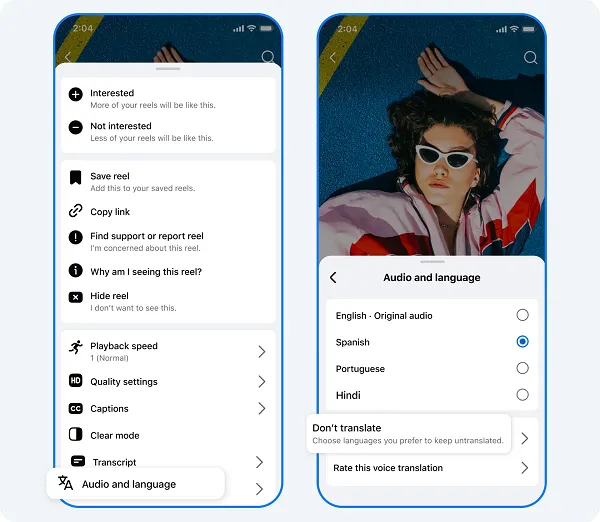
In an era where digital content transcends borders with a single swipe, Meta is doubling down on its commitment to global connectivity. Instagram has officially expanded its artificial intelligence-powered language translation tools for Reels, a strategic move designed to dismantle linguistic barriers and allow creators to reach international audiences without the need for manual dubbing or subtitles.
The latest update adds Japanese, Korean, French, German, and Italian to the platform’s growing roster of supported languages. This expansion is part of a broader, long-term initiative by Meta to leverage generative AI to foster a more inclusive and interconnected social media ecosystem.
The Core Technology: Syncing Sight and Sound
The technology powering these translations is more than a simple text-to-speech engine. Meta’s advanced language models are designed to perform a comprehensive overhaul of the original clip. When a creator opts into the translation feature, the AI translates both the audio and the on-screen captions.
Perhaps most impressively, the system employs visual processing to sync the creator’s mouth movements with the translated words. By generating an audio variation that matches the tone and cadence of the original speaker, the AI creates a seamless viewing experience that gives the illusion the creator is speaking fluently in the target language. This "lip-syncing" capability is designed to maintain the authenticity of the creator’s personality, ensuring that the essence of their message is not lost in translation.
Chronology: A Multi-Year AI Evolution
Meta’s journey toward seamless, AI-driven translation has been a methodical, iterative process.
- Early 2023: Meta began testing AI-based translation features, acknowledging the high demand for localized content in emerging markets.
- Late 2023: The rollout of translation tools began in earnest, focusing initially on major global languages and prioritizing content accessibility.
- Mid-2024: Meta refined its voice-cloning technology, moving beyond static subtitles to dynamic audio dubbing that retains the creator’s vocal characteristics.
- Q1 2025 (Current): Instagram confirms support for a significantly expanded list of languages, now reaching between 14 and 18 languages depending on the regional deployment.
The rapid progression from simple captioning to full-scale, synchronized audio dubbing marks one of the most significant shifts in how social media platforms handle multilingual content.
Supporting Data: Why Languages Matter
The impetus for this expansion is rooted in hard data. India, currently Instagram’s largest user market, is home to a vast array of regional languages and dialects. By prioritizing languages spoken in the subcontinent, Meta is directly addressing its most active user base, ensuring that content creators can bridge the gap between regional and national audiences.
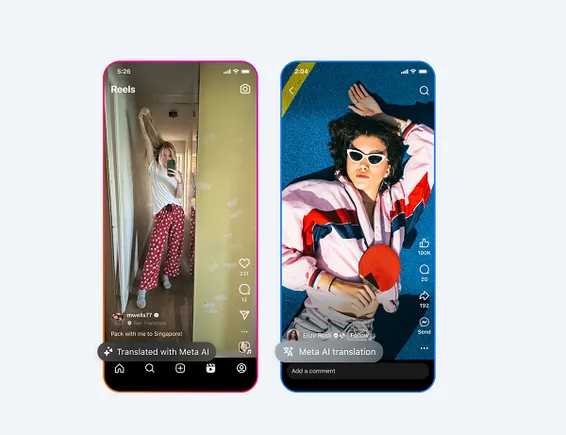
While Instagram Head Adam Mosseri noted that the platform currently supports 14 languages, internal Meta documents suggest that the total capacity of the engine has reached 18 languages. This discrepancy highlights the fluid nature of the rollout, as Meta continuously tests and validates the accuracy of its models across different linguistic structures.
Furthermore, the expansion is not limited to Instagram. Meta is concurrently rolling out these translation capabilities to Facebook, adding support for Bahasa, Indonesian, Arabic, French, Vietnamese, and Thai. This multi-platform approach suggests that Meta views translation as a utility that will eventually become a standard component of its entire suite of applications.
Official Responses and Creator Guidelines
Meta has been transparent about the limitations of this technology. While the AI is remarkably advanced, the company admits that results can vary based on background noise, the speed of the original speech, and the complexity of the content.
"The goal is to increase accessibility and reach," a Meta spokesperson noted in recent documentation. "However, we recognize that the ‘uncanny valley’ effect—where the syncing might look slightly off—is a hurdle we are constantly working to clear."
To empower creators, Meta has built in robust "human-in-the-loop" safeguards. Creators are not forced to accept the AI’s output; they have the agency to review translations, adjust sync settings, or choose to abandon the translation entirely if they feel it misrepresents their original intent. This focus on creator control is a cornerstone of Meta’s approach to AI implementation.
Who can use the tool?
Access is currently gated to ensure high-quality, professional deployments. At present, the tool is available to creators with more than 1,000 followers within the Reels composer. Creators can select up to two target languages per video, allowing them to test the performance of their content in specific foreign markets without overwhelming their followers.
Strategic Implications for the Creator Economy
The implications of this technology for the creator economy are profound. Previously, scaling an audience internationally required hiring professional translators or voice actors, or settling for static subtitles, which often suffer from low engagement rates. With AI dubbing, the barrier to entry for international stardom has been significantly lowered.

1. The Death of the Language Barrier
For creators in niche fields—such as educational content, DIY tutorials, or comedy—language has historically acted as a natural ceiling. A tutorial on baking or coding in English is functionally inaccessible to a non-English speaker who prefers visual cues. AI-powered dubbing effectively removes this ceiling, allowing content to "travel" globally.
2. Marketing and Monetization
For brands and influencers, this technology opens up entirely new revenue streams. An influencer with a massive following in the United States can now, with a few clicks, engage with audiences in Germany or Japan. If the response in these regions is strong, it provides data-driven evidence for brands to expand their ad spends into those specific territories.
3. The "Uncanny Valley" and Brand Safety
Despite the technological marvel, creators must be wary of the "uncanny valley." If a translation is poor or the lip-syncing is noticeably flawed, it can detract from the professionalism of the creator’s brand. The decision to switch on AI translations should be a strategic one, perhaps best suited for evergreen content rather than highly personal, emotional, or time-sensitive updates.
4. Cultural Nuance
While AI is proficient at literal translation, it still struggles with cultural idioms, sarcasm, and regional slang. Creators should exercise caution and perform test runs before fully committing their library to AI translation. The platform’s ability to allow manual review is not just a feature; it is an essential safeguard for maintaining brand integrity.
Looking Ahead: The Future of Multilingual Social Media
As Meta continues to iterate on its language models, we can expect the accuracy of the lip-syncing and the nuance of the audio to improve exponentially. In the coming years, it is likely that real-time translation—or at least near-instantaneous translation—will become the default state for Reels.
The competitive landscape is also shifting. With TikTok and YouTube also investing heavily in AI-driven translation tools, the battle for the global user is increasingly being fought on the field of accessibility. For the average user, this means a more personalized, globally-connected feed. For the creator, it means the world is no longer just a collection of domestic followers, but a potential audience of billions.
For those currently building a presence on Instagram, the advice is clear: leverage these tools to experiment. Switch on the translation feature for a series of posts and monitor the audience analytics. If you see a surge in engagement from non-native language speakers, you have successfully discovered a new market. In the digital age, the ability to speak the same language as your audience—quite literally—is the most powerful tool a creator can possess.

 Siti Muinah
 Nana Wu