

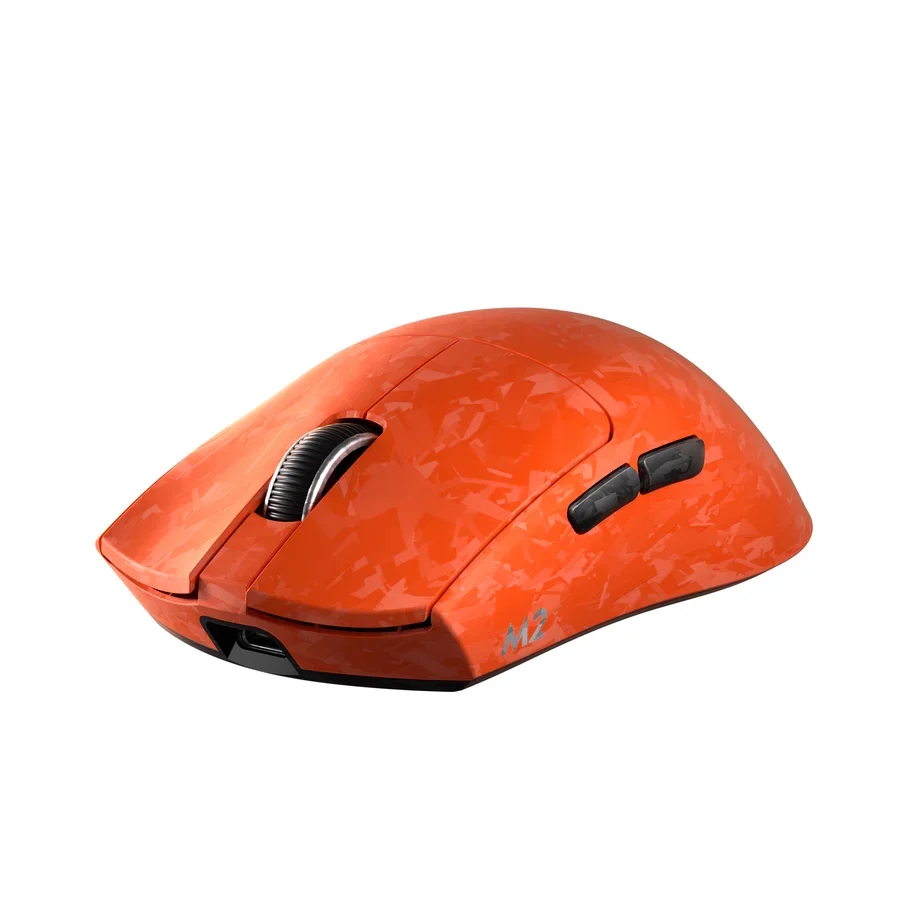
In the rapidly evolving landscape of competitive PC gaming peripherals, the demand for ultra-low latency and high-fidelity tracking has transitioned from the realm of professional eSports exclusivity to the mainstream consumer market. Yunzii, a manufacturer increasingly recognized for bridging the gap between custom mechanical keyboard aesthetics and high-performance gaming hardware, has officially unveiled its latest flagship offering: the M2 Dual 8K wireless gaming mouse. By integrating industry-standard high-performance sensors with a rare dual-8KHz polling capability, Yunzii is positioning itself as a formidable contender against legacy peripheral giants.
Main Facts: High-End Specifications at an Aggressive Price Point
The Yunzii M2 Dual 8K arrives with a specification sheet that, until recently, was reserved for premium peripherals costing upwards of $150. At its heart lies the PixArt PAW3395 optical sensor, a gold standard in the gaming industry. This sensor provides a maximum sensitivity of 30,000 DPI, 650 IPS (inches per second) tracking speed, and 50G of acceleration. These metrics ensure that even the most frantic flick-shots in tactical shooters are tracked with pixel-perfect accuracy.
However, the headline feature of the M2 is its dual 8KHz polling rate. Polling rate—the frequency at which a mouse reports its position to the PC—is the primary driver of input latency reduction. While standard gaming mice operate at 1,000Hz (reporting every 1ms), the M2’s 8,000Hz mode updates the system every 0.125ms. Crucially, Yunzii has achieved this stability across both wired and 2.4GHz wireless connections, effectively eliminating the "wireless tax" that gamers previously had to pay in terms of latency.
Beyond internal hardware, the M2 is engineered for ergonomics and endurance. Weighing in at approximately 63 grams (±3g), the mouse fits comfortably within the "ultra-lightweight" category, a weight class favored by eSports professionals to minimize wrist fatigue during extended gaming sessions. The chassis design utilizes a carbon-fiber-textured grip, specifically tailored for users with medium- to large-sized hands, providing tactile feedback that remains consistent even during humid conditions or high-intensity play.
A Chronology of Yunzii’s Strategic Shift
Yunzii’s trajectory within the tech space is a study in calculated expansion. Originally gaining notoriety for its vibrant, enthusiast-focused mechanical keyboards and desk accessories, the company spent its formative years cultivating a community of design-conscious users. However, in late 2023 and early 2024, a pivot toward performance-oriented peripherals became evident.
- Early 2024: Yunzii began expanding its catalog beyond keyboards, focusing on budget-friendly but aesthetically pleasing mice.
- Mid-2024: The company signaled its intent to challenge the "pro-tier" market by experimenting with high-end sensors in their prototype builds.
- Late 2024 (The Launch): The official announcement of the M2 Dual 8K marks the culmination of this strategy. By implementing a tri-mode connectivity system (2.4GHz, Bluetooth 5.2, and Wired) alongside the 8K polling rate, Yunzii has signaled that it is no longer just a "lifestyle" brand, but a serious competitor in the technical gaming hardware arena.
Supporting Data: Why 8K Polling Matters
The push for 8,000Hz polling rates is not merely a marketing gimmick; it is a direct response to the adoption of high-refresh-rate monitors. As the gaming industry moves toward 240Hz, 360Hz, and even 540Hz displays, the delta between the monitor’s frame refresh and the mouse’s input polling becomes critical.
If a monitor refreshes at 540Hz, the interval between frames is roughly 1.85ms. If a mouse is only reporting at 1,000Hz (1ms), there is a high probability that the display will render frames without updated input data from the mouse. An 8,000Hz polling rate reduces the input interval to 0.125ms, ensuring that for virtually every frame rendered by the GPU, the mouse has provided a fresh data packet.
Data from the M2’s performance tests confirms that this consistency is maintained across its wireless protocol. By utilizing a high-efficiency 500mAh battery, the M2 balances the power-hungry demands of an 8K sensor with the necessity of maintaining a lightweight chassis, proving that high-polling rates do not necessarily require a heavy, oversized battery or a cumbersome wired tether.
Official Responses and Ecosystem Integration
Yunzii has emphasized that the M2 is designed for versatility. A significant hurdle for many "budget-tier" high-performance mice is the lack of robust software. To counter this, Yunzii has introduced a dual-layer approach to customization: users can utilize standard Windows-based software for deep adjustments, or take advantage of their web-based driver interface. This web-based solution is particularly innovative, as it removes the need to install bloated background software, which many competitive players avoid to minimize system latency.
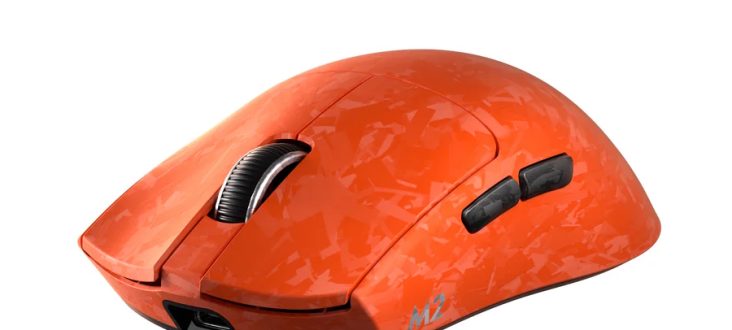
The mouse is currently available in four distinct colorways: light pink, white, black, and orange. This aesthetic diversity is a hallmark of the Yunzii brand, ensuring that the M2 can integrate into any setup—from a minimalist workstation to a color-coordinated battlestation. At a retail price point of $59.99, the device is significantly cheaper than competing 8K-capable mice from established industry incumbents, which often retail for double that amount.
Implications for the Peripheral Market
The release of the Yunzii M2 represents a broader, tectonic shift in the peripheral market. For years, the industry was dominated by a "Big Three" model, where research and development costs were passed down to consumers in the form of high retail prices. Chinese manufacturing powerhouses like Yunzii, Lamzu, and Pulsar have effectively "democratized" performance.
- Price Compression: By offering a PAW3395 sensor and 8K polling for under $60, Yunzii forces legacy brands to justify their higher price tags. If a $60 mouse can perform nearly identically to a $150 mouse, the value proposition of premium-branded gear becomes increasingly difficult to defend.
- Focus on Software Accessibility: The shift toward web-based drivers is a direct benefit to the end-user. It reduces the risk of malware, lowers memory footprint on the PC, and ensures the mouse remains functional even on machines where users do not have administrative rights to install software.
- The Rise of "Prosumer" Aesthetics: Yunzii’s success proves that gamers want high performance without sacrificing visual identity. The M2 shows that a mouse can be both a precision instrument and a stylish accessory.
Conclusion: Is the M2 the New Standard?
The Yunzii M2 Dual 8K is more than just a peripheral; it is a statement of intent. By bundling top-tier technical specifications—the PAW3395 sensor, 8K wireless polling, and an ultra-lightweight chassis—into a $60 package, Yunzii has effectively set a new baseline for what gamers should expect for their money.
For the competitive gamer, the M2 offers the technical edge required to compete at high levels. For the casual enthusiast, it offers a premium experience without the premium cost. As the peripheral market continues to saturate, it is clear that the companies that win will be those that can successfully marry high-end internal components with user-centric software and aggressive pricing. If the M2’s performance holds up under long-term usage, it may well be remembered as the product that forced the rest of the industry to rethink their pricing strategies for high-performance hardware.











