

In an era where our workstations are defined by the constant, aggressive ping of notifications, the relentless influx of emails, and the seductive pull of social media, the act of writing has become a battle against distraction. For many creative professionals, the solution to this modern malaise has been a return to the past—specifically, the tactile, focused world of the typewriter.
However, the vintage typewriter presents its own set of challenges: the lack of digital backups, the difficulty of editing, and the physical noise that makes it unsuitable for shared office spaces. Enter "Myth Made," a creator who has bridged this generational gap with a stunning DIY project: an E-ink typewriter powered by a Raspberry Pi Zero. This project represents more than just a hobbyist’s curiosity; it is a profound statement on how we interact with technology, blending the aesthetic charm of the mid-20th century with the efficiency of modern computing.
The Core Concept: Merging Eras
The device, which has gained significant traction in the maker community, functions as a dedicated "distraction-free" word processor. While the market has seen commercial attempts at this—such as the Astrohaus Freewrite—Myth Made’s iteration stands out for its accessibility and custom-built philosophy.
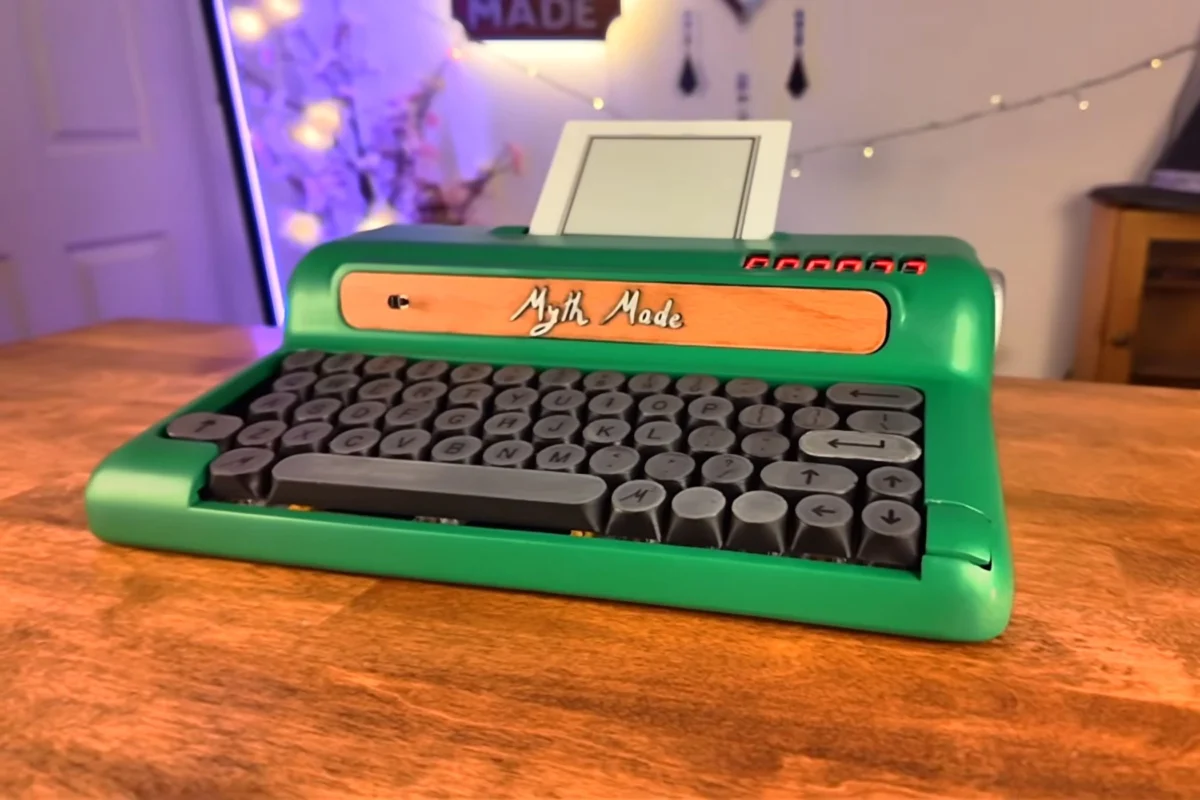
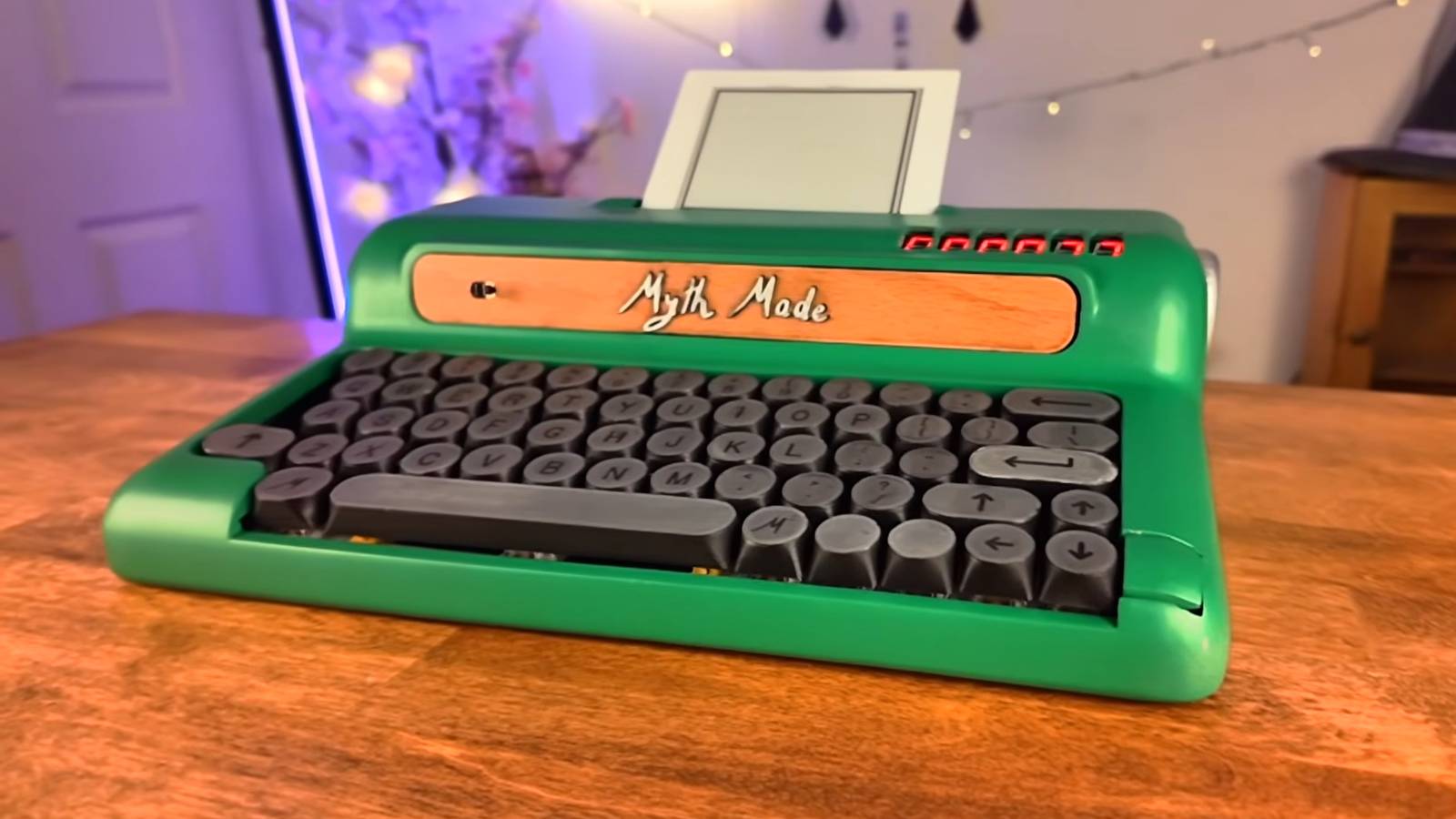
At its heart, the device is a triumph of DIY engineering. Rather than gutting a fragile, antique typewriter, the creator utilized 3D printing to fabricate a custom chassis that mimics the architectural lines of classic office equipment. By marrying a standard USB keyboard (modified with vintage-style round keycaps) to a compact, low-power Raspberry Pi Zero, the project achieves a seamless blend of form and function. The "paper" is replaced by a high-contrast Waveshare ePaper display, which mimics the look of ink on page without the eye strain associated with LCD or OLED backlights.
Chronology of the Build: From Concept to Keystrokes
The development of this typewriter was a multi-stage process that highlights the capabilities of modern open-source hardware.
Phase 1: Design and Prototyping
The project began with the goal of creating a portable, battery-efficient writing deck. Myth Made utilized CAD software to design a 3D-printed enclosure, focusing on ergonomics and aesthetic fidelity. The objective was not merely to build a computer, but to build a tool that felt like a typewriter. This involved selecting a rotary encoder for the side of the unit, which serves as a tactile scrolling mechanism, mimicking the manual paper-feed knob of a mechanical machine.
Phase 2: Hardware Integration
The integration phase involved connecting the Raspberry Pi Zero to the E-ink display. The choice of the Pi Zero is critical here; it is small, energy-efficient, and more than capable of handling text-based tasks. The creator integrated a rack-and-pinion gear system, which allows the display to physically shift, providing a sensory feedback loop that reminds the user of an actual typewriter carriage.
Phase 3: Software and Firmware
The software backbone of the project relies on "Zerowriter," an open-source project tailored for the Raspberry Pi. This software provides the essential environment for text creation, ensuring that the device remains a "write-only" machine. It lacks a web browser, a mail client, or a notification center—it is a digital blank slate.
Phase 4: Final Assembly and Polish
The final touches included the addition of a seven-digit physical word count display. This feature serves as a psychological anchor for the writer, providing a tangible metric of productivity that isn’t buried in a software menu, but sits prominently on the device’s "dashboard."
Supporting Data: Why E-Ink Matters
The choice of E-ink (electronic paper) is not merely an aesthetic decision; it is a deliberate technological choice backed by cognitive science. Unlike backlit LED screens, which emit blue light and can disrupt circadian rhythms, E-ink displays reflect ambient light.
- Battery Efficiency: Because E-ink only consumes power when the image on the screen changes, the typewriter can run for days or weeks on a single charge of a modest battery.
- Reduced Cognitive Load: Research into "Flow State" suggests that intermittent notifications are the primary enemy of deep work. By removing the ability to "tab out" to a browser, the device forces the brain to remain in a state of sustained attention.
- Tactile Feedback: The inclusion of round, mechanical keycaps provides haptic feedback that software keyboards simply cannot replicate, which has been shown to improve typing accuracy and user satisfaction.
The Broader Implications: The "Analog" Tech Movement
The success of Myth Made’s project points to a growing dissatisfaction with "always-on" computing. As software ecosystems become increasingly cluttered with subscription models and telemetry, there is a burgeoning desire for "dumb" hardware that does one thing perfectly.
The implications for the tech industry are significant. When users spend their own time and money to build machines that actively limit their own connectivity, it serves as a critique of current OS design. Major tech companies have spent the last decade trying to make computers do everything, everywhere, all at once. The success of this E-ink typewriter suggests that the market may be ready for the opposite: devices that offer silence, simplicity, and a singular focus.
Official Responses and Community Impact
The maker community has responded with overwhelming enthusiasm. By releasing the assets via Gumroad—including the bill of materials, wiring diagrams, and CAD files—Myth Made has democratized the build process.
In an interview-style breakdown on Hackster.io, experts noted that this project is a "perfect entry point" for makers interested in the intersection of hardware design and software minimalism. Unlike high-end niche products that cost upwards of $500, the total cost of this build is significantly lower, making it an accessible project for students, writers, and hobbyists alike.
Conclusion: The Future of Focused Work
The E-ink typewriter is not a step backward; it is a strategic retreat to a more human-centric way of working. By using 21st-century components to recreate the focused environment of the 20th century, Myth Made has created a tool that acknowledges the primary problem of the digital age: we are too connected for our own good.
As we look toward the future, the popularity of such projects suggests that the next generation of productivity tools may not be defined by higher processing speeds or more complex AI integration, but by how effectively they can help us disappear into our own thoughts. Whether you are a novelist, a coder, or a student, the message is clear: sometimes, the most sophisticated piece of technology is the one that simply lets you write.
Project Specifications Summary:
- Hardware: Raspberry Pi Zero, Waveshare E-Paper Display, USB Keyboard, Custom 3D-printed enclosure.
- Software: Zerowriter (Open Source).
- Primary Features: Distraction-free interface, 7-digit word count tracking, high-contrast display, mechanical-style haptics.
- Availability: Documentation and files are available through the Myth Made repository on Gumroad for those looking to replicate the build.











