

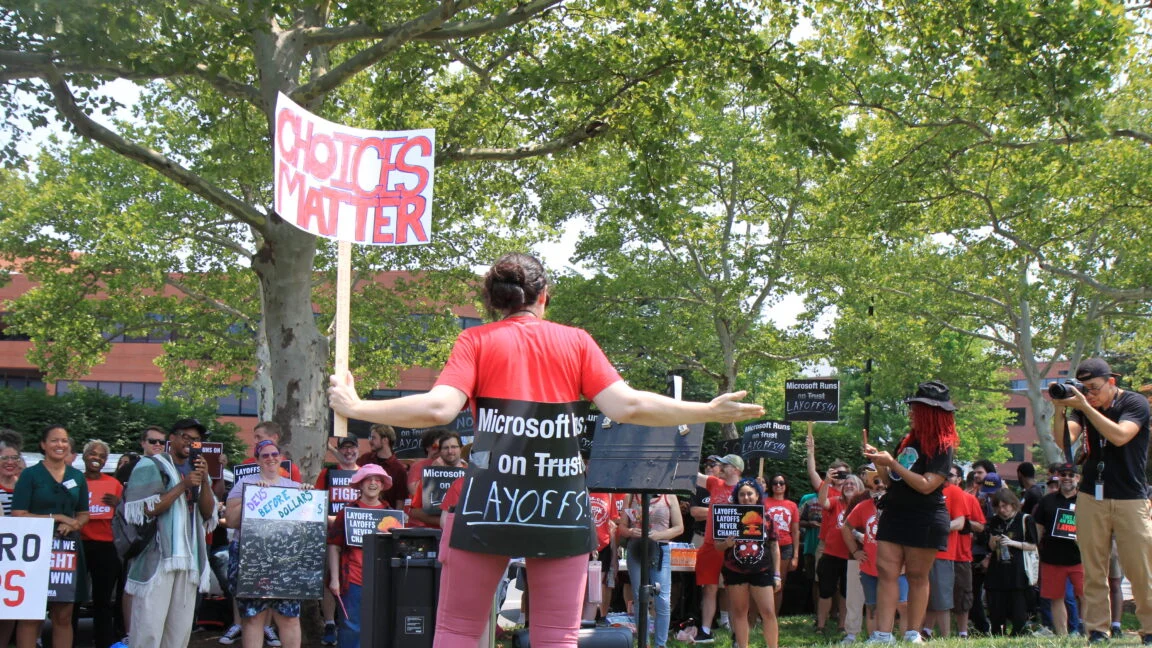
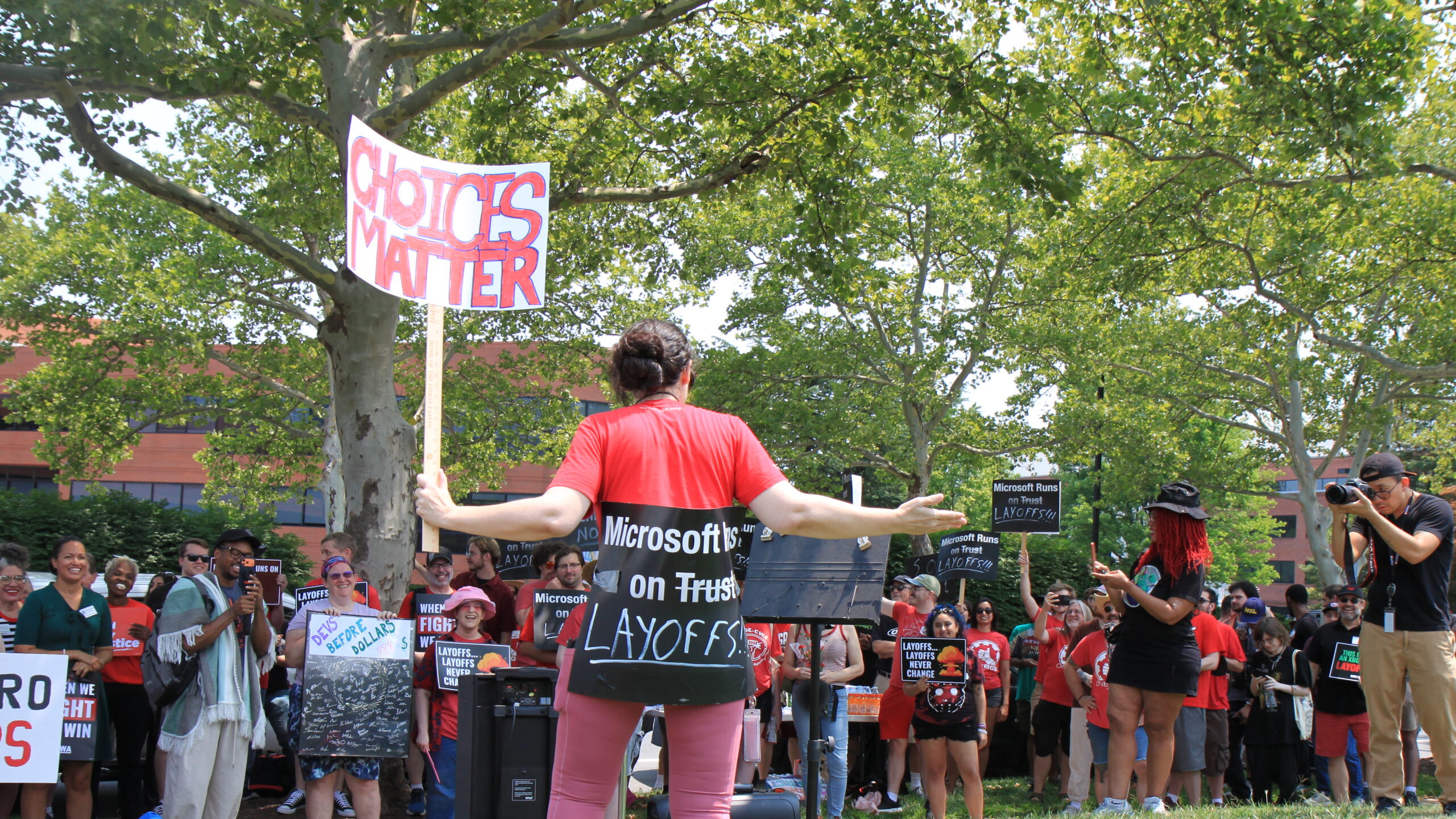
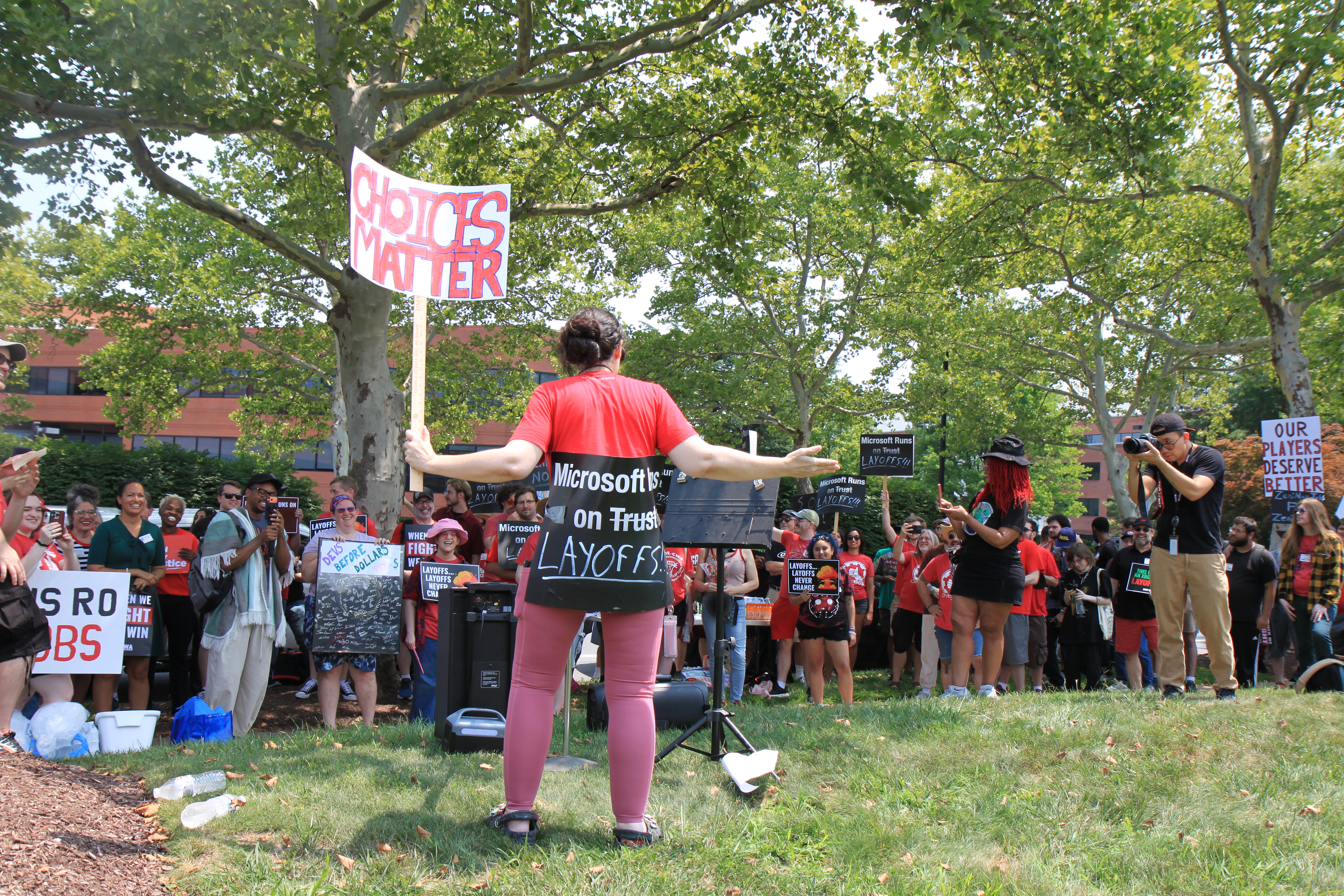
ROCKVILLE, Maryland — The sweltering mid-July heat, reaching nearly 100°F, did little to dampen the resolve of hundreds of Bethesda Game Studios and ZeniMax Online Studios employees who gathered outside their parent company’s headquarters on Tuesday. The rally, organized by ZeniMax Workers United and the Communications Workers of America (CWA), served as a defiant public response to the latest round of sweeping layoffs announced across Microsoft’s gaming division—a move that has left the industry reeling and employees questioning the stability of their creative future.
The Rockville protest was one of five simultaneous actions coordinated across offices in Texas, California, and Montreal. As the gaming industry grapples with an era of "incredible shrinking" workforces, the message from the picket line was clear: the employees are no longer willing to remain silent as their colleagues are removed from the teams that build some of the world’s most beloved digital experiences.
The Human Cost of Corporate Restructuring
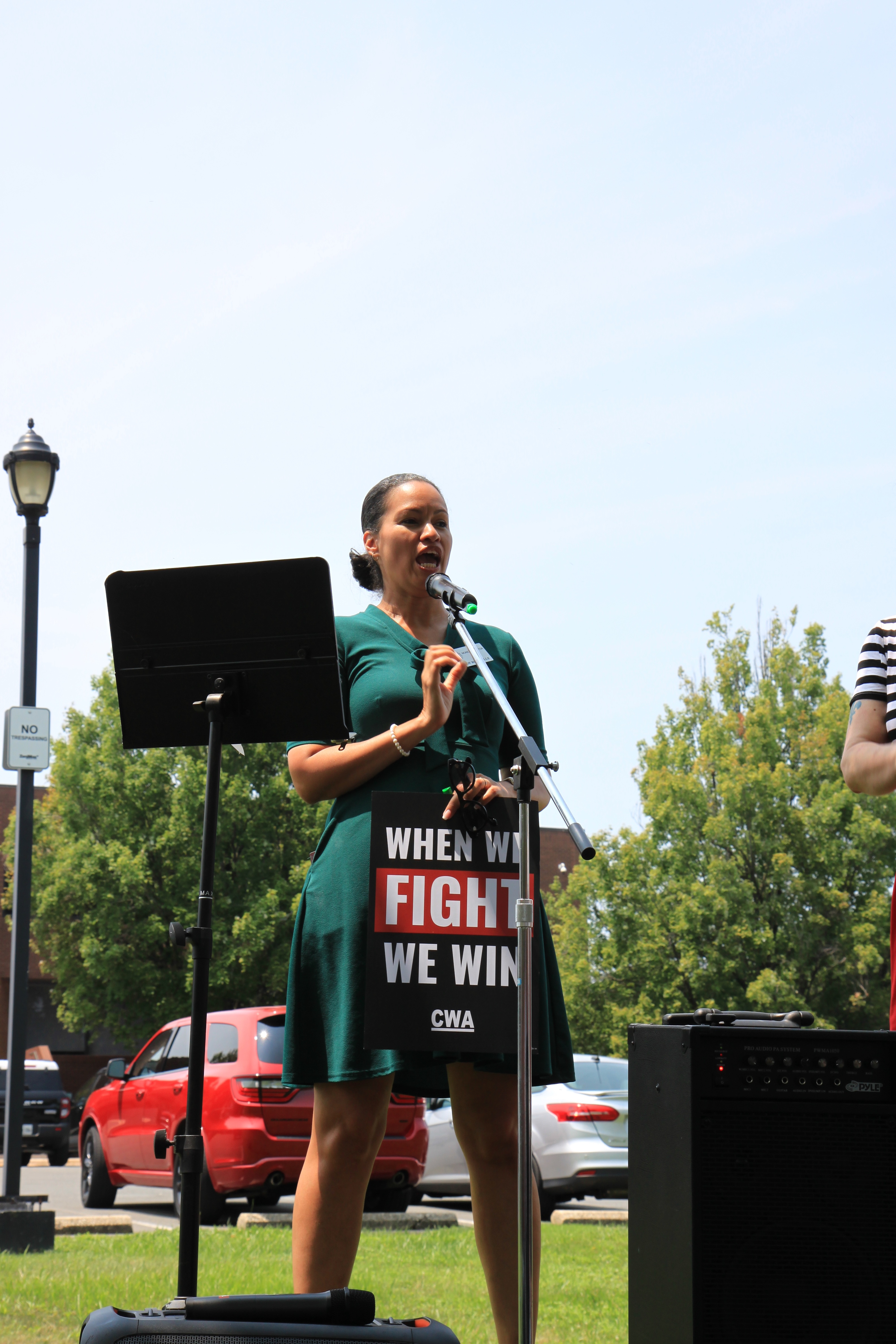
The rally was marked by a blend of raw emotion and disciplined organization. Attendees brandished signs with biting slogans such as "Layoffs never change" and "Our players deserve better," while speakers—including union organizers, affected employees, and even local government officials—took turns addressing the crowd.
For many, the protest was not just about job security, but about the preservation of a culture that has historically defined Bethesda’s output. Nathan Hahn, a Bethesda technical producer and volunteer union organizer, emphasized that the rally was a necessary step toward visibility. "It’s about us building our movement and making sure that we get seen," Hahn told Ars Technica. "Because we want to make sure that we’re not okay with these layoffs, and that Xbox knows."
The personal toll of these layoffs was visible in the accounts of veteran developers. Jay Woodward, an AI programmer whose tenure at Bethesda spanned nearly two decades—dating back to the development of Fallout 3—found himself among the hundreds let go last week. Speaking to the crowd, he challenged the narrative that mass layoffs are an inevitable reality of the modern business world.
"Obviously, in the business world, we understand that this is the sort of thing that happens," Woodward said. "But it’s absolutely not inevitable. That’s a complete nonsense concept, especially when the studio and the overall company are doing fantastically well. There is no need to say that this has to happen."
A Chronology of Conflict
The tension between Microsoft’s gaming division and its workforce has been escalating for months. Following a "reduction in force" last year, ZeniMax Workers United successfully negotiated a historic tentative agreement with the company, which included crucial protections such as guaranteed severance for laid-off employees.
However, the current situation feels different in scale and severity to many on the ground. According to union representatives, the company failed to engage in meaningful dialogue regarding this latest wave of cuts.
"We had a reduction in force proposal on the table for months, and they ignored it," Hahn explained. "They never got back to us. So, instead, they’ve chosen to do layoffs without bargaining with us, and that’s something we’re fighting back against."
The union’s primary demand is for Microsoft to return to the bargaining table. The current sentiment is one of "us versus them," as expressed by CWA District 213 vice president Mike Davis. "They can either come meet at the table, or they can meet us in the street," Davis told the cheering crowd. "They can meet us anywhere they want, but they’re gonna fight with us."
Supporting Data: The Shrinking Landscape
The scale of the current layoffs is staggering. Reports indicate that approximately 3,200 employees have been let go across five different Xbox-affiliated studios. This comes on the heels of previous cuts, leading to what many employees describe as a "perpetual cycle" of instability.
The impact of these cuts is being felt acutely in the quality assurance (QA) and development departments. Juniper Dowell, a QA tester with five years of experience, described the current state of her team—and the broader studio—as "trying to sing with half a choir."
"Last year, we lost about 100 folks, and that was impossible to deal with," Dowell said. "And this time, we lost even more. This is skilled labor. You can’t pull someone off the street and ask them to start developing games or to start testing games. These are skills that are learned and honed over time."
The loss of institutional knowledge is perhaps the most concerning factor for long-term project viability. As Bethesda moves forward with massive, high-profile titles like The Elder Scrolls and ongoing Fallout updates, the absence of veteran staff creates a significant knowledge gap. "We had received some signals from Xbox that Fallout and Elder Scrolls were going to be pivotal titles for them," Hahn added. "And then to hear that our teams who work on those games got cut—it was a real deep cut for us. Who do you ask that question to if they’re no longer here?"
Official Responses and Corporate Strategy
In the wake of the protest, Microsoft provided a statement acknowledging the gravity of the situation. A company spokesperson noted, "We respect our employees’ right to make their voices heard, and we recognize that this is a difficult time for many. We reached out to the union on July 6 to begin effects bargaining and are committed to that process. We remain focused on supporting impacted employees through this transition while positioning the organization for long-term strength."
This corporate stance mirrors the rhetoric used by Xbox CEO Asha Sharma when announcing the layoffs last week. Sharma defended the restructuring, characterizing the business as "not healthy" and operating at margins "well below the competition."
"These changes are about a bigger future for Xbox, not a smaller one," Sharma said in the initial announcement. "This year, we’ll invest as much in Xbox as we ever have, but we’ll invest with greater focus, greater discipline, and greater clarity, all in service of making Xbox where the world plays and creates."
However, for employees like System Designer Mandy Parker, this "discipline" does not align with the reality on the factory floor. Parker noted that the corporate narrative of trimming "redundant middle management" did not seem to apply to her office, where the brunt of the cuts were felt by lower-level employees. "These folks… they don’t make a lot of money," Parker said. "They’re taking home pizzas from our cafeteria for their kids to eat to help them. We don’t get the big Microsoft money."
Local and Broader Implications
The rally also drew the attention of local political leadership. Rockville Mayor Monique Ashton addressed the crowd, offering her support and expressing deep concern for the economic stability of the region.
"We have seen job losses related to issues in the federal government, but to see the gaming industry, which has been blossoming, do this—it’s something that I’m concerned about," Ashton said. She pledged to bring the issue before the County Council and the Maryland Department of Labor, emphasizing that the gaming industry’s growth should be accompanied by a commitment to the people who build it. "It’s going to touch every industry, and we, as consumers, have to say, ‘We value people.’"

A Broken System?
The mood among those who survived the latest cuts is, by all accounts, "bleak." Many report a culture of fear, where the focus has shifted from creative collaboration to survival. Parker, in an impassioned speech to her colleagues, summarized the prevailing sentiment: "If you weren’t caught this time, you’ll be caught next time. I study systems, and when I see a broken system, I say it when it’s broken. This is a [expletive] broken system!"
As the union prepares for further negotiations, they are also calling on the player base for support. By directing fans to the Xbox Player Voice forums, the CWA hopes to leverage consumer pressure to hold the company accountable. "They’re the people that pay their salaries," CWA’s Mike Davis said. "Those managers can’t have jobs without those people."
As the dust settles on this latest round of layoffs, the path forward remains uncertain. The clash between the drive for corporate efficiency and the needs of a specialized, unionized workforce is setting a precedent that will likely define the gaming industry for years to come. For the developers at Bethesda, the goal is simple: they want to return to their desks, resume the work they love, and find a way to break the cycle of fear that has gripped their studio. Whether Microsoft’s management will meet them at the bargaining table with a solution that prioritizes people over "discipline" remains the critical, unanswered question.











