

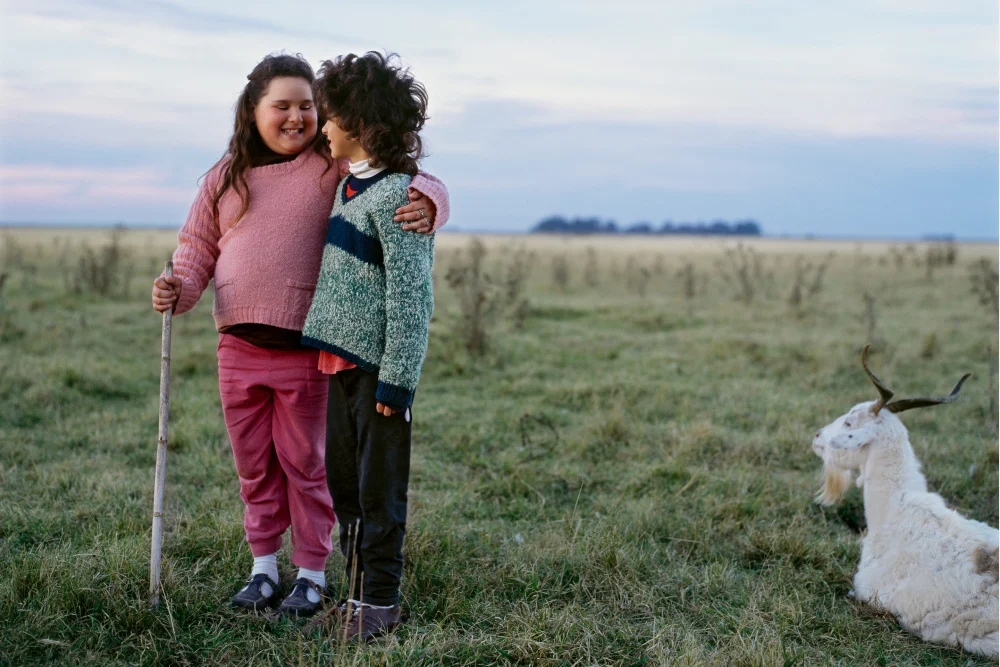
The international film landscape is bracing for a singular cinematic event as Autlook Filmsales boards the highly anticipated documentary The Illusion of an Everlasting Summer. The film, which marks the feature directorial debut of renowned photographer Alessandra Sanguinetti, is set to make its world premiere in the competitive "Filmmakers of the Present" section at the Locarno Film Festival.
As a project that spans more than two decades, the documentary represents a rare commitment to long-form storytelling, capturing the metamorphosis of two lives against the backdrop of the Argentine Pampas. With Mubi already secured as a financier and holder of distribution rights for North America, the U.K., and Ireland, the film arrives with significant industry backing and critical curiosity.
The Core Narrative: A Quarter-Century of Becoming
At the heart of The Illusion of an Everlasting Summer are Guillermina and Belinda, two cousins whose lives have been observed by Sanguinetti since 1999. When the project began, the subjects were nine years old, living on adjacent farms in the rural reaches of Argentina.
What began as a photographic study evolved into a profound cinematic examination of the transition from childhood to adulthood. Sanguinetti’s camera acts as both an observer and a silent companion, charting the girls’ progression through the ephemeral games of youth toward the sobering realities of the adult world. The narrative arc traces the encroachment of "real life"—the responsibilities of labor, the complications of family structures, the journey into motherhood, and the inevitable divergence of two paths that were once inextricably linked.
The film serves as a poignant counter-narrative to the region’s traditional cultural output. Historically, the Argentine Pampas have been defined by the masculine, myth-heavy iconography of the gaucho. Sanguinetti’s work deliberately pivots away from this, offering an intimate, female-centered lens that explores the texture of daily life, the endurance of friendship, and the relentless, often cruel passage of time.
Chronology: From Static Stills to Living Cinema
The genesis of this documentary is inseparable from Sanguinetti’s illustrious career as a photographer. To understand the film, one must understand the decades of visual documentation that preceded it.
- 1999: The initial collaboration begins. Sanguinetti starts photographing Guillermina and Belinda, focusing on their imaginative play and the surreal isolation of their rural upbringing.
- Early 2000s: The photographic series The Adventures of Guille and Belinda gains international acclaim, cementing Sanguinetti’s status as a master of intimate portraiture.
- Mid-2000s to 2010s: As the subjects mature, the nature of the project shifts. Sanguinetti continues to document their lives, but the shift from still photography to motion picture becomes necessary to capture the fluid, complex reality of their adulthood.
- 2024: After 25 years of filming, the project reaches its conclusion, coalescing into a feature-length documentary ready for its debut at one of the world’s most prestigious festivals.
This 25-year production cycle is an anomaly in modern filmmaking. While most documentaries are produced within a three-to-five-year window, Sanguinetti’s film functions as a time capsule, providing a rare longitudinal view of human development that is seldom achieved in the medium of non-fiction cinema.
The Creative Powerhouse: Sanguinetti and Solomonoff
The film’s depth is largely attributable to the caliber of its creators. Alessandra Sanguinetti is a Guggenheim Fellow and a member of the prestigious Magnum Photos agency (since 2007). Her aesthetic language—characterized by a sensitivity to light, landscape, and the unspoken emotional states of her subjects—has been exhibited at institutions ranging from the Museum of Modern Art (MoMA) in New York to the Fondation Cartier-Bresson in Paris. Her previous monographs, including On the Sixth Day and Some Say Ice, have prepared the ground for this transition to long-form video.
Complementing Sanguinetti’s vision is the veteran producer Julia Solomonoff. A central figure in Latin American cinema, Solomonoff brings a wealth of experience in nurturing emerging talent. Her resume is a masterclass in independent production, having produced films by heavyweights like Lucrecia Martel (Zama) and Celina Murga (The Third Bank of the River). Solomonoff’s involvement as a producer ensures that the documentary maintains a rigorous narrative structure, balancing the poetic nature of Sanguinetti’s photography with the pacing required for a feature film.
Supporting Data: Financing and Industry Footprint
The production structure of The Illusion of an Everlasting Summer underscores its status as an "arthouse prestige" project. By securing partial financing from Mubi, the production team ensured both the longevity of the project and a robust distribution pipeline.
- Financing Partners: Mubi and Impact Partners.
- Sales Agent: Autlook Filmsales.
- Distribution: Mubi has retained rights for the U.K., Ireland, and North America, signaling their confidence in the film’s crossover appeal beyond traditional documentary festival circuits.
The inclusion of Impact Partners—a group known for backing socially impactful and artistically ambitious documentary filmmaking—further highlights the film’s perceived cultural weight. The film is not merely a biography of two women; it is an examination of rural sociology, the endurance of the feminine spirit, and the nature of memory.
Official Perspectives and Implications
While official statements have remained relatively sparse ahead of the Locarno premiere, the industry consensus is that The Illusion of an Everlasting Summer will serve as a defining work of the "autobiographical documentary" genre.
Implications for the Documentary Genre
The film challenges the traditional "interview-heavy" documentary style. By prioritizing the lived experience of the subjects over expert testimony or voiceover-driven exposition, Sanguinetti aligns herself with filmmakers like Richard Linklater—who famously used long-term production to capture natural aging in Boyhood—but applies it to a documentary framework.
The Cultural Shift
There is an implicit political dimension to the film’s focus on the Argentine Pampas. By centering the lives of two rural women, Sanguinetti is effectively reclaiming the landscape from the male-dominated mythology that has dominated the region’s literature and cinema for over a century. This "female-centered counterpoint" is likely to spark significant academic and critical discourse regarding gender and geography in Latin American art.
The Role of Mubi
Mubi’s aggressive move to secure rights for the film reflects the streamer’s ongoing strategy of "curated excellence." By backing a film that has taken a quarter-century to produce, Mubi is positioning itself as a patron of slow cinema—a vital move in an era defined by content saturation and rapidly produced, ephemeral media.
Conclusion: A Meditation on Endurance
As the Locarno Film Festival prepares to screen the film, the anticipation is not just for the story of Guillermina and Belinda, but for the witness of the medium itself. Alessandra Sanguinetti has managed to produce a work that is simultaneously a portrait of two individuals and a portrait of a landscape undergoing change.
In an era where "everlasting" often refers to the digital afterlife of data, The Illusion of an Everlasting Summer reminds us of the fragility of time. It asks the audience to consider what truly endures: is it the landscape of our youth, the friendships we forge in our formative years, or the act of remembering itself?
When the lights go down in Locarno, the audience will not just be watching a documentary; they will be witnessing the culmination of a 25-year conversation between an artist and her subjects—a rare, patient, and deeply human achievement that will undoubtedly resonate throughout the global film community for years to come.










