

[Editor’s note: This article was first published in July 2017 and has been updated multiple times to reflect the director’s most recent works, including his 2026 epic, "The Odyssey."]

At a time when the traditional Hollywood "star system" has begun to wane, and major studios are increasingly reasserting themselves as the primary architects of cinema, one soft-spoken British director has defied the trend. Christopher Nolan, a man with a distinct flair for complex puzzles and a signature penchant for scarves, has somehow transformed himself into one of the most recognizable pop-art figures on the planet.

In less than two decades, Nolan has transitioned from an anonymous, micro-budget independent filmmaker to a genuine household name. His cultural cachet now rivals that of titans like Quentin Tarantino or Steven Spielberg. Paradoxically, he has achieved this status while remaining a low-profile personality; most casual moviegoers would struggle to pick him out of a lineup. Instead, his films serve as his primary voice. His 2010 masterpiece, Inception, became so deeply embedded in the modern vernacular that it is now shorthand for anything layered or complex—even if that "anything" is merely a poorly constructed sandwich.

The Architect’s Blueprint: A Chronology of Success
Nolan’s rise to prominence is not a story of overnight success, but rather a calculated climb through the ranks of the studio system. His journey began with the 1998 neo-noir Following, a $5,000 experiment that showcased his raw talent for non-linear storytelling. However, it was the 2000 psychological thriller Memento that truly put him on the map, proving that he could master the architecture of memory and time.

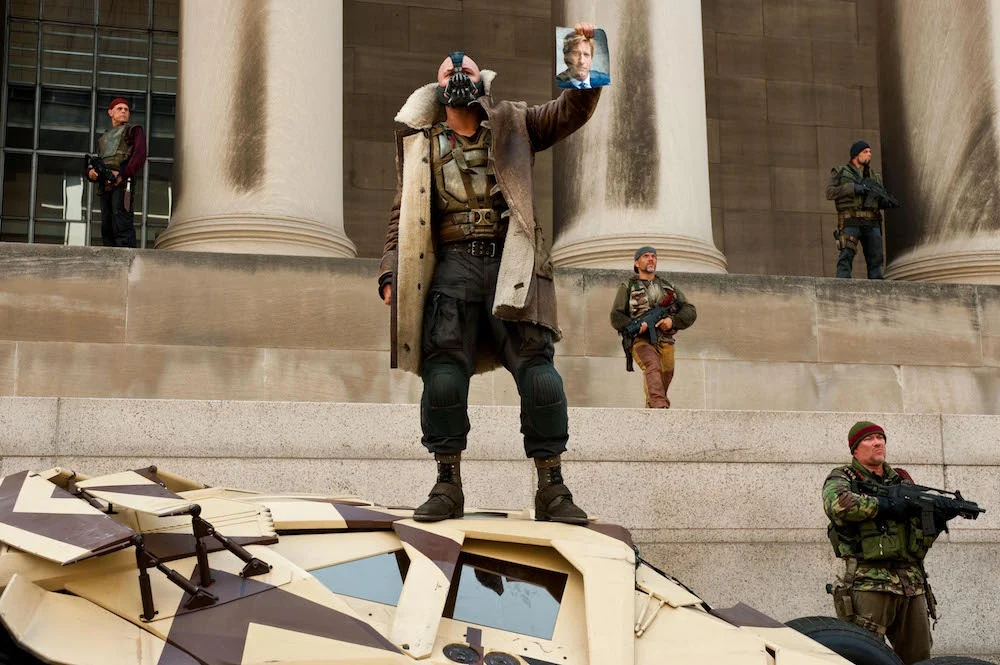
The true turning point came in 2005. By signing on to direct Batman Begins, Nolan did the unthinkable: he brought his hyper-realistic, auteur sensibilities to the superhero genre. The subsequent The Dark Knight (2008) solidified his standing, earning him enough "carte blanche" at Warner Bros. to pursue his own original, ambitious projects.

Following a high-profile, public rift with Warner Bros. over their pandemic-era distribution strategies, Nolan pivoted to Universal Pictures for his recent projects. This move yielded the colossal success of Oppenheimer, a three-hour character study that grossed over $900 million worldwide and finally secured Nolan the Academy Awards for Best Picture and Best Director. He now returns to the screen with The Odyssey, an expansive, gritty retelling of Homer’s epic, marking his 13th feature film.

Supporting Data: The Nolan Filmography Ranked
To appreciate the scope of Nolan’s career, one must look at his body of work in its entirety. Below is an updated ranking of his 13 feature films:

- Dunkirk (2017): A bloodless but profoundly unnerving assault on the senses. It is Nolan’s most contradictory film—and his best.
- The Odyssey (2026): A bold, horror-tinged exploration of myth, turning the ancient epic into a study of the psychological weight of warfare.
- The Prestige (2006): A masterpiece of misdirection that functions as a confession of Nolan’s own obsessions as a filmmaker.
- Memento (2000): The template for everything that followed; a perfect marriage of form and function.
- Inception (2010): A hog-wild celebration of cinematic possibility that serves as a metaphor for the act of filmmaking itself.
- Interstellar (2014): His most vulnerable, emotionally unchecked deep-dive into the mysteries of love and physics.
- Oppenheimer (2023): A thunderously intimate character study that crystallizes the anxiety of the atomic age.
- The Dark Knight (2008): Powered by Heath Ledger’s monumental, genre-defining performance as the Joker.
- Batman Begins (2005): The genesis of modern, gritty superhero cinema.
- Insomnia (2002): A crucial, if slightly procedural, study of guilt in the constant daylight of Alaska.
- Tenet (2020): A divisive, cold-blooded experiment in time manipulation that remains a point of contention among fans.
- Following (1998): A scrappy, 69-minute black-and-white exercise that foreshadowed the director’s future brilliance.
- The Dark Knight Rises (2012): A well-intentioned but overstuffed conclusion that struggled to find its footing after the heights of its predecessor.
Official Responses and Industry Impact
Nolan’s impact on the industry extends beyond his box office numbers. He is widely credited (or blamed, depending on your perspective) for the "realist" turn in superhero movies, which influenced the entire Marvel and DC landscape for over a decade. His vocal, uncompromising stance on the necessity of the theatrical experience—particularly his commitment to IMAX film—has positioned him as the unofficial defender of the "big screen" in an era of streaming dominance.

His departure from Warner Bros. in 2021 sent shockwaves through Hollywood. By publicly criticizing the studio’s decision to release films simultaneously on HBO Max and in theaters, Nolan signaled that the "auteur" still holds significant leverage. His success with Oppenheimer at Universal proved that original, adult-oriented blockbusters remain a viable commodity if handled with the right marketing and vision.

Implications for the Future of Cinema
What does the career of Christopher Nolan mean for the future of film? His trajectory suggests that the "Director as Brand" model is far from dead. In an ecosystem dominated by IP (intellectual property), Nolan has successfully turned his own name into the most valuable IP in the business.

However, there is a lingering question regarding his accessibility. Critics often point to his reliance on exposition, his notoriously difficult-to-hear dialogue, and his frequent "coldness" as barriers to deeper emotional connection. Yet, as seen with Interstellar and Oppenheimer, Nolan is clearly attempting to bridge the gap between his cerebral, puzzle-like structures and the messy, human heart.

As he moves forward into the realm of ancient mythology with The Odyssey, the implications are clear: Nolan is not interested in settling into a comfortable niche. Whether he is dealing with subatomic particles, dream thieves, or the ghosts of Greek heroes, his goal remains the same—to test the limits of what a blockbuster can be.

For the audience, the invitation remains open. As he famously teased in The Prestige: "Are you watching closely?" For over twenty years, the world has been watching, and as long as Nolan continues to treat the cinema screen as a playground for the impossible, they likely will continue to do so for many years to come.










