


Few figures in the history of cinema have commanded the cultural landscape with the same gravitational pull as Steven Spielberg. From the sun-drenched beaches of Amity Island in "Jaws" to the haunting, monochrome depths of "Schindler’s List," Spielberg has defined the vocabulary of modern film. Yet, beyond the technical wizardry and the unparalleled box-office dominance lies a more profound truth: Spielberg’s career is not merely a collection of stories, but a lifelong process of psychological excavation.
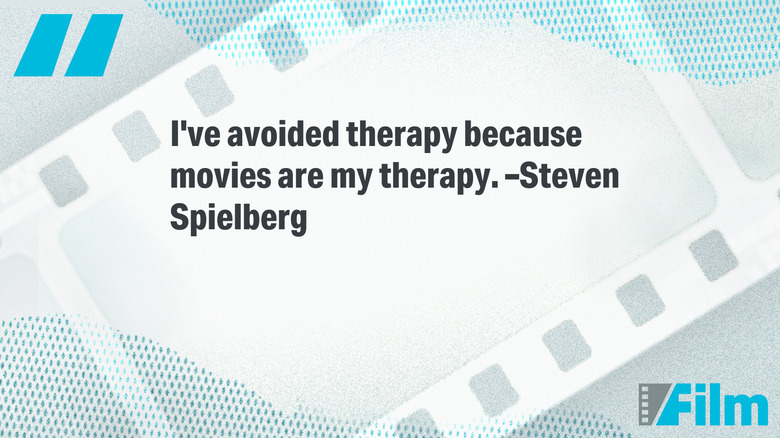
As the director himself famously noted, "I’ve avoided therapy because movies are my therapy." This admission serves as the cornerstone of our understanding of one of the 20th century’s most vital artists. Rather than seeking the clinical confines of a therapist’s office, Spielberg chose to project his anxieties, his childhood traumas, and his deepest wonder onto a 40-foot screen, inviting the world to bear witness to his internal evolution.
The Architecture of a Visionary: Main Facts
Steven Spielberg’s influence on the film industry cannot be overstated. Rising to prominence during the "New Hollywood" era of the late 1960s and 1970s, he stood alongside luminaries like George Lucas and Francis Ford Coppola as a vanguard of a new, director-driven age. However, while many of his contemporaries focused on genre deconstruction, Spielberg’s approach was deeply, often painfully, personal.
His methodology involves a unique fusion of high-concept spectacle and intimate human vulnerability. Whether it is the fear of abandonment represented by the absent fathers in his narratives or the obsessive need to capture the "miraculous" through a camera lens, Spielberg’s films act as a mirror to his own psyche. His willingness to confront these personal demons—publicly and repeatedly—is precisely what distinguishes him from his peers. It is a rare form of artistic "chutzpah" that has transformed him from a mere technician of suspense into a living cultural monument.
A Chronological Odyssey: From Phoenix to the Silver Screen
To understand the "cinematic therapy" that Spielberg describes, one must look at the progression of his work as a reflection of his own maturation.
The Formative Years (1946–1970s)
Born in Cincinnati and raised in Arizona, Spielberg’s childhood was marked by the complexities of a changing family dynamic. His parents’ divorce, a recurring motif in his work, served as the primary wound that he would spend decades attempting to stitch shut through storytelling. Early films like Duel and Jaws showcased his technical prowess, but it was Close Encounters of the Third Kind that first signaled his preoccupation with the search for something "out there"—a yearning for connection that mirrored his internal state.
The Middle Period (1980s–2000s)
During this era, the director began to tackle the reconciliation of his past. E.T. the Extra-Terrestrial remains the definitive cinematic expression of a child dealing with a broken home, offering a fantasy of reconciliation that reality had denied him. Later, in Indiana Jones and the Last Crusade, the focus shifted to the complex, often fractured relationship between father and son. These films weren’t just blockbusters; they were cathartic exercises.
The Later Years (2010s–Present)
The release of The Fabelmans in 2022 marked a turning point in this journey. It was the most explicit admission that his life’s work was a form of self-reflection. By dramatizing the very moments that shaped his love for filmmaking—the train crashes, the family secrets, the realization that art is the "most intoxicating drug"—he invited audiences to see the man behind the camera as clearly as the images on the screen. His recent work, including The Disclosure Day, continues this trend of using fiction to explore the boundaries of the known and the unknown.
Supporting Data: The Anatomy of an Obsession
The "therapy" theory is not merely an interpretation; it is supported by the recurring imagery found across his sprawling filmography. Critics and film historians have long noted specific patterns:
- The Absent Father/Broken Home: From E.T. to Hook and Catch Me If You Can, the figure of the father who leaves or is unreachable is a constant. By exploring this through different genres, Spielberg repeatedly "works through" the pain of his own father’s departure.
- The Obsession with Optics: In The Fabelmans, we see a young Spielberg using a camera to control his world, to make sense of the chaos of his parents’ marriage. This is not just a plot point; it is the fundamental reason he became a filmmaker. The lens is his shield and his scalpel.
- The "Miraculous" Encounter: Whether it is aliens or historical miracles, Spielberg’s characters are often defined by their capacity for "awe." This reflects a lifelong belief in the extraordinary, a belief he uses to counterbalance the mundane disappointments of reality.
Official Responses and Perspectives
Spielberg’s admission, first articulated in the 2017 Susan Lacy documentary Spielberg, provided the definitive key to his work. When he stated, "I’ve avoided therapy because movies are my therapy," he was acknowledging that the professional, high-stakes environment of a film set provided him with the structure that traditional therapy could not.
While the mental health community might advocate for a more traditional approach to processing trauma, one cannot deny the efficacy of Spielberg’s method. For a man who grew up in the public eye, his movies have served as a diagnostic tool. In interviews surrounding The Fabelmans, Spielberg reflected on the fear he felt in finally making such a vulnerable film, noting that while the movie was a release, it was also a daunting process of finally "taking the mask off."
The Implications: Why It Matters
What are the implications of a legendary director using their life as a psychological playground? For the audience, the effect is profound. Because Spielberg’s trauma is deeply rooted in universal human experiences—grief, longing, the complexity of family love, and the search for identity—his personal "therapy" becomes our own.
When we watch Indiana Jones reconcile with his father, we are not just watching an action movie; we are watching a proxy for our own family reconciliations. When we watch Schindler’s List or Munich, we are watching a man grapple with his own cultural identity and the weight of history.
Spielberg’s "therapy" has turned cinema into a communal experience. By refusing to hide his scars, he has emboldened generations of filmmakers to be equally honest. He has proven that the most "commercial" art can also be the most deeply personal.
Conclusion: A Legacy of Reflection
Ultimately, Steven Spielberg’s career stands as a testament to the power of transformation. He turned the isolation of his childhood into the shared wonder of the global audience. He chose to look through the lens rather than at the therapist, and in doing so, he created a body of work that serves as a permanent record of a soul in search of resolution.
Who needs a couch when you have a camera? For Spielberg, the screen is where the healing happens, and we are all better off for his refusal to seek a quieter, more private path to peace. As long as he continues to create, we continue to learn, not just about the art of cinema, but about the art of being human.










