

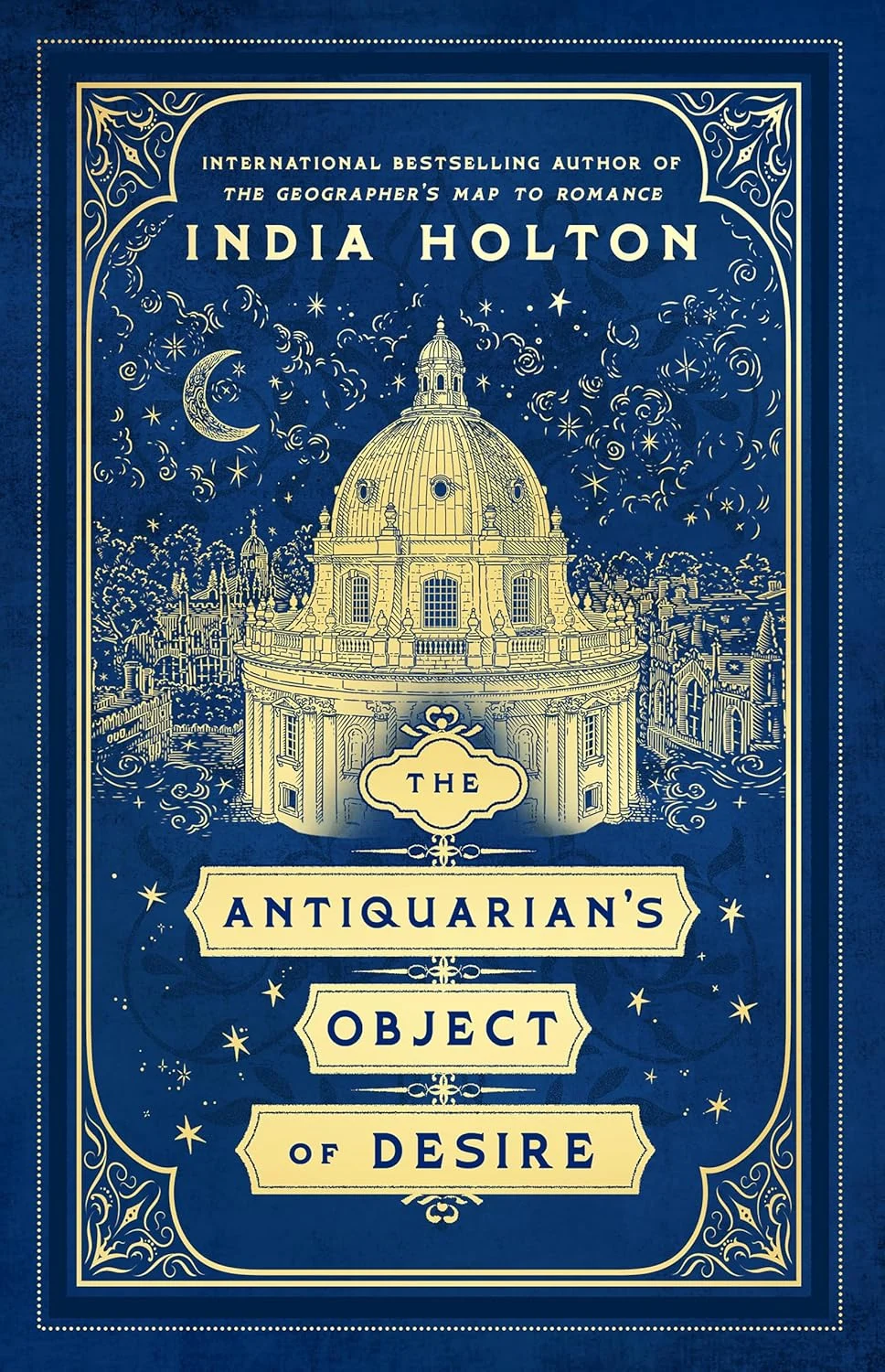
In the landscape of contemporary speculative fiction, few authors have managed to balance the whimsical with the profound quite like India Holton. With the release of The Antiquarian’s Object of Desire (2026), Holton brings her Love’s Academic trilogy to a definitive, explosive close. Set in an alternate Victorian England where magic is as common as high tea and social mores are as rigid as iron, the novel serves as both a delightful romantic comedy and a stinging critique of the patriarchal structures that have historically sought to gatekeep the ivory tower.
The Academic Landscape: From Dangerous Damsels to Love’s Academic
To understand the stakes of The Antiquarian’s Object of Desire, one must look back at the foundation laid by Holton’s earlier work. Her debut series, Dangerous Damsels (2021–2023), established a hallmark style: high-stakes adventures featuring pirates, spies, and witches navigating a world that demanded they remain small.
Love’s Academic (2024–2026) shifts the battlefield from the high seas to the hallowed, dusty halls of Oxford. Each entry in this trilogy focuses on a specific scholarly discipline—ornithology, geography, and now, in the final installment, history. However, these are not your traditional dusty-tome academics. They are "magical antiquarians," experts in artifacts that have a habit of detonating if handled incorrectly. It is a world where being a professor is a radical act for a woman, and where the threat of a "magical kaboom" is the only thing more dangerous than a dean’s disapproval.
Chronology of a Slow Burn: The Journey of Amelia and Caleb
The narrative centers on Professors Amelia Tarrant and Caleb Sterling. Their relationship is the quintessential "best-friends-to-lovers" trope, but with a twenty-year pedigree that defies standard genre conventions.
The Foundation (Boarding School Years)
Amelia and Caleb met as students, bonded by a shared commitment to a life of academic excellence. They adopted the motto Stabilitas Perpetuus—a vow of composure, organization, and a "stiff upper lip" so rigid that stress itself would supposedly flee in terror. This foundation of deep, platonic trust serves as the bedrock of the novel, setting the stage for a conflict that is as internal as it is external.
The Catalyst of Scandal
The plot accelerates when a seemingly innocuous act of comfort—a hug following the death of Amelia’s grandfather—is weaponized by the university’s gossiping senior faculty. Under the gaze of an overbearing patriarchal administration, the two are presented with a draconian ultimatum: marry to preserve their reputations, or face termination. The irony, of course, is that the society forcing them to marry is the very one that finds their professional competence threatening.
The "Public Enmity" Phase
To protect their careers, the duo adopts a desperate strategy: they must publicly pretend to loathe one another. This ruse, while necessary, becomes increasingly difficult as a new magical artifact—a sentient, mischievous spoon—begins to amplify their suppressed emotions. As the spoon feeds on the "thaumaturgic energy" of their unspoken yearning, it triggers chaotic, explosive magical outbursts, forcing the university to exile them to a haunted manor in Cumbria.
Supporting Data: Character Dynamics and Thematic Depth
The success of The Antiquarian’s Object of Desire lies in its subversion of traditional tropes. While the plot involves a mystery at the haunted Ravenscroft Manor, the true narrative weight is carried by the psychological evolution of the leads.
The "Howl" Archetype
Caleb Sterling is a standout character in modern romance. Often compared to the titular character of Howl’s Moving Castle, Caleb uses his charm and flamboyant exterior to hide a deep-seated insecurity. Despite his brilliance, he harbors a fear that he is "not enough"—that he is an outsider who doesn’t deserve the love of an academic of Amelia’s pedigree.
The Burden of "La Erudite Terrifante"
Amelia’s character arc is perhaps the most poignant in the trilogy. Labeled "La Erudite Terrifante" by her continental peers, she has spent her life curating an image of icy, unapproachable competence to survive in a man’s world. Holton explores the toll this takes on a woman’s psyche: the feeling that one must be either "likable" or "capable," but never both. Amelia’s journey toward accepting her own softness—her "expressive softy" core—is the heart of the book.
Official Responses and Literary Reception
Critical reception has praised Holton’s ability to weave "dark academia" aesthetics with "magical mayhem." The consensus among reviewers is that while the pacing of the mystery plot is deliberately measured, the emotional payoffs are significant.
"Holton is as tender as she is tongue-in-cheek," noted one literary observer. The inclusion of the wider cast from the previous two books adds a sense of community to the trilogy, showing that the solidarity between women in academia is not just a thematic goal but an active, supportive network. The novel’s use of dual-POV allows readers to see the most intimate, unvoiced desires of both characters long before they are able to articulate them to one another, creating a "slow burn" that is both frustrating and deeply rewarding.
Implications: The Politics of Professional Identity
Beyond the romance and the magic, The Antiquarian’s Object of Desire poses a broader question about the nature of success. Through Amelia and Caleb, Holton highlights the impossibility of being truly authentic in a professional environment that demands conformity.
- The Price of Authenticity: The novel demonstrates that when women or marginalized individuals achieve high status in academia, they are often derided as "unlikable" to delegitimize their work.
- The Myth of the "Stiff Upper Lip": By the end of the book, the protagonists realize that their obsession with composure—their Stabilitas Perpetuus—was actually a cage. True professional and personal liberation comes from shedding the need for external validation.
- The Collective Experience: By linking the three books, Holton suggests that these struggles are not isolated incidents but part of a larger structural shift in this alternate Victorian history.
Conclusion: A Resolution of Self-Love
The climax of the novel occurs not in a grand magical battle, but in a moment of personal declaration. When Amelia finally chooses to reject the weight of societal expectations, the emotional resonance is palpable. Her declaration—"My soul is friends with yours. I want no more limits on expressing that"—serves as the perfect bookend to a series that has consistently advocated for the right of its characters to be both brilliant and vulnerable.
The Antiquarian’s Object of Desire is more than just the conclusion to a trilogy; it is an assertion of joy. It argues that even in a world of explosions, haunting manors, and stifling social codes, the most radical thing one can do is to love oneself and one’s partner without apology. India Holton has crafted a finale that will likely remain a standard-bearer for the "academic romance" subgenre for years to come.










