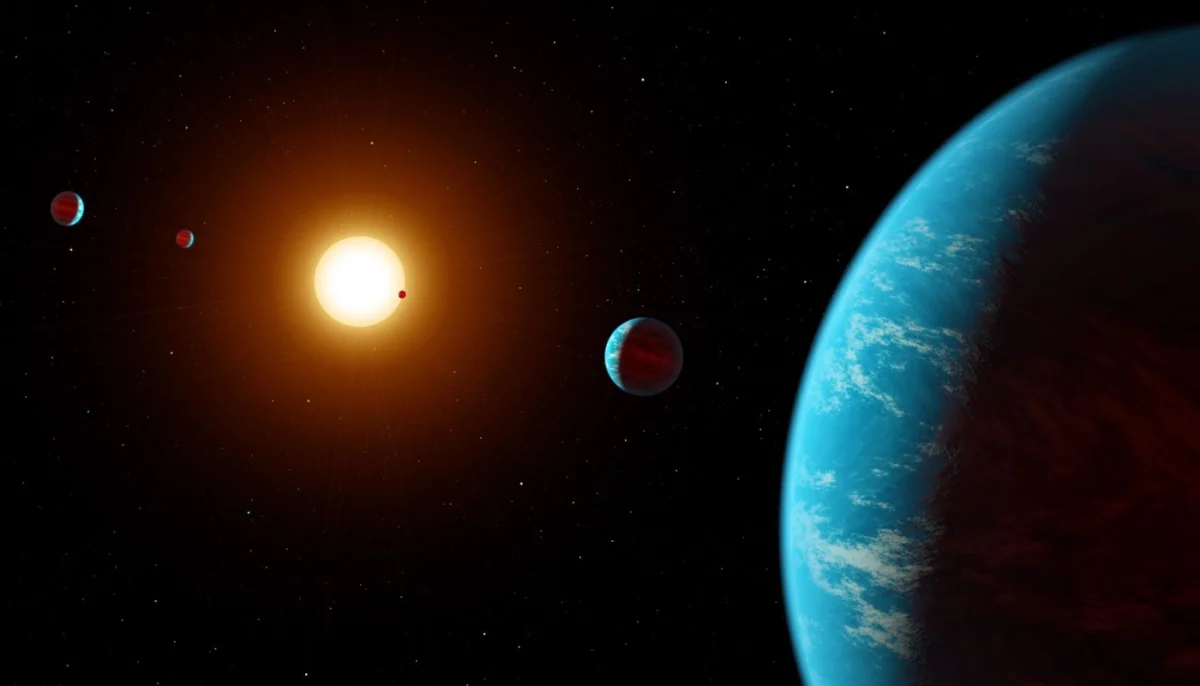
Introduction: The Intellectual Zing of Synchronicity
There is a distinct, electric sensation that accompanies the convergence of two disparate fields of study. It is the “intellectual zing” that occurs when a presentation in one domain unexpectedly illuminates a dormant theory in another. This phenomenon recently visited the author, arriving nearly three decades after a first reading of Geoffrey Landis’s seminal paper, The Fermi Paradox: An Approach Based on Percolation Theory.
The catalyst was, perhaps unexpectedly, a video essay by zoologist and science communicator Lindsay Nikole. While her work—often focused on the terrestrial oddities of the animal kingdom—seemed worlds away from the cold vacuum of interstellar space, her analysis of feline genetics provided a missing piece to an age-old cosmic puzzle. By bridging the gap between population genetics and galactic expansion, we may have found a more robust explanation for why the universe remains, to our limited perspective, hauntingly silent.
Main Facts: The Silence of the Cosmos
The Fermi Paradox is not so much a paradox as it is a profound statistical dissonance. Enrico Fermi’s famous inquiry, "But where is everybody?", remains the defining question of SETI (Search for Extraterrestrial Intelligence).
The logic is deceptively simple:
- The galaxy is billions of years older than the Earth.
- Even with sub-light, "slow-boat" propulsion, a single civilization could colonize the entire Milky Way within a few million years—a blink of an eye in geological terms.
- If civilizations are common, we should see evidence of them everywhere.
- We do not.
For decades, we have debated whether this silence is due to the "Great Filter," the inherent danger of technology, or simply the immense distances involved. However, Landis’s Percolation Theory offers a more grounded approach: colonization is not a relentless wave of expansion, but a patchy, stochastic process that often dies out before it truly begins.
Chronology: From Physics to Biology
To understand the new synthesis, we must examine the timeline of these concepts:
- 1950: Enrico Fermi poses his question during a lunch at Los Alamos, sparking the modern debate on extraterrestrial life.
- 1993: Geoffrey Landis publishes The Fermi Paradox: An Approach Based on Percolation Theory. He argues that colonization will be expensive, difficult, and prone to failure, creating a "patchy" network rather than a uniform expansion.
- 2024: Lindsay Nikole releases an analysis of cheetah population genetics, detailing how repeated environmental bottlenecks have rendered the species genetically "f***ed"—dangerously uniform and vulnerable to extinction.
- Present Day: By applying the biological reality of "founder effects" and "genetic bottlenecks" to the logistical model of interstellar colonization, we arrive at a theory of Biological Percolation, which suggests that even if civilizations begin to expand, they may reach a point of "genetic exhaustion" that terminates their progress.
Supporting Data: The Logistics of Expansion
Landis’s model relies on the idea that colonization is limited by the "practical distance" a civilization is willing or able to travel. If we consider the Stellar Database, the local neighborhood of Sol illustrates this limitation clearly.
If we assume a maximum travel radius of 6 light-years per leg, Sol is connected to only two systems: Alpha Centauri and Barnard’s Star. These, in turn, have limited connections to others. The network is sparse. If the probability ($P$) of a colony deciding to further colonize is low—due to resource constraints or the psychological disconnect caused by light-speed lag—then the "percolation probability" falls below the critical threshold ($P_c$). When $P < P_c$, the expansion inevitably terminates after a finite number of steps.
The Genetic Bottleneck Simulation
When we introduce the biological perspective, the situation worsens. Every time a civilization jumps to a new star system, it is effectively a "founder event." Only a tiny subset of the original population leaves. This creates a genetic bottleneck.
If we assume a high-efficiency colonization where 90% of genetic diversity is preserved per jump, the results are startling:
| Colony | % of Original Diversity Remaining |
|---|---|
| 1 | 90% |
| 2 | 81% |
| 3 | 73% |
| 4 | 66% |
| 5 | 59% |
| 6 | 53% |
| 7 | 48% |
| 8 | 43% |
| 9 | 39% |
| 10 | 34% |
By the tenth generation of colonies, the population is so genetically homogenous that it faces the same fate as the modern cheetah: a catastrophic lack of resilience. A single pathogen, a minor change in atmospheric composition, or a slight shift in agricultural stability could wipe out the entire colony because there is no genetic variation to provide resistance.
Official Responses: The Scientific Consensus
While the "Great Filter" and "Dark Forest" theories remain popular, the scientific community has increasingly turned toward models of limited expansion.
Astrophysicists like Adam Frank and Frank Drake have often noted that the "cost" of long-term colonization is frequently underestimated in science fiction. The consensus is shifting toward the idea that civilizations do not "spread like a virus" across the galaxy, but rather exist as isolated, ephemeral islands. The Percolation Theory, enriched by the genetic argument, provides a mathematical and biological backbone to this "Island Universe" model.
Critics of the genetic argument point to the possibility of "technological intervention"—that future societies will use CRISPR or synthetic biology to artificially manufacture diversity. However, this assumes that the species survives long enough to develop such technologies while simultaneously suffering from the stagnation inherent in a bottlenecked population.
Implications: A Fragile Future
If the combination of percolation limits and genetic bottlenecks is accurate, the implications for the Fermi Paradox are profound:
1. The Death of the "Empire" Model
We must abandon the trope of the sprawling galactic empire. If a civilization is essentially a "genetic cheetah," it cannot expand indefinitely. It is trapped by its own biological (or even cultural) limits. Any attempt to reach for the stars beyond a certain threshold would lead to the rapid decline of the species’ vitality.
2. The Great Silence is Not a Choice
We often ask if aliens are hiding from us. Perhaps they aren’t hiding; perhaps they are simply dead. If the "founder effect" is an intractable barrier, then most interstellar expansion attempts across the galaxy may have ended in silent, localized extinction events within a few centuries of arrival.
3. A New Directive for Humanity
If we, as a species, harbor dreams of traversing the stars, we must treat genetic diversity as a strategic, non-renewable resource. We cannot simply send a few hundred individuals to a new world and hope for the best. We would need to transport the massive, complex bio-data of our entire planet, maintaining a "genetic firewall" against the inevitable entropy of the bottleneck.
Conclusion: The Finality of the Percolation
Geoffrey Landis’s assertion that "colonization will always terminate after a finite number of colonies" is supported by the physics of travel and the biology of reproduction. When we view the galaxy through this lens, the Fermi Paradox ceases to be a mystery of "where are they?" and becomes a testament to the fragility of life.
The universe may be a vast, empty expanse not because life is rare, but because life is inherently prone to "genetically f***ing itself" the moment it tries to reach too far. We are, perhaps, a species currently playing with the embers of a fire, wondering why we haven’t seen the glow of other campfires in the distance. The answer may be that, once the fuel is spent and the bottleneck is reached, the light simply goes out.
To expand, we must not only solve the propulsion problem; we must solve the problem of our own biological limitations. Until then, the silence of the galaxy will remain our most reliable companion.