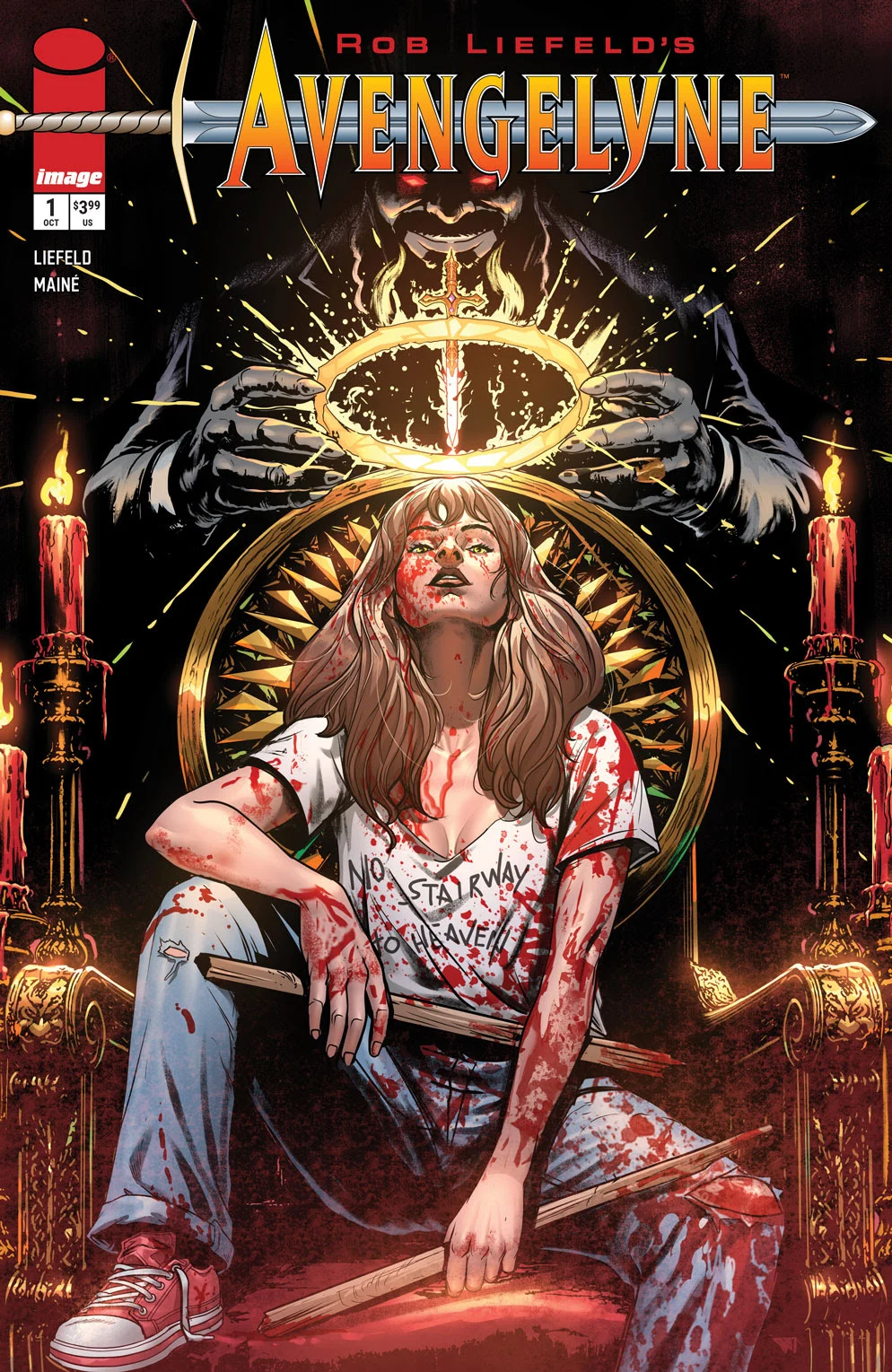
The landscape of independent comics is set for a seismic shift this November as one of the most recognizable figures of the 1990s comic book boom returns to the spotlight. Rob Liefeld, the visionary creator behind Youngblood and Deadpool, has officially announced the relaunch of his seminal supernatural heroine, Avengelyne. Published through Image Comics—the powerhouse publisher Liefeld helped co-found—this new series promises a modern reimagining of the character, coinciding with a high-profile feature film development at Warner Bros.
Main Facts: A New Chapter for the Avenging Angel
The upcoming Avengelyne series is positioned as both a celebration of the character’s legacy and a fresh entry point for a new generation of readers. The series features the collaborative efforts of Liefeld and rising artistic talent Daniel Mainé, whose kinetic, high-detail style has been touted by Liefeld as the perfect visual accompaniment to the character’s return.

The narrative hook for this relaunch centers on a profound crisis of faith. The story introduces a disillusioned priest, a man whose spiritual foundations have crumbled under the weight of an indifferent world. His trajectory changes violently when the titular Avengelyne—a fallen angel cast out of Heaven—suddenly manifests in his life. This divine intrusion immediately attracts the attention of Belisle, a formidable demon lord. Belisle’s machinations set the stage for a high-stakes supernatural war, with the priest and the angel trapped in the crosshairs of a hellish agenda aimed at corrupting or destroying the celestial warrior.
The launch is bolstered by an expansive variant cover program, featuring industry titans including Diógenes Neves, Shannon Maer, Dan Lawlis, Andy Park, and Ben Bradi, ensuring the title will be a centerpiece for collectors upon its release.
Chronology: From 90s Cult Classic to Modern Media Property
To understand the weight of this return, one must look at the historical trajectory of the character. Created by Rob Liefeld and Cathy Christian in 1995, Avengelyne debuted during the height of the "Image Revolution," a time when creator-owned comics were challenging the long-standing dominance of the Big Two publishers.
- 1995: The Debut: Avengelyne arrived during a period of extreme creative experimentation. As an angel tasked with hunting demons on Earth, she became a symbol of the "Bad Girl" art movement of the 90s, characterized by elaborate costume designs and high-octane, action-oriented storytelling.
- The Mid-90s Transition: Following her initial success at Maximum Press (Liefeld’s imprint at the time), the character underwent various creative iterations, jumping between publishers and creative teams, which allowed her to evolve from a simple archetype into a more nuanced character in the eyes of hardcore fans.
- The 2000s and 2010s: During this era, Avengelyne maintained a dedicated cult following. Liefeld frequently teased a return, waiting for the right creative alignment and the right industry climate to reintroduce the character to a modern audience.
- The Warner Bros. Development: In recent years, the character’s potential as a transmedia property became undeniable. The announcement of a feature film development at Warner Bros. served as the catalyst for the current comic book push, aiming to align the source material with a broader cinematic vision.
- November 2026: The official launch of the new ongoing series represents the most significant push for the brand in nearly three decades.
Supporting Data: The Power of the "Liefeld Brand"
The commercial viability of an Avengelyne relaunch is supported by several key factors. First, the "nostalgia cycle" in the comic book industry is currently at an all-time high. Readers who grew up on the 90s Image aesthetic are now in their prime spending years, and the demand for "prestige" revivals of classic creator-owned properties has rarely been higher.

Furthermore, the data surrounding Liefeld’s previous projects suggests that his specific brand of storytelling—characterized by heavy line weights, dynamic anatomy, and explosive pacing—retains a massive audience. When looking at the "variant cover" model, the inclusion of artists like Andy Park (known for his work with Marvel Studios’ visual development) suggests a deliberate attempt to bridge the gap between comic book fans and the mainstream film-going public.
The inclusion of a demon lord as a primary antagonist (Belisle) also signals a return to the "epic" scale of storytelling that defined early Image Comics. By stripping away the bloat of three decades of continuity, the new series relies on a "clean slate" strategy, which is statistically proven to increase first-issue sales by attracting lapsed readers who are intimidated by complex lore.

Official Responses: The Creative Philosophy
Rob Liefeld’s enthusiasm for this project is palpable. In a statement regarding the partnership with Daniel Mainé, Liefeld emphasized that the delay in bringing Avengelyne back was a tactical choice rather than a lack of interest.
"Avengelyne is all the way back!" Liefeld remarked. "Finding a creative partner on par with Daniel Mainé was essential in creating these new adventures. Daniel is blowing me away; he is a perfect match for our Avenging Angel. As with all my titles, I wait until the right talent manifests, and I wouldn’t be doing this without Daniel. His work is certain to impress."

This sentiment underscores a critical shift in how Liefeld approaches his modern work. Rather than rushing to capitalize on the character’s name recognition, he has prioritized the visual synergy between the artist and the subject matter. For a character like Avengelyne, whose identity is deeply tied to her striking visual design, this emphasis on artistic collaboration is the bedrock of the project’s perceived quality.
Implications: The Future of Creator-Owned Media
The relaunch of Avengelyne is more than just another comic book on the shelf; it serves as a case study for the current state of independent publishing.

1. The Transmedia Pipeline
With a major studio film in development, Avengelyne highlights the modern necessity of the "transmedia pipeline." Successful comics are no longer judged solely by their monthly print circulation, but by their ability to act as a proof-of-concept for larger, more expensive intellectual property (IP) adaptations. If this comic succeeds, it validates the strategy of using comics as "storyboards" for Hollywood.
2. The Return of the 90s Aesthetic
The industry is currently seeing a resurgence in the "hyper-stylized" art of the 1990s. By embracing this aesthetic rather than running from it, Liefeld is leaning into his own strengths. The success of this series could signal to other publishers that there is a hunger for the bold, unapologetic, and larger-than-life storytelling that dominated the comic shops of the mid-90s.

3. The Power of the Independent "Big"
Image Comics remains the only true competitor to the massive, corporate-owned universes of DC and Marvel. By putting significant resources behind Avengelyne, Image is reinforcing its commitment to its founding principles: that a single character, if managed correctly, can anchor an entire universe.
4. Market Impact
Finally, the impact on local comic shops (LCS) cannot be ignored. A high-profile launch from an industry legend acts as a "traffic driver." Collectors who may have stopped visiting their local shops will be incentivized to return for the variant covers, providing a much-needed boost to the retail sector. The strategy of using established creators to drive foot traffic is a tried-and-true method that continues to be the lifeblood of the physical comic book industry.

As November approaches, the industry watches with keen interest. Whether Avengelyne will reach the heights of its 90s glory days or serve as a foundational piece for a new multimedia franchise remains to be seen. However, one thing is certain: the Avenging Angel is back, and she is looking to reclaim her place at the top of the comic book hierarchy.