For years, the internal thermal dynamics of Nvidia’s flagship graphics cards have remained something of a "black box" to the average enthusiast. While tools like MSI Afterburner and HWiNFO have long provided aggregate data, the specific, per-module thermal health of the VRAM and the intricate hotspot readings of the silicon die were reserved for Nvidia’s own internal engineering tools, such as MODS (Modular Diagnostic Software).
That era of opacity is coming to an end. Through a remarkable community-driven effort led by Overclock.net (OCN) user "asder00," a new wave of monitoring capabilities has been unlocked, allowing users to track every thermal facet of Nvidia’s latest "Blackwell" RTX 50-series GPUs. This breakthrough represents a significant shift in the landscape of PC hardware diagnostics, granting power users, overclockers, and system builders unprecedented visibility into the performance and health of their high-end hardware.
The Technical Landscape: NVAPI and the Limitations of Access
To understand why this development is so significant, one must first understand the role of the Nvidia API (NVAPI). NVAPI serves as the bridge between Nvidia’s hardware and the software ecosystem. It is the gatekeeper that determines which data points—such as core clock, voltage, fan speed, and average GPU temperature—are exposed to third-party developers.
For decades, Nvidia has maintained a conservative stance regarding the data exposed through NVAPI. While this ensures stability and prevents the accidental exposure of sensitive or confusing data, it has historically stifled the ability of monitoring software to provide comprehensive diagnostics. Developers of popular utilities like MSI Afterburner, bound by legal and technical partnerships with hardware vendors, have been restricted to the "official" sensor pool provided by the API.
However, the hardware enthusiast community has never been satisfied with these limitations. When manufacturers keep data behind a digital curtain, the collective ingenuity of the modding community inevitably finds a way to peek behind it. The recent unlocking of individual GDDR7 memory module temperatures is the latest chapter in a long-standing tradition of enthusiast-led hardware transparency.
A Chronology of Discovery: From Hotspots to Per-Module Granularity
The path to this discovery was not an overnight success but rather a cumulative effort of reverse engineering and collaborative trial-and-error.
- The Early Days of Obscurity: Historically, GPU monitoring was limited to a single "GPU Temperature" sensor. Users had to rely on thermal pads and heat sinks to do their job without knowing exactly how hot their VRAM was running.
- The Hotspot Breakthrough: Recently, the community made significant headway by gaining access to the "hotspot" sensor—a metric that identifies the highest temperature point on the GPU die, which can often be 10–20 degrees Celsius higher than the reported average. This was previously locked away in Nvidia’s internal MODS tool.
- The Rise of the "Hotspot.dll" Plugin: Building on the momentum of the hotspot discovery, developer "asder00" spearheaded the creation of a specialized plugin. Designed specifically for MSI Afterburner, this plugin acts as a bridge, allowing the software to poll data that the standard NVAPI ignores.
- Cross-Industry Collaboration: The project was a massive, collaborative effort. It involved key figures such as Alexey "Unwinder" Nicolaychuk (the mastermind behind MSI Afterburner), the open-source Linux GDDR6/GDDR6X developer known as "olealgoritme," renowned Brazilian hardware modder Paulo Gomes, and Martin "Mumak" Malík, the creator of HWiNFO.
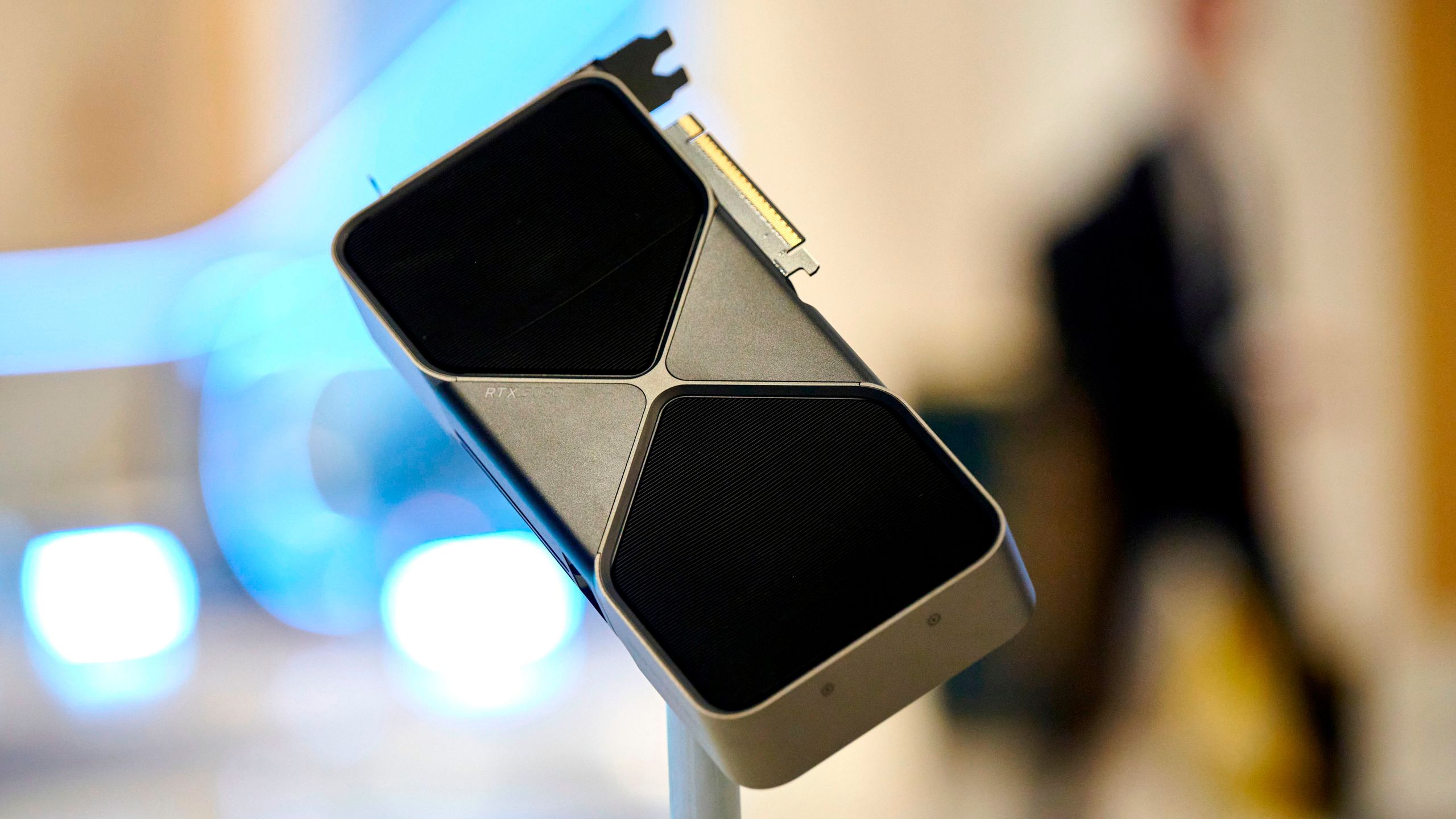
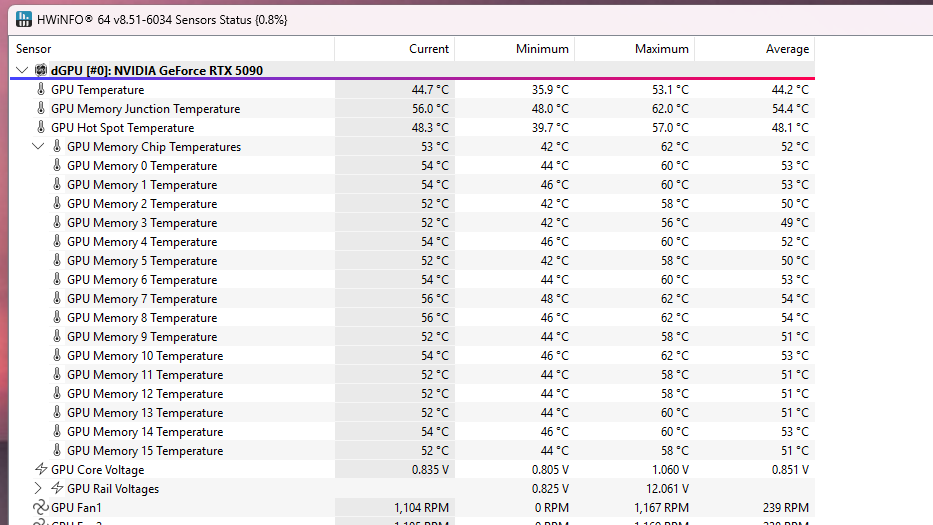
- Validation and Implementation: As of the latest beta release of HWiNFO (v8.51-6304), the functionality has been integrated directly. Testing on an RTX 5090 confirmed the system could accurately report temperatures for all 16 individual GDDR7 memory modules simultaneously.
Supporting Data: Why VRAM Temperature Matters
The shift to per-module monitoring is not just for show; it is critical for modern performance tuning. The Blackwell architecture, paired with ultra-fast GDDR7 memory, generates immense heat density.
GDDR7 represents a significant leap in memory bandwidth, but with higher performance comes higher thermal output. When a memory module runs hot, it does not always lead to a system crash; instead, it can lead to "silent" throttling—where the memory controller downclocks the VRAM to protect the hardware, leading to stuttering, frame drops, and reduced 1% low frame rates in games.
By having access to per-chip data, users can now identify "hot spots" on the PCB that might indicate:
- Improper Mounting Pressure: If one specific module is significantly hotter than the others, it may indicate a thermal pad that is too thick or uneven pressure from the cooler’s heatsink.
- Airflow Blockages: It allows users to optimize their case fans to direct airflow specifically toward the region of the card that is struggling.
- Stability Limits: Overclockers can now identify exactly which memory chip is the "weak link" in their setup, allowing for more precise voltage and clock speed adjustments.
The Implications: Transparency and Control
The implications of this breakthrough ripple across several segments of the PC industry, from the casual gamer to the professional data scientist.
For the Hardware Enthusiast
The ability to see per-module thermals changes the game for aftermarket cooler installations. Users who void their warranties to install water blocks or high-end air coolers now have a "real-time audit" of their work. If the temperatures are not uniform across the board, they know instantly that their thermal interface material (TIM) application or pad placement requires refinement.
For Diagnostic and Warranty Support
Historically, diagnosing a "bad" GPU has been a guessing game. A user might experience artifacts, but because the average temperature looked fine, they couldn’t prove a hardware fault. With individual module tracking, users can now provide empirical, granular data to manufacturers when submitting an RMA (Return Merchandise Authorization). This data is difficult for support departments to ignore.
For Software Developers
While MSI Afterburner is currently utilizing a plugin-based workaround, it is highly likely that other industry-standard tools like AIDA64, GPU-Z, and various Linux-based sensor monitoring suites will integrate this data natively. Since these tools are not strictly bound by the same partner agreements as MSI, the barrier to entry for full implementation is much lower.
Official Responses and the Future of Thermal Monitoring
As of this writing, Nvidia has not issued a formal statement regarding the community’s circumvention of their sensor access protocols. Historically, the company has remained protective of its internal diagnostics tools, viewing them as proprietary assets for manufacturing and quality control.
However, the community’s success raises a question: Should this data be official? There is a growing argument that as GPU prices climb and hardware complexity increases, transparency regarding thermal performance should be a standard feature, not a hidden "easter egg" unlocked by modders.
By keeping these sensors hidden, Nvidia inadvertently creates a "knowledge gap" where the consumer is less informed about their own purchase. Conversely, by embracing this level of transparency, Nvidia could potentially reduce the number of RMAs caused by users who simply don’t know how to troubleshoot thermal throttling.
Conclusion: A New Era of Visibility
The unlocking of individual thermal sensors for the Blackwell RTX 50-series is a testament to the persistent, inquisitive nature of the PC enthusiast community. What started as a hidden metric in a closed-source diagnostic tool has become a powerful utility for the end-user.
Whether you are an RTX 5090 owner looking to squeeze the last percentage of performance out of your GDDR7 memory, or an RTX 5050 user wanting to ensure your card is operating within healthy parameters, the ability to monitor individual components is a massive win for the consumer. As this technology matures and becomes integrated into the broader monitoring ecosystem, the "black box" of the graphics card will finally be fully illuminated, shifting the power dynamic from the manufacturer back to the user.
As we look toward future GPU architectures, it is clear that the community will continue to demand this level of granular control. For now, the "Hotspot.dll" and the HWiNFO beta stand as the latest milestones in the ongoing journey toward complete system transparency.