Pevita Pearce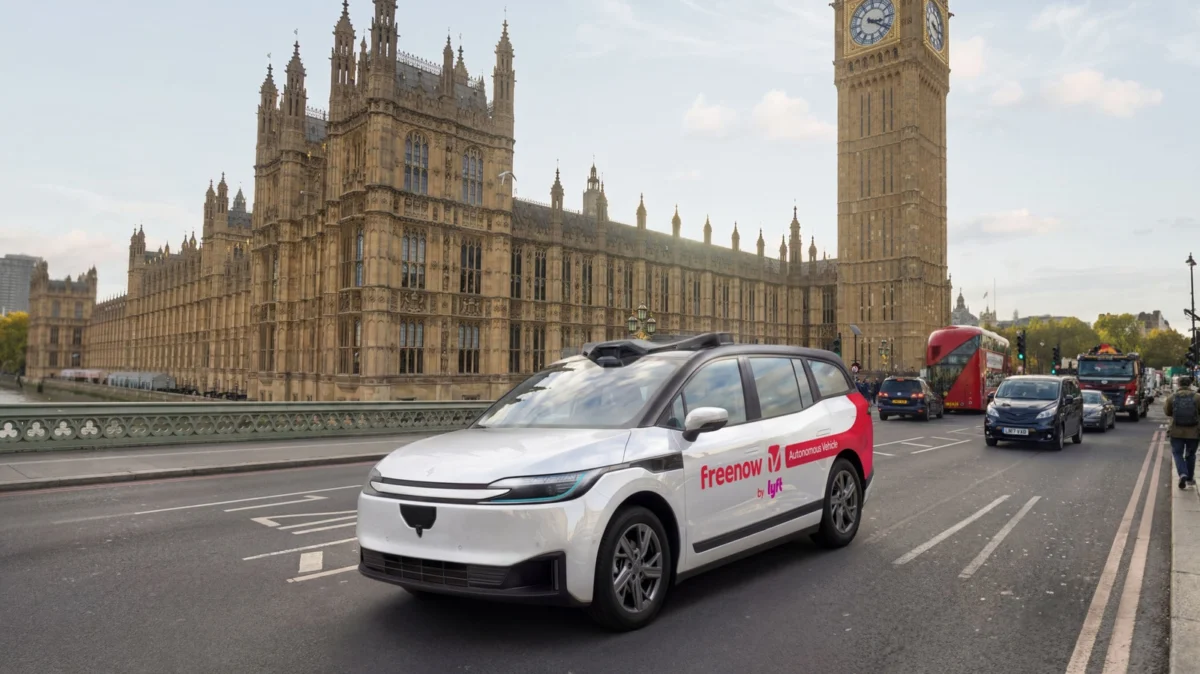
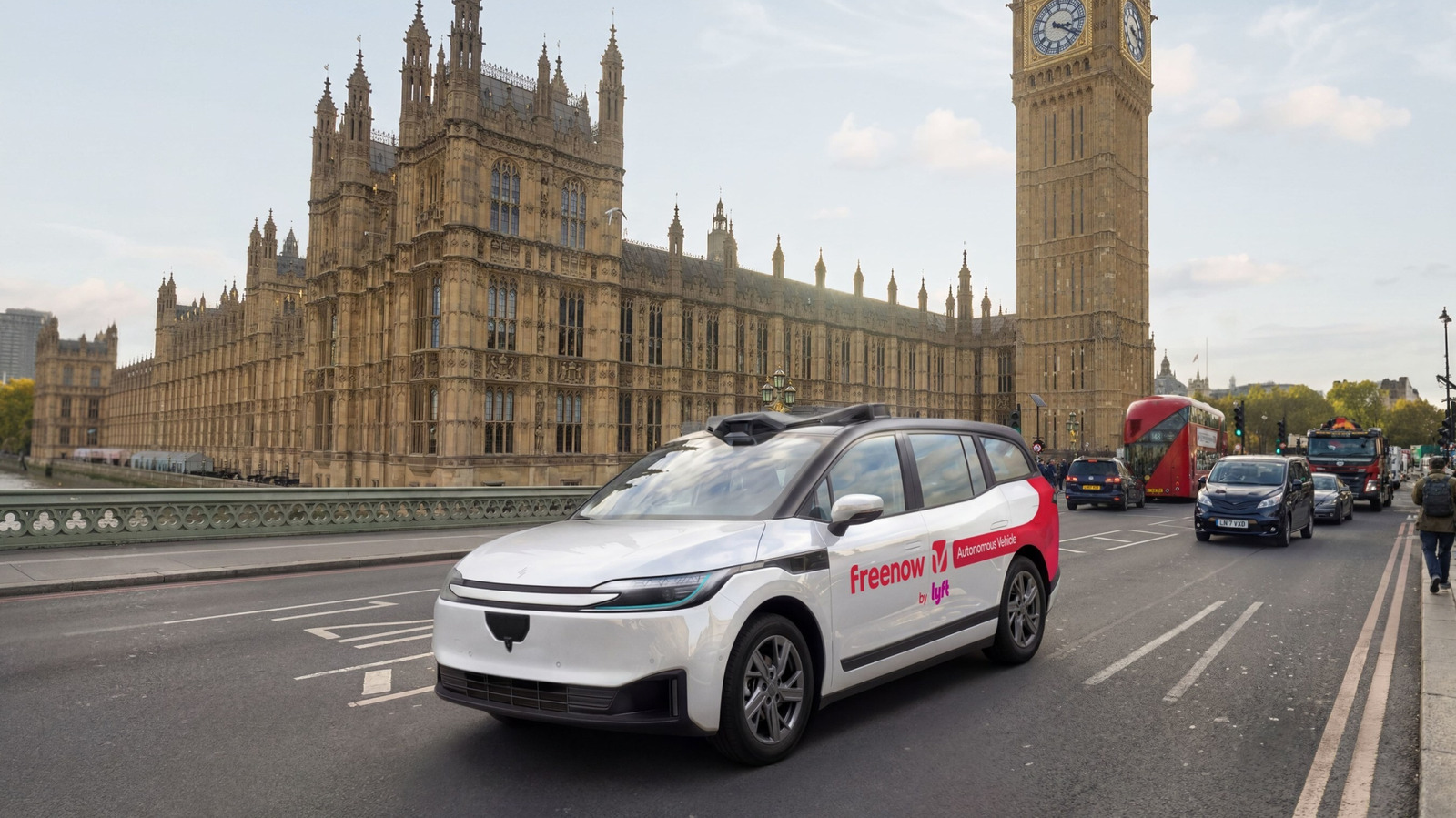
London, a city historically defined by its iconic black cabs and winding, complex Victorian-era streets, is becoming the latest high-stakes testing ground for the global autonomous vehicle (AV) revolution. In a significant move that signals the deepening intersection of Eastern artificial intelligence and Western mobility platforms, Baidu has officially launched its Apollo Go RT6 robotaxi testing program in the UK capital.
Supported by a strategic partnership with Lyft and its European subsidiary, Freenow, the initiative marks a pivotal milestone in the race to automate urban transportation. While human safety drivers will remain behind the wheels during this initial phase, the long-term objective is clear: the deployment of thousands of autonomous vehicles across the European continent, fundamentally altering the fabric of urban transit.
The Core Partnership: Fusing Tech with Infrastructure
The arrival of the Apollo Go RT6—Baidu’s sophisticated, purpose-built autonomous electric vehicle—is not an isolated technological experiment. It is the product of a calculated merger of capabilities. Baidu provides the "brains" of the operation: a highly advanced AI-driven autonomous driving stack that has already logged millions of miles in complex urban environments across China.
Lyft, meanwhile, brings the logistical backbone. By leveraging its acquisition of Freenow, the German-based mobility giant, Lyft has secured an immediate, ready-made taxi and private-hire network. This integration is designed to solve the "last mile" problem of autonomous deployment—ensuring that when the vehicles are ready for public use, there is already an existing user base and a regulatory-compliant booking interface.
The service, branded as "Freenow by Lyft," is currently initiating its rollout in the London borough of Brent. This location, characterized by a mix of residential zones and arterial roads, offers a controlled yet sufficiently challenging environment to gather telemetry and refine the vehicle’s decision-making algorithms.
A Chronology of the London Autonomous Pivot
The roadmap to this week’s announcement has been carefully staged over the past eighteen months:
- Early 2023: Initial reports surface regarding Baidu’s expansionist ambitions, with the company signaling its intent to enter the European and UK markets.
- Late 2023: Lyft completes the strategic acquisition of Freenow for $197 million, a move explicitly intended to provide the physical infrastructure needed for an autonomous fleet rollout in Germany and the UK.
- Mid-2024: Waymo, the industry incumbent, begins testing its Jaguar I-Pace autonomous fleet in London, signaling to the UK government that the technology has reached a level of maturity that warrants serious regulatory attention.
- Late 2024: The UK government formally launches its robotaxi pilot program, establishing a legal framework for testing.
- Present Day: Baidu and Lyft officially commence road testing in London with the Apollo Go RT6, marking the beginning of a multi-year transition toward public-facing, driverless service.
- 2027 (Projected): The target window for the first public-facing, fully autonomous rides available via the Freenow by Lyft app, subject to final regulatory clearance.
Supporting Data: The Scale of the Ambition
The deployment is not merely a token presence. Industry insiders suggest that the partnership aims to eventually operate a fleet numbering in the thousands. The RT6 vehicles themselves are engineering marvels designed specifically for the taxi market. Unlike retrofitted passenger sedans, the RT6 is a modular vehicle that features a detachable steering wheel—though in London, these will remain in place for the duration of the testing phase to satisfy safety mandates.
The choice of London as a testing hub is grounded in data. Transport for London (TfL) manages one of the most complex traffic environments in the world. Success here serves as a "gold standard" credential. If an autonomous system can navigate the irregular junctions, high pedestrian density, and unpredictable weather patterns of the UK capital, it is arguably ready for deployment in almost any other major city in the Western world.
The Competitive Landscape
Baidu and Lyft are not alone in their pursuit of the London market. The city has become a microcosm of the global autonomous arms race:
- Waymo: With its Jaguar I-Pace fleet, Waymo continues to lead in public perception and testing duration, focusing on high-resolution mapping and safety-first sensor integration.
- Wayve and Uber: In a contrasting approach, the UK-based startup Wayve—which focuses on end-to-end "deep learning" rather than traditional rule-based mapping—is partnering with Uber to bring autonomous ride-hailing to the platform.
- Local Regulatory Hurdles: All players are currently in a delicate dance with the UK government. The Department for Transport is currently drafting the "Automated Vehicles Act," which will create the legal liability framework necessary for companies to transition from human-supervised testing to true driverless operation.
Official Responses and Regulatory Sentiment
The tone from official bodies remains cautiously optimistic. Transport for London has emphasized that any deployment of autonomous technology must prioritize the safety of vulnerable road users, including cyclists and pedestrians.
In a recent statement, government spokespeople noted that the UK is "one step closer to booking taxi and bus-style self-driving vehicles," provided that the technology proves it can consistently outperform human drivers in reaction time and adherence to traffic laws. The current testing phase in Brent is being conducted in close coordination with local councils and TfL to ensure that the influx of high-tech hardware does not disrupt public services or exacerbate congestion.
For their part, the companies involved—Baidu and Lyft—have stressed that they are "guests" in the London ecosystem. They are prioritizing the integration of their data feeds with municipal traffic management systems, a move that is intended to build public trust before the 2027 launch date.
Implications: The Future of Urban Mobility
The implications of this rollout extend far beyond the convenience of a smartphone-summoned ride.
Economic Impact
The transition to autonomous taxis could significantly lower the cost of urban transit. By removing the cost of the human driver, the "cost-per-mile" of a ride-hail service could potentially drop to a point where it becomes a viable alternative to personal car ownership. This, in turn, could lead to a decline in vehicle density in city centers.
Urban Planning
City planners are watching the Freenow by Lyft tests with keen interest. If autonomous fleets can be managed via a centralized, algorithmic grid, it could lead to "dynamic routing," where vehicles are pre-positioned in areas of high demand before passengers even request a ride, thereby reducing the "deadheading" (driving empty) that contributes to urban gridlock.
The Social Contract
There is, however, an inevitable friction point regarding labor. The taxi and private-hire industry in London is a significant employer. The shift toward automation represents an existential challenge to the traditional gig-economy driver. How the UK government balances the drive for innovation with the protection of these livelihoods will be one of the most significant policy challenges of the coming decade.
Conclusion
As the Baidu Apollo Go RT6 navigates the streets of Brent, it serves as a silent, rolling testament to the inevitable shift toward an autonomous future. The path from this initial testing phase to a fully realized, driverless transport network is long, fraught with technical, legal, and social hurdles. However, the alignment of a tech giant like Baidu with a mobility powerhouse like Lyft suggests that the "robotaxi era" is no longer a distant sci-fi concept—it is a scheduled arrival.
By 2027, the London commute may look fundamentally different, transforming the city into a global showcase for how artificial intelligence can reshape the oldest of human activities: getting from point A to point B.

 Lina Hope