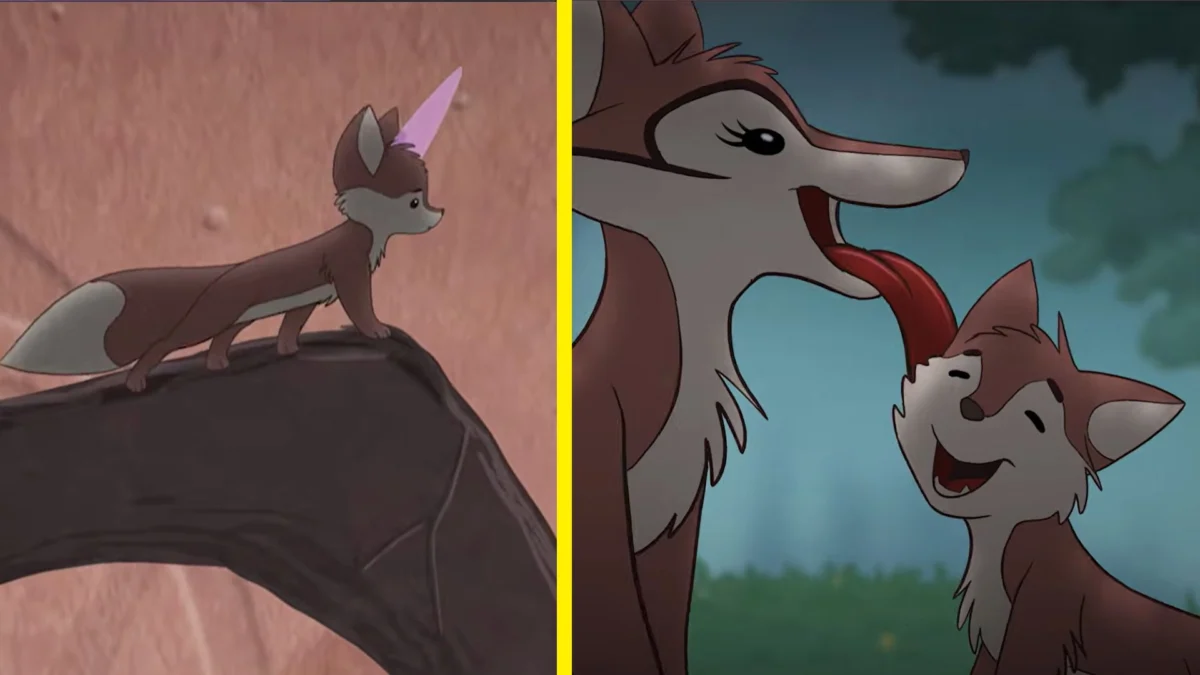
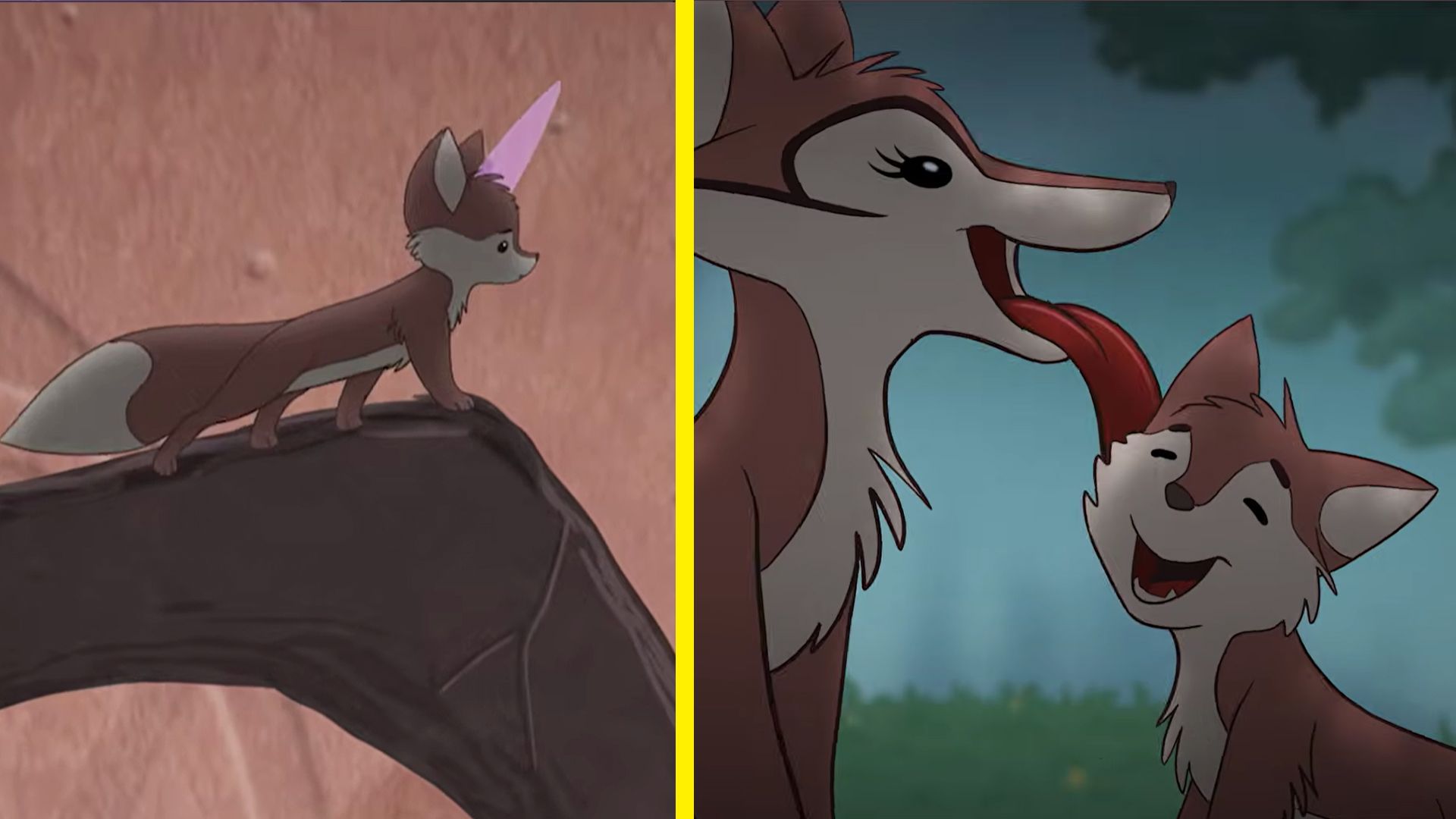
In an era defined by the rapid encroachment of generative artificial intelligence into the creative industries, where studios are increasingly leveraging automated tools to accelerate production timelines, one animator has taken the path of maximum resistance. Michel Gagné, a veteran of the animation industry with a resume spanning legendary films like The Iron Giant and An American Tail, has unveiled the first trailer for The Saga of Rex—a feature-length, hand-drawn animated film that has been in continuous production for the past fourteen years.
The project, which represents a monumental feat of individual endurance, tells the poignant story of a young fox abducted by extraterrestrial forces who forms an unlikely, transformative bond with a mysterious entity named Aven. The trailer, recently released to widespread acclaim, serves as a defiant testament to the power of human artistry and the enduring value of traditional, frame-by-frame craftsmanship.
The Genesis: From Anthology to Odyssey
The roots of The Saga of Rex trace back to 1998, when Gagné self-published his first book, A Search for Meaning: The Story of Rex. The character quickly captured the imagination of the indie comic community, leading to a broader expansion of the narrative across six volumes of the critically acclaimed Flight anthology, curated by Kazu Kibuishi. Following the positive reception of the serialized chapters, Image Comics consolidated the story into a complete graphic novel, solidifying the character’s place in the pantheon of modern illustrated storytelling.
The transition from page to screen began in earnest in 2012, when Gagné launched a Kickstarter campaign to fund a short proof-of-concept. The campaign’s success provided the initial momentum, yet the path toward a full-length, 60-minute feature was fraught with the logistical and financial hurdles that typically plague independent creators. Although Belgium-based GRID Animation briefly held an option on the project, Gagné eventually reclaimed full creative control, opting to complete the film as an independent venture. He viewed the project not merely as a job, but as an existential necessity.
Chronology of an Artistic Crusade
The timeline of The Saga of Rex is a study in relentless, disciplined focus. Beginning in 2012, the production spanned over a decade, during which Gagné balanced the solitary creation of his film with a career as a freelance artist for major Hollywood studios.
The Phases of Production:
- 2012: Launch of the Kickstarter campaign and the development of the proof-of-concept, establishing the film’s unique, ethereal aesthetic.
- 2013–2016: The foundational years. Gagné established a rigorous daily routine, often committing eight hours or more to the film after completing professional assignments for clients.
- 2017–2020: The middle passage. During this period, the scope of the project evolved. Gagné faced physical adversity, including a period where he lost the use of his right hand. Demonstrating an uncompromising work ethic, he retrained himself to animate with his left hand for two months, refusing to allow the momentum to stall.
- 2021–2025: The refinement phase. With the bulk of the animation completed, the focus shifted to technical polish, sound design, and the final assembly of the narrative.
- 2026–2027: The unveiling. The release of the trailer and the scheduled debut at film festivals mark the conclusion of this fourteen-year marathon.
Technical Methodology: The Analog Heart in a Digital World
Despite the film being produced in the 21st century, Gagné consciously avoided the "digital shortcuts" that define contemporary commercial animation. He utilized Toon Boom Harmony for the core animation, supported by Adobe’s suite of professional tools—Premiere, After Effects, and Photoshop—for composition and post-production.
However, the methodology remained fundamentally analog in spirit. To ensure the project retained the soul of hand-drawn animation, Gagné relied on his own labor for the vast majority of the work. The only external contribution to the visual side came from his longtime friend and collaborator, Seung Beom Kim, who provided essential assistance with "inbetweening"—the labor-intensive process of creating the frames that transition between key poses. This limited collaboration allowed Gagné to maintain total creative sovereignty over every character gesture and environmental shift.
Institutional Background and Professional Pedigree
Michel Gagné is far from an amateur; his pedigree is deeply rooted in the history of 20th and 21st-century animation. His professional journey includes significant contributions to Sullivan Bluth Studios, where he worked on classics like An American Tail. His tenure at Warner Bros. saw him contribute to the aesthetic development of Quest for Camelot and the cult classic The Iron Giant.
Beyond traditional cel-style animation, Gagné has been a pivotal force in special effects and character design for high-profile projects, including Star Wars: The Clone Wars and various Disney and Pixar productions. His personal artistic ventures, such as his short films Prelude to Eden (an Annie Award nominee) and Sensology (an Academy Award shortlist selection), established his reputation as a master of visual storytelling. The Saga of Rex is the culmination of these decades of experience, representing the director’s most ambitious and personal statement to date.
The Psychological Toll and Creative Philosophy
Perhaps the most compelling aspect of the film’s production is the psychological state of its creator. In recent interviews, Gagné has spoken candidly about the "insanity" required to sustain such a long-term project in complete isolation. "I would disconnect from reality and enter the worlds I was creating," he admitted. "It was intoxicating at times."
For Gagné, the film was a "journey of discovery, experimentation, and revelation." He consciously distanced himself from the transactional nature of the film industry, viewing his work as an expression of his "soul." By self-funding the project through his freelance earnings, he successfully stripped away the external pressures of shareholders and commercial deadlines, allowing the narrative to dictate its own pace.
When asked if he would do anything differently, his response was characteristically philosophical: "Probably a thousand things along the way. But I think the film needed to take the journey it took to become what it is."
Implications for the Future of Independent Animation
The completion of The Saga of Rex arrives at a pivotal moment for the animation industry. As artificial intelligence threatens to devalue the human element in artistic production, Gagné’s work serves as a powerful counter-narrative. It raises significant questions regarding the value of time in art. In an industry that prioritizes "content velocity" and quarterly output, a 14-year production cycle might be viewed as an outlier or an inefficiency.
However, for the audience, the result is a rare, cohesive vision that cannot be replicated by algorithms. The project suggests that there is a viable, albeit grueling, future for the "auteur" animator—one who uses modern tools to facilitate, rather than automate, the creative process. By maintaining a strict commitment to the hand-drawn medium, Gagné has created a work that is likely to endure long after the trends of automated production have shifted.
Looking Ahead: The 2027 Festival Circuit
As the film moves into its final stage—preparation for the festival circuit—the anticipation continues to grow. Gagné is currently finalizing the logistics for a 2027 premiere, where The Saga of Rex is expected to become a touchstone for discussions regarding the future of independent cinema.
For those interested in the minutiae of the film’s development, from character design sketches to the complex animation tests that filled the last decade, Gagné maintains an extensive archive at his official website, sagaofrex.com. As the industry watches, the "little fox" who was born in a 1998 book is finally ready to step into the light of the silver screen, bringing with him the accumulated wisdom, struggle, and beauty of one man’s fourteen-year obsession.