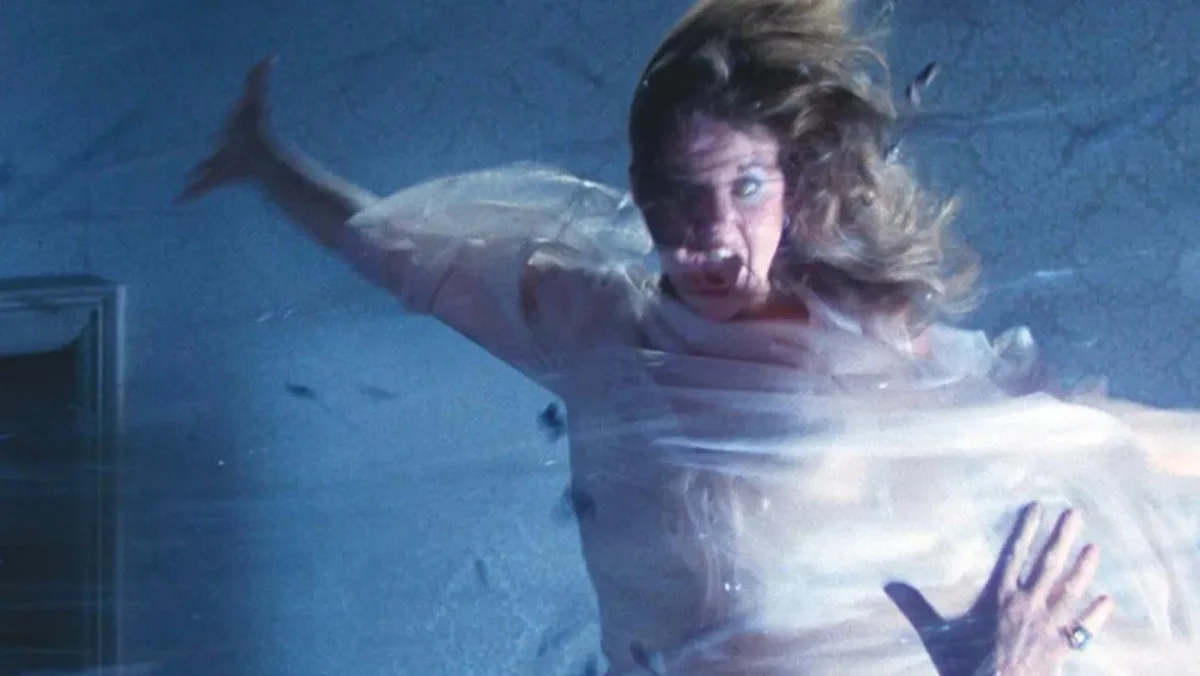
In the annals of Hollywood history, there are failures, and then there are cataclysms. Few films occupy as notorious a place in the cultural zeitgeist as Exorcist II: The Heretic. Released in the summer of 1977, the sequel to William Friedkin’s 1973 masterpiece—widely considered one of the most terrifying films ever made—was not merely a disappointment; it was an event of such profound, bewildering ineptitude that it turned audiences into hecklers.
David Kittredge’s new documentary, Boorman and the Devil, attempts to peel back the layers of this legendary dud. It is a dishy, fascinating, and at times surreal exploration of how a filmmaker of John Boorman’s caliber managed to steer such a high-profile ship directly into an iceberg. The documentary serves as a masterclass in the perils of artistic hubris, reminding us that even the most talented directors can lose their way when they mistake pretension for profundity.
The Genesis of a Misconception
To understand the failure of Exorcist II, one must first understand the era. The 1970s represented the high-water mark of the "New Hollywood" movement, a period where directors were granted unprecedented creative freedom—a "carte blanche" that often led to brilliant masterpieces, but occasionally birthed bloated, ego-driven disasters. From Steven Spielberg’s 1941 to Peter Bogdanovich’s At Long Last Love and the ultimate "bomb," Michael Cimino’s Heaven’s Gate, the decade was littered with ambitious projects that collapsed under their own weight.
John Boorman, fresh off the massive success of the 1972 survival thriller Deliverance, was a director with a distinct, if sometimes polarizing, vision. Yet, he was never a natural fit for the horror genre. When he was originally approached to direct the first Exorcist, he famously declined, finding the source material to be a grotesque meditation on the torture of a child. However, when Warner Bros. returned to him for the sequel, his perspective had shifted—or, perhaps more accurately, his ego had expanded. He didn’t want to make a horror movie; he wanted to make a metaphysical inquiry into the nature of evil.
As the legendary Stanley Kubrick bluntly warned him at the time, "If you want to do a sequel to The Exorcist, you just get more blood and gore." Boorman ignored the advice. He opted instead to pursue the ideas of French theologian Pierre Teilhard de Chardin, aiming to explore human evolution, collective consciousness, and "synchronized hypnosis."
A Chronology of Artistic Hubris
The production of Exorcist II was a comedy of errors from the start, a sequence of events that Boorman and the Devil captures with sharp, ironic clarity.
- 1975-1976: Boorman and screenwriter Rospo Pallenberg labor over a script that loses its way before the cameras even roll. The central conceit involves Regan MacNeil (Linda Blair) and her therapist, Dr. Tuskin (Louise Fletcher), using "synchronized hypnosis" to unlock the memories of the demon Pazuzu.
- The Shoot: The production was plagued by physical and creative setbacks. Boorman contracted valley fever from inhaling the dust on a soundstage designed to mimic an Ethiopian landscape—a set that featured Styrofoam boulders and massive wind machines. The production was halted for five weeks while he recovered.
- The Budget: The film’s costs ballooned from an initial $10 million to a staggering $15 million, making it the most expensive project in Warner Bros. history at the time.
- The Release: Upon its premiere in the summer of 1977, the reaction was swift and brutal. Audiences laughed. In Pasadena, the first sneak preview became a folk legend; attendees were reportedly so baffled and angered by the onscreen absurdity that they threatened the filmmakers, forcing them to flee the theater.
- The Aftermath: Recognizing the disaster, Boorman made a frantic, desperate attempt to recut the film, hacking off the ending to replace it with a slightly different—but equally atrocious—conclusion. It was too late. Attendance plummeted by 50% in the second weekend alone.
The Aesthetic of Folly
The documentary highlights the specific choices that rendered the film so preposterous. Richard Burton, a titan of the stage, delivers a performance of one-note, stentorian exhaustion, intoning lines like "Evil… is a spiritual being" with the gravity of a man who knows he is in a sinking ship.
Then there is the imagery. In an attempt to visualize the demonic, Boorman settled on swarms of locusts. The result was a film that felt less like a supernatural thriller and more like a low-budget nature documentary gone wrong. James Earl Jones, appearing as the African scientist Kokumo, dons a giant locust head that looks like a discarded Halloween mask, at one point spitting a whole tomato from his mouth—a moment of unintentional comedy that remains etched in the memories of those who sat through it. The Steadicam, a new invention at the time, was used to capture a "locust’s-eye view" of flight, resulting in a nauseating, abstract aesthetic that failed to conjure any real fear.
Echoes of Denial: Boorman’s Stance
Perhaps the most striking aspect of Boorman and the Devil is the access it provides to an 85-year-old John Boorman (now 93). Fifty years later, he remains remarkably unbowed. From his home in County Wicklow, Ireland, he discusses the film with a "shining belief" that borders on the delusional.
He maintains that the film contains some of his best work and suggests that the failure was entirely on the audience, who were simply expecting the wrong kind of movie. He dismisses the critical and commercial failure as a matter of "bad luck," a sentiment the documentary rightly challenges. While he acknowledges the production was cursed by misfortune, he struggles to confront the reality that the film’s failure was rooted in its lack of emotional logic, pacing, and narrative coherence.
The Rise of "Disaster Rehabilitation Culture"
Boorman and the Devil does not shy away from the modern trend of re-evaluating cinematic failures. Through interviews with critics like Bilge Ebiri and Joseph McBride, the film touches upon the "Movie Disaster Rehabilitation Culture" that has gripped modern cinephiles.
This trend—which has seen films like Heaven’s Gate and Eyes Wide Shut elevated to masterpiece status—often views movies as malleable "texts" rather than cohesive stories. The documentary explores how even the most nonsensical films can be "reframed" by postmodern analysis, turning artistic folly into an object of academic curiosity. While some critics in the documentary offer a charitable view of Boorman’s "loopy grandeur," the film effectively exposes the hollowness of this revisionism. To call Exorcist II an "insane work of artistic daring" is perhaps true, but that does not make it a good film.
Implications for Modern Filmmaking
The legacy of Exorcist II is a cautionary tale for the industry. It stands as a reminder that artistic vision, when untethered from the needs of the audience and the basic requirements of narrative, leads to vanity. The film’s reliance on "metaphysics" instead of character, and "metaphor" instead of terror, alienated the very people who made the original Exorcist a global phenomenon.
Boorman and the Devil is an essential watch for anyone interested in the friction between directorial ego and the realities of production. It is a film about a man who aimed for the heavens and ended up in the dirt—a literal, dust-filled soundstage in the middle of a career crisis. Ultimately, the documentary confirms what audiences knew in 1977: sometimes, a disaster is just a disaster, no matter how many locusts you throw at it. The film may have been intended as a meditation on the next phase of human evolution, but it remains a permanent monument to the dangers of losing touch with the ground beneath one’s feet.