The international film circuit is buzzing with anticipation as the Toronto International Film Festival (TIFF) approaches, particularly regarding the highly anticipated world premiere of Eugene Kotlyarenko’s latest directorial effort, Vintage Violence. In a strategic move ahead of the festival’s Midnight Madness showcase, international sales powerhouse Best Friend Forever (BFF) has officially boarded the project, securing the worldwide rights to what promises to be one of the most eccentric and stylized thrillers of the year.
The film, which features a cross-continental narrative spanning from the rugged landscapes of Colorado to the neon-lit underworld of Japan, stars Riverdale alumnus Cole Sprouse and multifaceted performer Kiko Mizuhara. As the film gears up for its high-profile debut in Toronto, industry insiders are already comparing its kinetic energy to the works of Japanese cult-cinema icon Takashi Miike.
The Core Narrative: From Rare Finds to Deadly Turf Wars
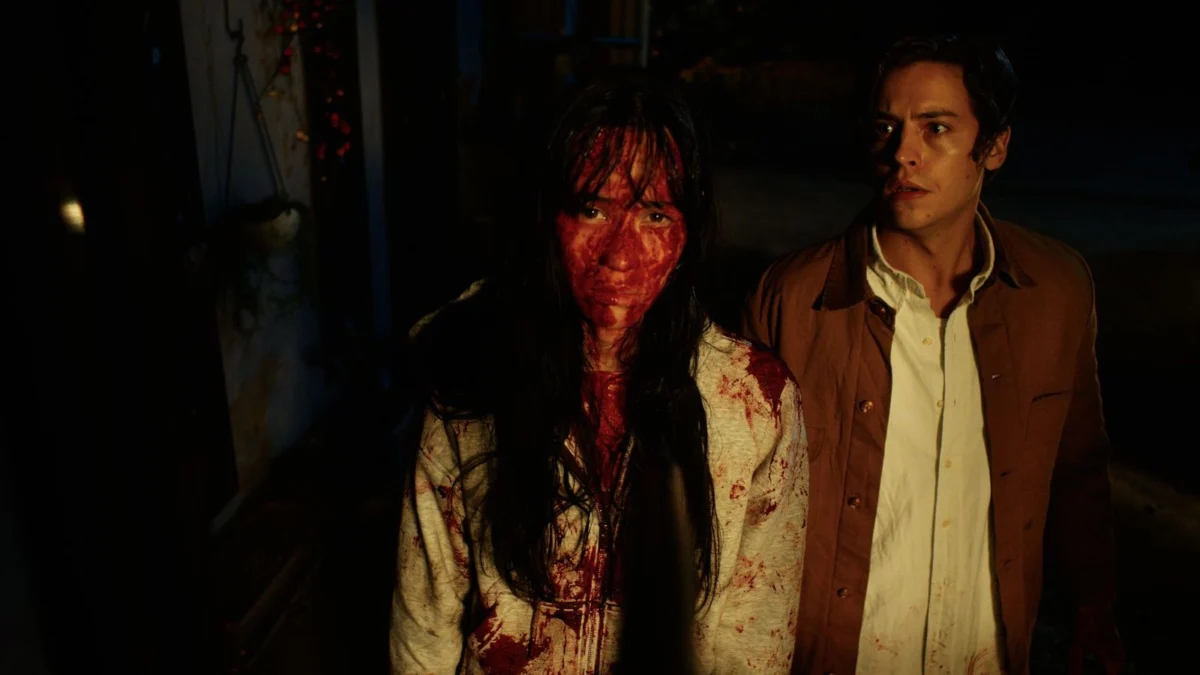
At its heart, Vintage Violence is a genre-bending exploration of obsession, internet culture, and the unforeseen consequences of digital connectivity. The story follows a dedicated, perhaps slightly unhinged, livestreamer who makes the discovery of a lifetime: a hidden cache of incredibly rare vintage denim tucked away in the American West.
What begins as a quest for sartorial treasure takes a dark turn when the protagonist is lured to Japan by a mysterious subscriber. Promised a fortune in exchange for the denim, he soon realizes that the transaction is merely a front for something far more sinister. He finds himself thrust into a high-stakes, violent turf war involving the Yakuza, forcing him to navigate a landscape where his digital influence offers no protection against traditional criminal power structures.
The premise aligns perfectly with Kotlyarenko’s established brand of filmmaking—an uncanny ability to dissect the psychological toll of modern internet life and weave it into high-tension, contemporary narratives.
A Chronology of a Cinephile’s Journey
To understand the trajectory of Vintage Violence, one must look at the evolution of Eugene Kotlyarenko’s career. A filmmaker defined by his unique, experimental approach to digital media, Kotlyarenko has spent his career refining a language that feels both immediate and timeless.
- The Early Years and Digital Dissection: Kotlyarenko first gained critical notice for his ability to translate the chaotic nature of the internet into coherent, biting narratives. His early works established a foundation of "hyper-connected" storytelling.
- The Spree Breakthrough (2020): The director reached a wider international audience with Spree, a satirical thriller that premiered at the Sundance Film Festival. By utilizing a "found footage" aesthetic rooted in the world of ride-sharing apps and social media vanity, the film struck a nerve with contemporary audiences. Its eventual success on Netflix’s global Top 10 cemented Kotlyarenko as a visionary of the digital age.
- Continued Exploration (2024): Prior to Vintage Violence, Kotlyarenko’s The Code made waves at the Fantasia International Film Festival. The project served as a thematic precursor, further honing his ability to blend online-video culture with genre tropes.
- The Present Moment: Vintage Violence represents his eighth feature film. With this project, he moves away from the domestic sphere of American internet fame and ventures into international waters, testing his protagonists—and his stylistic approach—against the backdrop of Japanese culture.
Behind the Lens: A Powerhouse Production
The success of a film like Vintage Violence rests as much on its crew as its cast. The production has secured the talents of cinematographer Sean Price Williams, widely considered one of the most vital visual stylists in independent cinema. Known for his work on Good Time, The Sweet East, and The Moment, Williams brings a gritty, kinetic, and deeply textured visual language that is perfectly suited to the film’s "thriller" designation.
The production represents a reunion of sorts. Kotlyarenko has once again teamed up with producers Alex Hughes and Riccardo Maddalosso of Spacemaker Productions. Having previously collaborated on Spree and The Code, this trio has developed a shorthand that allows for the stylistic risks seen in their previous outings. Spacemaker’s reputation for supporting provocative, auteur-driven cinema—evidenced by their involvement in James Gray’s Armageddon Time and Sebastián Silva’s Rotting in the Sun—lends Vintage Violence significant industry credibility.
The international scope is further bolstered by co-production partners in Japan, including Barravento (known for Onoda: 10,000 Nights in the Jungle) and Mam Film (the creative force behind Love Life). This collaborative structure ensures that the film’s depiction of Japan is grounded, authentic, and capable of navigating the complexities of its Yakuza-centric plot.
Official Responses and Strategic Alliances
The decision by Best Friend Forever to acquire the film is a testament to their confidence in Kotlyarenko’s vision. In a joint statement, BFF co-founders Martin Gondre and Charles Bin noted, "We’re huge fans of Eugene’s cinema and the unique way he turns our hyper-connected moment into a playful, fresh cinematic language."
They further emphasized the film’s tonal range, adding, "Vintage Violence feels like an exciting new step—a funny, romantic and irreverent thriller, made with a freedom of style that recalls Takashi Miike."
For his part, Kotlyarenko expressed immense gratitude for the partnership. "The film was made with lots of enthusiasm and cinephilia from everyone involved, so it’s great to work with Best Friend Forever, a company brimming with both those qualities," the director stated. "Most importantly, we have the same goal in mind: for audiences all over the world to get rocked by this movie."
Implications for the Industry and the Midnight Madness Crowd
The inclusion of Vintage Violence in the Midnight Madness section at TIFF is more than a programming choice; it is a signal of the film’s intended audience and its overall energy. Midnight Madness has long been the launchpad for films that defy convention—projects that are loud, disruptive, and unapologetically bold.
The casting of Cole Sprouse, who successfully pivoted from his early Disney stardom to the darker, more cynical world of Riverdale, provides a perfect entry point for younger, digitally savvy audiences. When coupled with the presence of Kiko Mizuhara—whose own career trajectory has seen her transition from high-fashion modeling to becoming a staple of Japanese cinema, including the upcoming untitled project with Takashi Miike—the film is poised for significant international crossover appeal.
Furthermore, the film’s thematic focus on "rare vintage denim" as a catalyst for a Yakuza turf war serves as a brilliant subversion of the "MacGuffin." It highlights the absurdity of modern obsessions, where a commodity of little objective value can lead to life-or-death stakes. This reflects the "irreverent" nature that BFF mentioned, suggesting that the film will likely balance its violent sequences with a biting, satirical commentary on the value we place on physical objects in a virtual world.
Looking Ahead: A New Standard for Genre Thrillers
As Vintage Violence prepares to hit the screen in Toronto, the broader implications for the indie film landscape are clear. The film represents a growing trend of "internet-native" cinema, where the language of the web is not merely a subject, but the very grammar through which the story is told.
With WME handling domestic rights and Best Friend Forever managing the global rollout, Vintage Violence is positioned to be a major player in the fall 2026 festival cycle. It joins an impressive BFF slate that includes Half and the Cannes-awarded Elephants in the Fog, signaling that the sales company is betting big on the future of boundary-pushing, director-driven content.
For fans of Kotlyarenko, Vintage Violence offers the promise of a director operating at the height of his powers, emboldened by a larger budget, a talented international cast, and the unwavering support of a production team that understands his unique brand of chaos. If the film lives up to the fervor surrounding its premiere, it will not only solidify Kotlyarenko’s place in the pantheon of contemporary auteurs but also redefine how we perceive the intersection of global crime, digital culture, and the enduring power of the "vintage" in a hyper-accelerated world.