Sagoh
Sagoh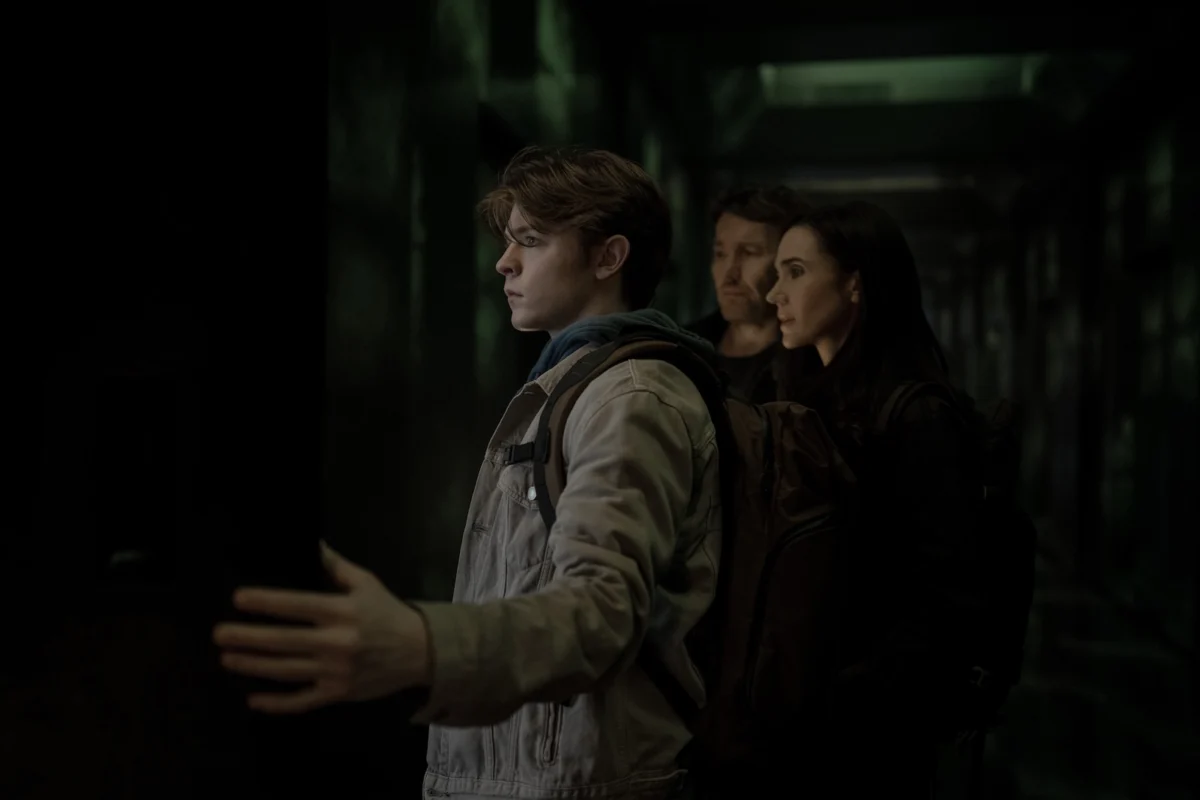
The Apple TV+ hit Dark Matter has returned for its sophomore season, plunging audiences back into the harrowing, multiversal nightmare of the Dessen family. While the first season was a high-stakes race through the infinite corridors of reality, the second season opens with a jarring pivot toward the psychological fallout of survival. Picking up shortly after a violent confrontation—where Daniela Dessen (Jennifer Connelly) is forced to take the life of an alternate-version of her husband, Jason (Joel Edgerton)—the narrative immediately establishes that the trauma of the "box" is far from over.
For the Dessens, there is no homecoming. The act of killing a version of her husband has shattered Daniela’s sense of reality, forcing the family into a nomadic existence as they scramble to find a stable universe where they can finally lay down roots. As the season unfolds, it becomes clear that the cost of their journey isn’t just the physical peril of interdimensional travel; it is the erosion of their own identities.
The Catalyst: A Family on the Run
The premiere of Dark Matter season two wastes no time in re-establishing the tension that defined its predecessor. Jason One, Daniela, and their son, Charlie (Oakes Fegley), are once again displaced, fleeing from the consequences of their past. The defining moment of the premiere—Daniela’s lethal defensive action—serves as the primary engine for the season’s character development.
In a joint interview, Jennifer Connelly and Joel Edgerton discussed the profound shift this moment represents. "Everything she experiences is compounded by what happens at the beginning of season two," Connelly explained. For Daniela, the act of shooting an alternate Jason was not merely a tactical decision; it was a profound violation of the life she had fought to preserve. "She really doesn’t know how to process it," Connelly noted. "I think everything that she built in her life that she wanted to build is now in question. She’s asking herself questions about who she trusts, what she can trust, and whether she trusts herself."
This internal instability is the anchor for the season’s narrative. The Dessen family, once a unit defined by their love and shared history, is now defined by the trauma of their displacement. They are no longer just running from a threat; they are running from the people they have become in the wake of the box’s discovery.
Chronology of the Multiversal Conflict
To understand the current state of Dark Matter, one must look back at the trajectory of the Dessen family’s struggle:
- The Discovery: Jason Dessen, a physics professor, is kidnapped by a version of himself from a reality where he prioritized his scientific work over his family. This set off a chain reaction, leading to the creation of the "box," a device that allows for travel between infinite parallel universes.
- The Escape: Jason One spent the entirety of the first season traversing these realities, fighting to find his way back to his true wife and son.
- The Unification: Upon finally finding his original reality, Jason One successfully reunited with his family, but the peace was short-lived as other versions of himself—and the consequences of his existence—began to encroach on their lives.
- The Breaking Point: The start of season two marks the transition from "escaping the antagonist" to "escaping the cycle." By killing a variant of her husband, Daniela has effectively crossed a moral threshold, turning the family into outcasts who can no longer rely on the status quo of their previous life.
The Burden of Technology: Should the Box Be Destroyed?
As the Dessens continue their search for a "safe" reality, the group faces a mounting existential dilemma. According to Joel Edgerton, the family is beginning to realize that as long as the technology for interdimensional travel exists, their vulnerability is absolute.
"There’s no real safe place for them," Edgerton said. "They decide that one way to make it safe is to get somewhere that might be okay, and potentially [ask,] should we get rid of this technology?"
This question serves as a central philosophical pillar for the season. It pits the family’s desire for normalcy against the reality that they are now the custodians of a potentially catastrophic invention. If they destroy the technology, they may find peace, but they also risk trapping themselves in a reality that may not be their own. The desire to "get back to the path" is at odds with the knowledge that the path they were on no longer exists.

Character Perspectives and Internal Conflict
The brilliance of Dark Matter lies in its ability to ground high-concept science fiction in human intimacy. The tension between Jason One and Daniela has evolved into a quiet, simmering conflict born from shared trauma.
Daniela’s Search for Self
Connelly describes Daniela’s arc as a journey of deconstruction. "She takes it upon herself to go on a journey and try to tease those things apart and take responsibility for her own actions," Connelly said. The character is mourning not just the version of Jason she lost, but the person she was before the trauma of the multiverse. "Some of the characters are thinking about the path not taken and where they want to go, and I think she just really wants to get back to the path she was on because she loves her family and she loved the life she had built, and she doesn’t know how to quite be there anymore."
Jason One’s Obsession
Meanwhile, Jason One is dealing with his own, more intellectual, set of demons. The mystery of the box remains an albatross around his neck. "What he hasn’t answered for himself is how another version of himself created this technology," Edgerton noted. "The final answers or stages of that creation are elusive to him, and his self-serving need to answer those questions overrides his promise to the family to the point where things become problematic."
This creates a fascinating dynamic where the audience sees the potential for the hero to become the very thing he fought against. Edgerton hints at this transformation: "We’ll see how Jason One could become closer to what Jason Two was in season one—those two characters almost show glimpses of the opposite."
Implications for the Season Ahead
As the series progresses toward its conclusion, the stakes have shifted from "survival" to "identity." The show is no longer just about the mechanics of the multiverse; it is about the cost of living in one.
The implications are clear:
- The Loss of the "Original" Reality: By continuing to jump, the Dessens are losing their tether to the reality that once defined them. Even if they find a "perfect" world, it will always be a replacement.
- Moral Corruption: Daniela’s transition from a victim of the multiverse to someone capable of cold-blooded murder highlights how the box corrupts everyone it touches.
- The Mirror Effect: If Jason One continues to prioritize the answers provided by the technology over the safety of his family, he effectively repeats the sins of his alternate selves, completing a tragic character loop.
The second season of Dark Matter is a darker, more introspective look at the consequences of curiosity and the fragility of a life built on a singular timeline. As the episodes continue to drop every Friday through October 30, 2026, the question remains: can the Dessen family ever truly stop running, or are they destined to become the ghosts of their own infinite lives?
For fans of the series, the current season promises a deep dive into the moral ambiguity of the characters, ensuring that while the multiverse is vast, the most dangerous place in existence remains the human heart.

 Laily UPN
 Evan Lee Salim