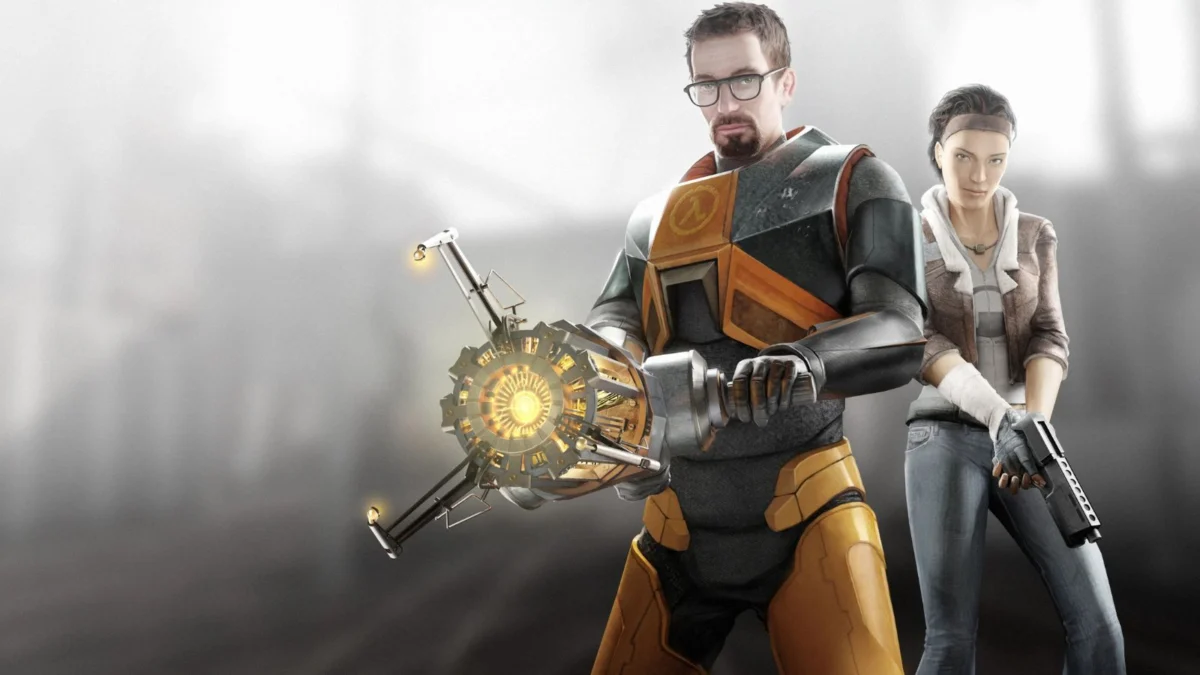
In an unprecedented event that has sent shockwaves through the gaming preservation community, a staggering 12-terabyte archive of internal Valve Corporation data has been exposed online. The leak, which has been colloquially dubbed the "Steam2 Teraleak," serves as a digital time capsule, offering an unfiltered, raw look at the internal development processes of one of the world’s most influential game studios between 2003 and 2013.
The archive contains a treasure trove of source code, early engine builds, conceptual assets, and internal documentation. While the size of the data is daunting, the historical significance is immense: it provides researchers with the ability to reconstruct the evolutionary paths of genre-defining titles like Portal 2, Left 4 Dead, and Counter-Strike: Global Offensive (CS:GO), while also shedding light on the "ghosts" of the industry—projects that were conceptualized, prototyped, and ultimately consigned to the cutting room floor.
A Failure of Infrastructure, Not a Malicious Hack
The nature of the breach has become a primary point of discussion. Unlike high-profile cyberattacks that rely on social engineering or sophisticated exploits, the "Steam2 Teraleak" was, according to industry experts, entirely preventable.
Prominent Valve dataminer and industry observer Gabe Follower was among the first to clarify the origins of the leak, definitively stating that no hacking occurred. Instead, the data was exposed through a publicly accessible endpoint on Valve’s legacy content delivery network.
"No hacking involved, just verified that everything in Steam2 Teraleak was obtained via a publicly accessible endpoint," Follower noted in his post-analysis. "It’s Valve’s fault."
The vulnerability stemmed from "Steam2," Valve’s retired content delivery system. Prior to 2013, Valve used this legacy system to package and distribute game files to developers and internal testers. When the company migrated to its modern "SteamPipe" infrastructure in 2013, it seemingly left the old server endpoints unsecured, effectively hosting a decade of development history in a digital "open house." This transition explains the strict chronological cutoff of the leak; as Valve shifted to the new, more secure storage system, the flow of data into this specific legacy endpoint ceased.
A Decade of Development: The Chronology of the Leak
The archive covers a transformative decade in Valve’s history—a period defined by the rise of the Source engine and the company’s transition from a developer of single-player epics to a titan of live-service multiplayer gaming.

2003–2007: The Source Engine Foundations
Early files in the dump reflect the infancy of the Source engine. Researchers have identified internal builds that showcase the iterative process of Half-Life 2 and its subsequent episodes. These files contain raw character models, level geometry that was never intended for public consumption, and early iterations of the physics engine that would eventually redefine immersive gaming.
2008–2010: The Era of Experimentation
This middle period of the archive is perhaps the most fascinating, as it contains the "lost" projects. It was during this time that Valve was experimenting heavily with concepts that would define their future. Among the most notable discoveries are assets for "F-Stop," the elusive and mysterious prequel to Portal. F-Stop was a project that famously avoided the use of the iconic portal gun entirely, instead focusing on a camera-based mechanic that allowed players to manipulate the size and scale of objects in the game world. Seeing these assets in a functional state has provided a "missing link" in understanding the conceptual transition between the original Portal and its sequel.
2011–2013: The Shift to Multiplayer Dominance
As the archive nears its 2013 conclusion, the focus shifts toward the optimization and refinement of Valve’s multiplayer juggernauts. The early builds of CS:GO found in the archive highlight a period when the game was essentially a heavily modified version of Counter-Strike: Source. This reveals the precarious nature of the game’s development, showing how Valve struggled to balance legacy mechanics with a modern competitive framework before finalizing the product that exists today.
Supporting Data: What’s Under the Hood?
The sheer volume of 12 terabytes is difficult for the average user to comprehend. To put this in perspective, this is not merely a collection of final game files; it is a repository of the work-in-progress.
The "Weaponizer" and the Episode 3 Mythos
Perhaps no mystery in gaming is as persistent as Half-Life 2: Episode 3. While the leak does not contain a "gold master" of the fabled final chapter, it does offer breadcrumbs. Researchers have discovered 3D models and code references for the "Weaponizer"—a modular weapon system that was rumored to be a core gameplay mechanic for the canceled title. These assets suggest that the project was far more than a conceptual pipe dream; it had tangible, working components that were deep into the development cycle before the plug was pulled.
Third-Party Exposure
The scope of the leak extends beyond Valve’s internal projects. Because Steam2 was a platform for content delivery, it also contained assets for titles developed by external studios that utilized Valve’s distribution infrastructure. Notable findings include early beta content for titles such as Sonic 4: Episode II and Fallout: New Vegas. This broad reach highlights how interconnected the industry’s digital distribution networks were during the late 2000s, and how a single point of failure can impact multiple stakeholders.
The Silence from Bellevue
As of this writing, Valve Corporation has maintained a policy of total silence regarding the "Steam2 Teraleak." This is consistent with the company’s long-standing culture of minimal public relations, preferring to let their software speak for itself.

However, the silence is noteworthy given the scale of the exposure. While the files are technically "legacy," they contain proprietary source code and intellectual property that, while dated, still holds significant value to the company. Whether Valve intends to pursue legal action against those distributing the data, or if they will simply allow the community to "declassify" the information, remains an open question. Legal experts suggest that while the data is technically "public," accessing and distributing proprietary source code remains a violation of copyright law, placing the preservation community in a complex legal gray area.
The Implications: Preservation vs. Propriety
The "Steam2 Teraleak" has ignited a fierce debate regarding game preservation. Proponents of the leak argue that this data is a vital piece of cultural heritage. Video games, unlike films or literature, are often inaccessible once their servers are shut down or their development files are deleted. By archiving this data, the community is ensuring that the "behind-the-scenes" reality of game design is not lost to time.
Conversely, the incident serves as a stark warning to the software industry at large. The "Teraleak" highlights the dangers of "security through obscurity." Valve operated under the assumption that because the endpoint was old and forgotten, it was safe. This leak proves that in the digital age, nothing is truly forgotten. As companies move toward cloud-based infrastructures and massive digital libraries, the risk of data exposure grows exponentially.
For the average gamer, the leak is a goldmine. It allows for the creation of "restoration projects," where fans can patch together unfinished builds, fix broken code, and finally play versions of games that were previously only spoken of in rumors. It humanizes the development process, showing that behind the polished final products are thousands of lines of broken code, discarded ideas, and iterative failures.
As the datamining community continues to sift through the 12 terabytes of information, we should expect more revelations in the coming months. From the inner workings of the Source engine to the hidden history of canceled classics, the "Steam2 Teraleak" is not just a security failure; it is perhaps the most significant archeological dig in the history of interactive entertainment. Whether or not Valve eventually responds, the history they thought was buried has now been permanently etched into the public consciousness.