Ali Ikhwan
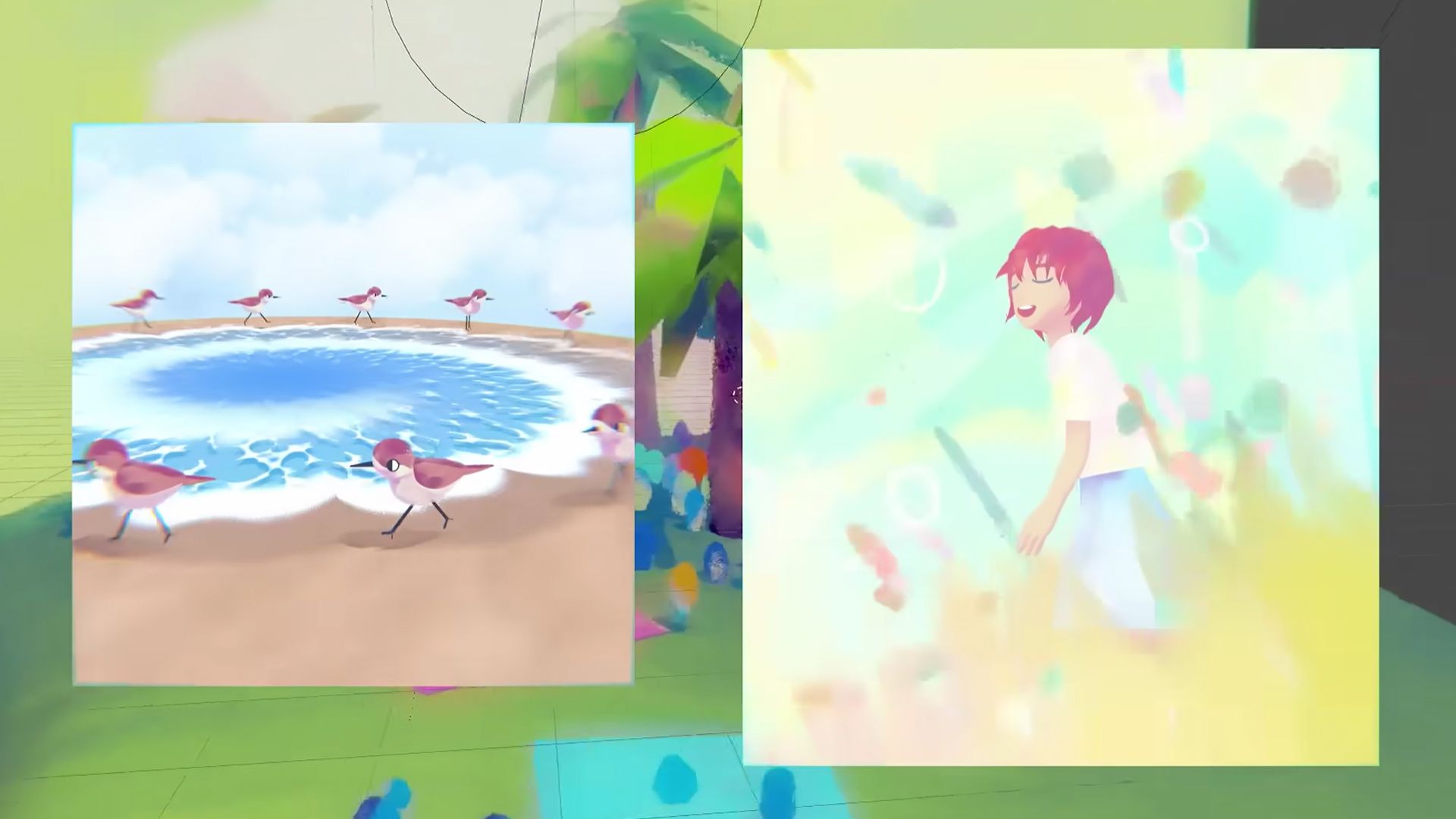
In the rapidly evolving landscape of digital creation, the barrier between traditional fine art and 3D modeling continues to blur. A striking example of this convergence has recently emerged from the Blender community, where artist Alyssa has unveiled a procedural shader technique that allows 3D models to adopt a convincing, hand-painted aesthetic. By leveraging the power of Blender—the industry-standard, open-source 3D suite—Alyssa has created a workflow that bridges the gap between the structured precision of polygons and the fluid, expressive nature of traditional canvas painting.
This development highlights a growing trend in the 3D industry: the movement away from hyper-realism and toward stylized, artistic rendering. As creators seek to infuse their digital work with a distinct "human" touch, procedural tools are providing the perfect solution, offering both efficiency and a unique visual signature.
The Genesis of a Painterly Workflow
The journey from a blank canvas to a fully rendered 3D scene is often fraught with technical hurdles. For many artists, the challenge lies in maintaining the warmth and imperfection of a hand-drawn sketch when transitioning into the mathematically precise world of 3D software.
Alyssa’s approach begins with a fundamental 2D concept. By establishing a solid compositional and stylistic foundation in a 2D environment, she ensures that the spirit of the artwork remains intact during the modeling process. Once the form is established in Blender, the magic occurs in the shading phase. Rather than manually texture-painting every surface—a time-consuming and labor-intensive process—Alyssa utilizes a custom-built procedural shader.
This shader relies heavily on noise nodes and EEVEE, Blender’s real-time render engine. By manipulating the way light interacts with the geometry through these procedural layers, the shader simulates the appearance of brushstrokes, canvas grain, and color blending. The result is a 3D asset that feels as if it were plucked directly from a gallery wall, yet retains all the benefits of a 3D model, such as dynamic lighting, camera movement, and depth.
Chronology of the Stylized Trend
The shift toward stylized 3D art has been building for years, but recent updates to software have accelerated its adoption.
- Early 2020s: The "Spider-Verse" effect. Following the release of Spider-Man: Into the Spider-Verse, the industry saw a surge in demand for non-photorealistic rendering (NPR). Artists began experimenting with "toon" shaders and cel-shading techniques.
- 2023–2024: The Rise of Proceduralism. With the advancement of Blender’s node-based material system, artists began moving away from static image textures. Procedural materials—which are resolution-independent and infinitely scalable—became the gold standard for efficiency.
- Late 2024/Early 2025: The "Alyssa Method." With the release of her specific EEVEE-based shader, the community has seen a democratization of this complex technical process. By making the tool accessible, the barrier to entry for beginners has been lowered significantly.
Technical Foundations: The Power of EEVEE
To understand why this development is significant, one must understand the role of Blender’s EEVEE engine. Unlike traditional "path-tracing" engines that take hours to render a single frame by calculating how light bounces off every atom, EEVEE is a real-time rasterization engine. This allows artists to see their work in near-final quality instantly.
Alyssa’s shader leverages this speed to create "painterly" noise. By feeding high-frequency noise patterns into the shader’s input, she creates subtle variations in color and value across the geometry. When combined with light-wrapping techniques—which soften the shadows where light hits an object—the hard edges of 3D meshes are effectively hidden. This creates a soft, impressionistic feel that mimics the way a physical brush might blend colors across a surface.
Furthermore, because the effect is procedural, it is entirely non-destructive. If an artist decides to change the color palette of their character or environment, they can simply adjust a slider in the shader settings, and the entire scene updates instantly. This level of flexibility is unprecedented for artists working in a traditional, hand-painted style.
Implications for the Creative Industry
The availability of these tools has profound implications for independent creators and small studios.
Lowering the Barrier to Entry
Previously, achieving a high-end stylized look required an extensive team of texture artists, lighting artists, and technical directors. Now, a single artist can achieve a professional-grade look that would have taken a team weeks to produce. This empowers solo developers to create games and animated shorts that compete with high-budget productions in terms of visual fidelity and artistic merit.
The Evolution of Asset Libraries
The decision by artists like Alyssa to distribute their shaders on platforms such as Ko-fi reflects a shift in the digital economy. Instead of selling finished models, creators are now selling workflows. This "Asset Library" culture encourages a collaborative ecosystem where artists can build upon each other’s research, leading to faster innovation across the entire industry.
The End of the "Uncanny Valley"
For years, the industry’s obsession with photorealism led to the "uncanny valley"—the discomfort felt when a digital character looks almost, but not quite, human. By leaning into stylized, painterly aesthetics, artists are bypassing this problem entirely. When a viewer knows they are looking at a "painting," they are more willing to suspend their disbelief, allowing for more creative freedom in character design and storytelling.
Official Responses and Community Impact
The reception within the Blender community has been overwhelmingly positive. On forums and social media, artists have praised the clarity of the tutorials provided by Alyssa, noting that her explanations strip away the intimidating technical jargon often associated with node-based shading.
"It’s not just about the tool," one community member noted in a discussion thread. "It’s about the philosophy of the workflow. She’s showing us that we don’t have to be slaves to the renderer. We can make the software work for our art, rather than making our art work for the software."
Alyssa’s request for users to tag her in their projects has also fostered a sense of digital community. By tracking the use of her shader, she is effectively crowdsourcing feedback, which will inevitably lead to future iterations of the tool. This feedback loop is the hallmark of open-source innovation, ensuring that the software stays relevant to the evolving needs of the artist.
Supporting Data: Why Blender 5.2 LTS Matters
The success of these procedural techniques is inextricably linked to the ongoing development of Blender. With the recent release of Blender 5.2 LTS (Long Term Support), the software has reached a new peak in stability and feature density.
- Geometry Nodes: The maturity of Blender’s node system allows for complex math-based shading that was previously impossible.
- Real-time Feedback: Improvements in the viewport rendering ensure that complex shaders can be tweaked in real-time, even on mid-range hardware.
- Community Support: The transition of the Blender Foundation to a larger, more robust development cycle means that tools like Alyssa’s are less likely to "break" with future updates, providing a level of security for artists who build their workflows around these assets.
Conclusion: A New Era of Digital Expression
As we look toward the future of 3D modeling, the divide between the "technician" and the "artist" will continue to dissolve. The work produced by creators like Alyssa serves as a blueprint for the next generation of digital media. By marrying the structural power of 3D software with the aesthetic sensibilities of traditional painting, the industry is entering a new, more expressive era.
The procedural shader is more than just a piece of code; it is a bridge. It allows artists to focus on the why of their work—the emotion, the color, the composition—while the software handles the how. As these tools become more accessible, we can expect to see a surge in independent animated films, stylized video games, and digital art that feels personal, human, and uniquely alive.
For those interested in exploring this workflow, the path is clear. The resources provided by the community—the tutorials, the demo scenes, and the open-source shaders—are all available for those willing to learn. The tools of a master are no longer behind a paywall; they are at our fingertips, waiting to be used to create the next generation of visual masterpieces.

 Reynand Wu
 Rifan Muazin