

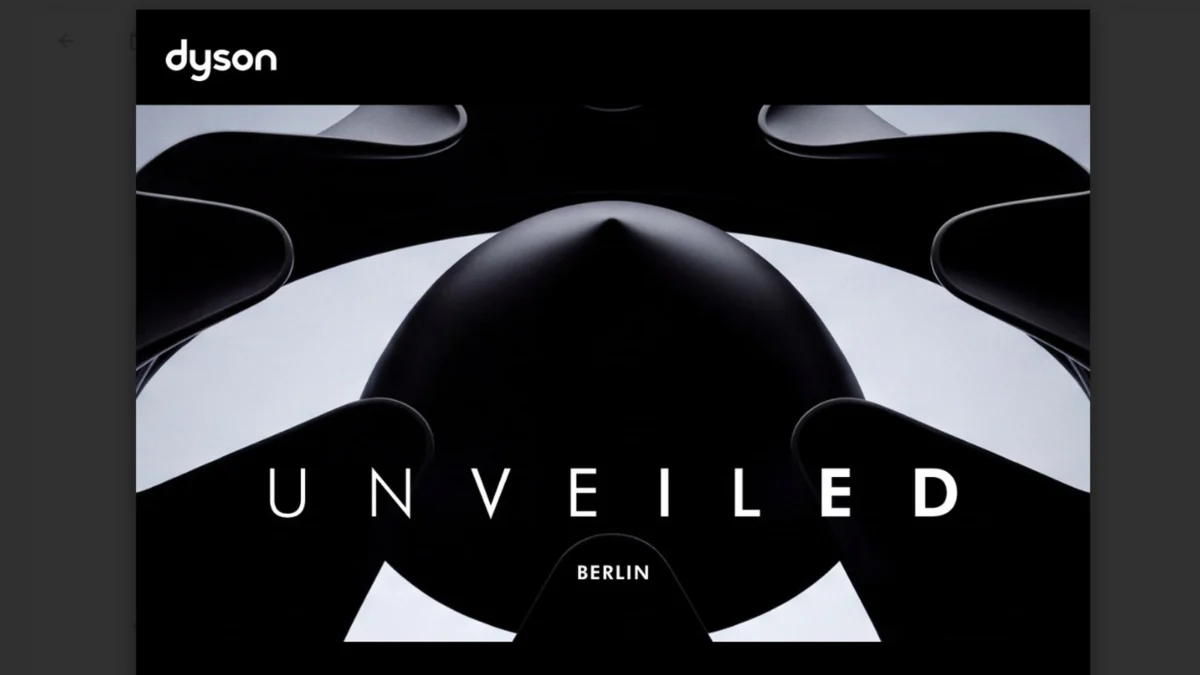
As the gates of Berlin’s Messe exhibition center swing open for IFA 2026, all eyes are turned toward the Dyson pavilion. While the company has long been synonymous with high-velocity airflow—from its iconic bagless vacuums to its high-end hair dryers—the engineering giant is signaling a dramatic pivot into the digital health space. Today, at the "Dyson Unveiled" event, the brand is looking to prove that its prowess in miniaturized motors and filtration systems is the perfect precursor to a revolution in personal hygiene.
Leading the charge is the head-turning, and perhaps polarizing, CameraJet. Part toothbrush, part professional-grade oral scanner, the device is the centerpiece of a day that promises to redefine how we interact with the most mundane of daily routines.
The Main Event: The CameraJet and the Future of Oral Hygiene
The star of the show, the Dyson CameraJet, is a $500 three-in-one device that seeks to bridge the gap between home dentistry and high-tech diagnostics. At its core, the device utilizes the same hyper-efficient motor technology found in the company’s handheld vacuums to provide high-frequency sonic cleaning, while integrated micro-nozzles provide a pressurized flossing experience.
However, it is the “Camera” aspect of the CameraJet that has caused the most discourse among tech journalists and dentists alike. The device features an ultra-compact, high-definition intraoral camera that syncs directly to the Dyson app. The intent, according to Dyson’s engineering leads, is not to broadcast your dental hygiene to the world—a prospect that has rightfully caused some privacy concerns—but to provide a “map” of the user’s mouth to identify plaque buildup, gum recession, and areas of concern that might be missed by the naked eye.
Why the skepticism?
The inclusion of a camera in a toothbrush is a bold, if not eccentric, design choice. Critics argue that adding complexity to a device intended for wet, high-humidity environments increases the risk of mechanical failure. Furthermore, the $500 price point positions the CameraJet as a luxury status symbol rather than a consumer health necessity. Yet, Dyson has historically thrived on taking the "unnecessary" and making it essential; much like the Airwrap changed the landscape of hair styling, Dyson is banking on the idea that once consumers see their own oral health in 4K resolution, they won’t be able to look back.
Chronology: A Roadmap to the Unveiling
The lead-up to this year’s IFA has been one of the most guarded in Dyson’s history. Below is the timeline of the events culminating in today’s keynote:
- June 2026: Dyson registers a series of patents regarding “intrabuccal imaging systems” and “pressurized fluid delivery modules,” sparking rumors of a move into the dental space.
- August 15, 2026: Official press invites go out for "Dyson Unveiled," featuring a cryptic image of a high-speed motor housing reflecting a human smile.
- September 1, 2026: Early leaks confirm the branding of the "CameraJet," sending shares of traditional dental care companies into a brief period of volatility.
- September 3, 2026 (9:30 AM EDT): The liveblog commences, with our UK bureau chief Mat Smith arriving on the floor of the Berlin convention center to provide real-time updates.
- September 3, 2026 (10:30 AM EDT / 4:30 PM CET): James Dyson takes the stage to unveil the full suite of new products, including the CameraJet and an updated line of residential air purifiers.
Supporting Data: The Engineering Behind the Hype
Dyson’s move into oral care is not a sudden whim; it is the result of years of R&D into fluid dynamics and sensor miniaturization. The CameraJet leverages the company’s "V12-Micro" motor, which weighs less than 50 grams but generates the torque necessary to drive both the sonic brush head and the integrated water flosser.
According to preliminary internal studies provided by the company, the combination of guided sonic brushing and high-pressure flossing—verified by the onboard camera’s AI-assisted plaque detection—resulted in a 40% reduction in gingival inflammation in test groups over a six-week period. While independent clinical trials are still pending, the sheer data-processing capability of the device sets a new benchmark for "smart" health hardware.
Beyond the toothbrush, Dyson is also showcasing:
- PureCool Nano: A desktop-sized air purifier that uses the same filter technology as the company’s heavy-duty units, specifically designed to capture micro-particulates in offices.
- Gen5-Robotics: A new iteration of their autonomous vacuuming systems that utilizes "Vision-SLAM" mapping, allowing the robot to navigate clutter with a level of precision that makes earlier models look archaic.
Official Responses and Industry Outlook
The industry reaction has been a mixture of admiration and bewilderment. Dr. Elena Rossi, a leading specialist in dental technology, noted: “Dyson’s expertise in airflow is unparalleled, and applying that to interdental cleaning is a logical step. However, the software integration is the real challenge. It isn’t enough to just show the user their mouth; the device must offer actionable, medical-grade advice that doesn’t replace a dentist, but complements them.”
Dyson’s official stance, as reiterated by James Dyson during the pre-show briefing, is that the company is "democratizing the oral exam." By bringing clinical imaging technology into the home, they hope to catch issues like cavities and early-stage gum disease long before they require invasive surgical intervention.
Implications: The "Smart" Home as a Health Hub
The broader implication of the Dyson Unveiled event is clear: the "Smart Home" is evolving into the "Health Home." We are moving past an era of connected lights and thermostats and into an era of biometric-monitoring household appliances.
If the CameraJet succeeds, it could set a precedent for other household brands. Imagine a showerhead that monitors skin pH or a refrigerator that analyzes the nutritional content of stored produce. Dyson is positioning itself as the vanguard of this transition, betting that consumers are ready to pay a premium for hardware that actively contributes to their longevity.
The Challenges Ahead
Despite the innovation, there are significant hurdles. Data privacy is the most glaring concern. If the CameraJet is storing images of a user’s mouth on the cloud, who owns that data? Does it fall under the same protections as medical records? Dyson has promised end-to-end encryption and a "local-only" storage option, but building trust in an age of constant data breaches will be the company’s biggest hurdle to mass adoption.
Furthermore, the price point of $500 is a significant barrier. While Dyson has built a brand around luxury, a toothbrush is a commodity product. Convincing the average consumer to spend half a thousand dollars on an oral hygiene tool—even one that takes photos—will require a massive marketing push and, likely, a more affordable "lite" version down the line.
Conclusion: A New Era of Personal Care
As the liveblog continues throughout the day, the discourse is shifting from the absurdity of the "mouth camera" to the potential efficacy of the underlying tech. Whether the CameraJet becomes a staple of the modern bathroom or a cautionary tale of "over-engineering," one thing is certain: Dyson is not interested in incremental updates. They are interested in disruption.
Stay tuned as we continue to track the demonstrations on the show floor. We will be updating this feed as James Dyson finishes his keynote, providing deeper dives into the technical specifications of the CameraJet and the rest of the new lineup. Do you think a smart-toothbrush is the future of preventative care, or is it a step too far into the surveillance-saturated home? Leave your comments below; we are reading them throughout the day.











