At IFA 2026, Nvidia took a bold step toward democratizing high-performance AI computing by unveiling the Personal AI Router (PAIR). As the appetite for local, private, and cost-effective AI agents grows, Nvidia is positioning PAIR as the ultimate solution for "token-hungry" enthusiasts who possess multiple systems with underutilized GPU resources. By enabling a household to turn its collection of PCs, workstations, and Macs into a unified, distributed AI cluster, Nvidia is effectively bringing data-center-style orchestration to the living room.
The Core Concept: Solving the Bottleneck of Local AI
For power users running sophisticated AI agents, the primary constraint is often compute density. When a single local agent is tasked with a complex goal, it frequently spawns multiple sub-tasks. Running these simultaneously on a single GPU creates "contention"—a scenario where the hardware resources are over-subscribed, leading to significant performance degradation.
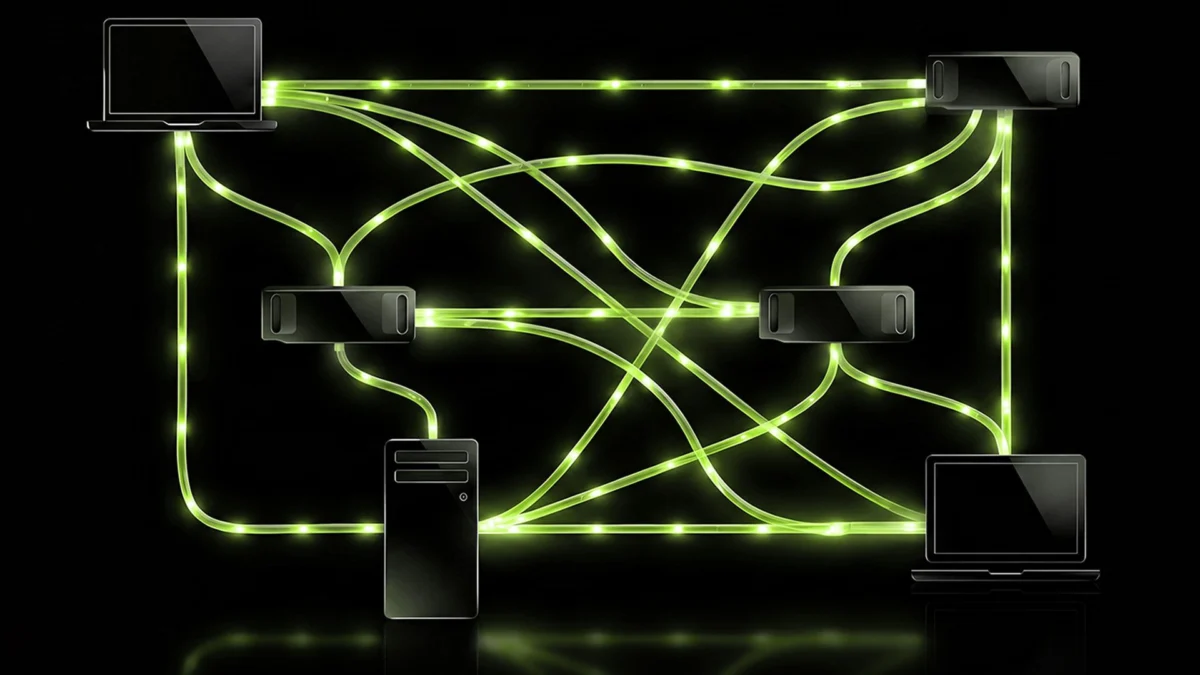
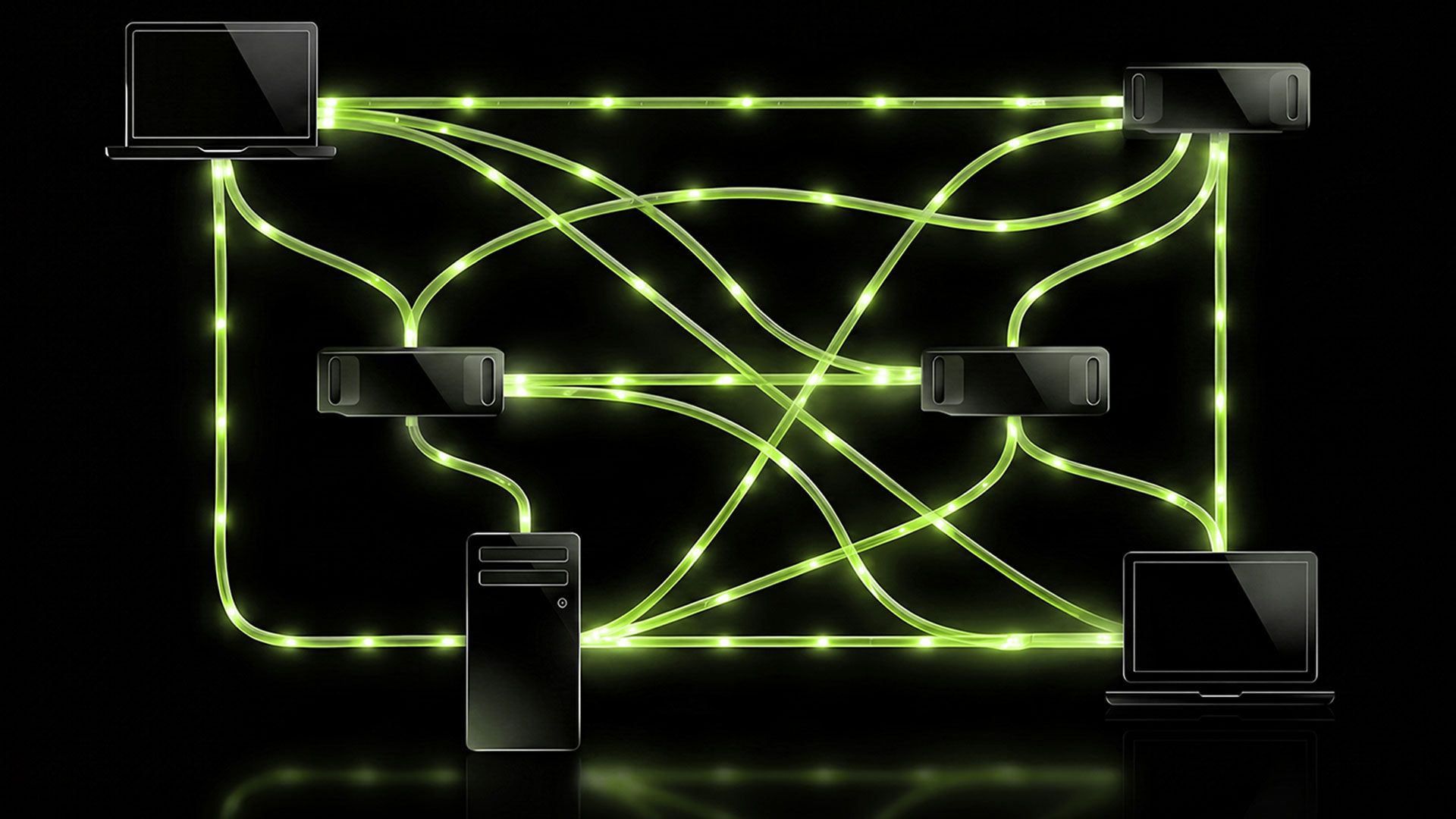
Nvidia’s PAIR platform acts as an intelligent traffic controller. When a main node—the primary computer handling the user’s request—determines that it needs to spawn sub-agents, PAIR intercepts these tasks and dispatches them across the local network to other systems that have available GPU cycles. The result is a seamless, parallelized execution environment that dramatically reduces completion times for complex, multi-step AI workflows.
Chronology of Development and Announcement
The shift toward local-first, agentic AI has been accelerating since early 2025, but the hardware barrier remained significant.
- Q1 2025: The rise of autonomous AI agents (AutoGPT, BabyAGI evolutions) highlighted that the bottleneck for local users wasn’t just the model size, but the ability to execute multiple concurrent reasoning chains.
- Q4 2025: Beta testing of "Project Mesh" (the internal codename for PAIR) began among select Nvidia developer partners, focusing on latency management across consumer-grade home networks.
- September 2026 (IFA Berlin): Nvidia officially announced PAIR, demonstrating the software running on a mix of Windows, macOS, and Linux hardware.
- October 2026: Scheduled public rollout of the PAIR client for early adopters.
Supporting Data and Technical Architecture
PAIR is designed to be "elastic by nature." Recognizing that the average household environment is dynamic, Nvidia has built the tool to prioritize user experience over rigid cluster performance.
1. Dynamic Resource Allocation
Unlike traditional server clusters that reserve dedicated hardware, PAIR is non-intrusive. If a family member begins playing a game or initiating a creative render on a node that was previously acting as a "worker" for the PAIR cluster, the system gracefully offloads or pauses the AI task. The orchestration engine constantly monitors the load on every connected device, rebalancing tasks in real-time to ensure that no primary user experience is compromised.
2. Integration and Ease of Use
The technical barrier to entry for distributed computing is historically high, but Nvidia has prioritized a "plug-and-play" philosophy for PAIR.
- Proxy-Based Connectivity: PAIR functions as a transparent proxy for existing front-ends such as LM Studio and Ollama. Users do not need to rewrite their workflows; they simply point their applications to the PAIR proxy.
- Discovery: Utilizing mDNS and fallback IP configurations, PAIR automatically detects compatible hardware on the network.
- Model Management: While PAIR can initiate model downloads to ensure nodes have the necessary assets, it does not require an identical library of models across all nodes. If a request requires a specific capability that only one node possesses, the orchestrator is intelligent enough to route that specific sub-task to the correct hardware.
3. Hardware Compatibility
Nvidia has ensured broad compatibility to maximize the utility of existing household investments:
- Nvidia Hardware: Supports any DGX Spark (GB10) architecture and GeForce RTX 20-series graphics cards or newer.
- Apple Silicon: Full support for Macs with M4-series processors and newer for inference-heavy tasks.
- Cross-Platform: The PAIR client is fully cross-compatible across Windows, macOS, and Linux environments.
Official Perspectives: Nvidia’s Vision
During the keynote at IFA 2026, Nvidia representatives emphasized that PAIR is not just about raw speed—it is about privacy and autonomy. "The era of sending every prompt to a centralized cloud provider is coming to an end for power users," stated an Nvidia product manager. "By pooling the GPU cycles you already own, you retain complete ownership of your data, bypass subscription costs for cloud tokens, and achieve a level of local throughput that was previously reserved for enterprise server farms."
Nvidia also addressed the "Quality of Service" (QoS) concerns. Because the network is unpredictable, Nvidia acknowledges that PAIR is not intended for real-time applications that require millisecond-perfect latency. Instead, it is designed for long-running, compute-intensive agentic workflows—such as deep data analysis, automated content generation, or long-form research tasks—where the benefit of having a "swarm" of GPUs outweighs the minor fluctuations in latency caused by network traffic.
Implications: The Democratization of the AI Swarm
The End of Token Poverty
For developers and AI enthusiasts, the cost of cloud-based AI (paying per million tokens) is a persistent financial drain. By shifting the workload to local hardware, PAIR essentially makes the marginal cost of compute zero once the hardware is purchased. This encourages more experimentation, as users no longer need to fear the "bill shock" associated with running complex, iterative agent chains.
Shifting Network Topology
PAIR could change how households view their digital infrastructure. We are moving toward a model where the "home network" is no longer just a way to connect to the internet, but a unified computational fabric. This may influence future consumer hardware purchases; a household might choose to buy a mid-range PC for a family member, knowing that its GPU will contribute to the collective "brain" of the home when not in use.
Privacy and Sovereign AI
Perhaps the most significant implication is the shift in privacy. When tasks are executed locally, data remains within the walls of the home. For researchers, legal professionals, or privacy-conscious individuals, the ability to run sophisticated, multi-node agentic tasks without transmitting proprietary information to a third-party server is a massive security upgrade. PAIR provides the infrastructure for "Sovereign AI"—the ability to build and run complex intelligence without reliance on the digital giants.
Future Outlook
As Nvidia continues to refine the PAIR orchestration algorithms, we can expect deeper integrations with third-party software. If the developer community adopts PAIR as a standard backend, we may see a future where "distributed local AI" becomes as common as home Wi-Fi.
However, challenges remain. The reliance on network bandwidth means that 10Gbps local networking may eventually become the "gold standard" for power users looking to minimize communication overhead between nodes. Furthermore, as the software matures, the complexity of managing heterogeneous hardware (e.g., mixing an RTX 5090 with an M4 Mac) will test the robustness of Nvidia’s load-balancing heuristics.
In conclusion, the launch of PAIR marks a pivotal moment in the consumer AI narrative. Nvidia is betting that the future of intelligence is not just bigger, but broader—distributed across the devices that occupy our homes, waiting to be unified into a powerful, local, and private network. For the token-hungry enthusiast, the era of the personal AI cluster has officially begun.