

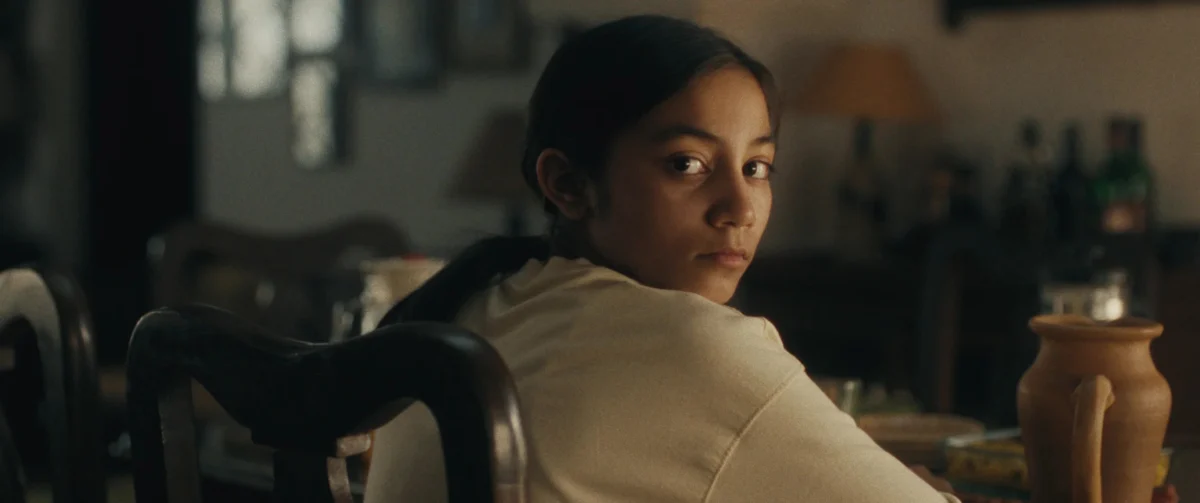
In the cinematic landscape of contemporary social dramas, few films manage to balance the intimate innocence of childhood with the crushing weight of systemic inequity as deftly as Shalini Adnani’s latest feature, Our Share of Sand. A brooding, atmospheric exploration of class, caste, and the moral ambiguity of the South Asian diaspora, the film serves as both a gripping narrative and a scathing indictment of the unseen costs of industrial progress.
Set against the volatile backdrop of a sand-mining crisis in the outskirts of Mumbai, the film follows 12-year-old Maya (Maya Mehta), a British Asian girl who returns to her ancestral homeland to reconnect with her father, Rohan (Mohammad Zeeshan Ayyub), a wealthy industrialist. What begins as a journey of cultural rediscovery quickly descends into a harrowing meditation on complicity as Maya bears witness to a routine, yet devastating, industrial accident that exposes the dark machinery of her family’s success.
The Myth of the "Self-Made" Fortune
The narrative is anchored by a compelling, almost mythic, framing device. A poetic prologue, set decades in the past, depicts laborers sifting through riverbanks, their identities obscured by the grit of their labor. Their discovery of a massive, life-altering diamond becomes the catalyst for a generational debate regarding ownership and ethics. Was this the seed of the family’s prosperity, or the product of an exploitative silence?
This question follows Maya into the present, where her paternal aunt, Arti (Jyoti Dogra), recounts the family’s "bootstraps" creation myth with pride. The film masterfully interrogates this narrative: Did the grandfather truly unearth the gem through his own grit, or did he, in a moment of post-colonial opportunism, seize the discovery from the very workers he commanded? This lingering, unanswered doubt serves as the film’s moral heartbeat, framing the current family dynamic as a continuation of a historical cycle of exploitation.
Chronology of a Crisis: From Childhood Innocence to Systemic Betrayal
The film’s pacing is deliberate, unfolding primarily through the limited, sheltered perspective of Maya. This narrative choice, while risky, proves to be the film’s most potent tool.
- The Arrival: Maya lands in the outskirts of Mumbai, a world that is sensory-heavy yet linguistically inaccessible to her. She does not speak the local Marathi or Hindi, creating an immediate, tangible barrier between her and the workers that populate her father’s industrial sphere.
- The Unlikely Bond: Maya finds a fleeting companionship with Kiran (Krish Raj More), a boy of similar age. Their relationship is the film’s most poignant element, highlighting the rigid class divide even in childhood. While they communicate through broken gestures, the hierarchy is constantly reinforced by Rohan’s cold, dismissive attitude toward the boy.
- The Turning Point: As it is revealed that Kiran is, in fact, one of Rohan’s manual laborers—a diver in the dangerous sand-mining operations—the tension escalates. The accident, occurring under the cover of night, results in permanent injury to Kiran.
- The Moral Dilemma: The final act focuses on the agonizing silence of those in power. Maya, as the primary witness, and her mother, Priti (Ellora Torchia), are forced to choose between the safety of their status and the pursuit of justice. The film refuses to offer easy absolution, leaving the audience to grapple with the same paralyzing choices as its protagonists.
Supporting Data: The Reality of Sand Mining in India
While Our Share of Sand functions as a work of fiction, its setting is rooted in the harsh realities of India’s construction boom. The sand-mining industry—often referred to as the "sand mafia" in Indian news—is a multi-billion dollar illicit sector that has caused irreparable ecological damage to riverbeds and coastal regions.
According to environmental reports, the unregulated extraction of sand to fuel the rapid urbanization of cities like Mumbai and Delhi has led to the collapse of local ecosystems and the systematic exploitation of migrant labor. Workers in these sectors are frequently subject to hazardous conditions, lack of safety equipment, and the coercive power of contractors who operate within the gray areas of the law. Adnani’s film captures this reality with a visceral intensity, showing that the modern cement foundations of India’s urban centers are literally built upon the bodies of the marginalized.
Official Responses and Social Implications
Though Our Share of Sand is a character-driven drama, its implications reach far beyond the confines of the screen. The film forces a confrontation with the "complicit diaspora"—the well-to-do South Asian families living abroad who maintain their luxury on the foundations of generational wealth generated in their home countries.
Critics and social commentators have noted that the film avoids the "gawking" trope often found in Western-led portrayals of the Global South. Instead of exoticizing the poverty of the workers, Adnani turns the camera inward, focusing on the internal decay of the wealthy. The use of surveillance imagery—security cameras capturing the compound—serves as a metaphor for the fascistic tendencies required to maintain caste and class superiority in a changing world.
In academic circles, the film is already being hailed for its nuanced take on the "moral compartmentalization" of the middle and upper classes. By isolating the characters within the compound, Adnani illustrates how physical walls are built to support psychological walls; it is easy to ignore the humanity of a laborer when you view them solely as a line item in a ledger.
Aesthetic Choices and Dramatic Dividends
Cinematographer Adric Watson contributes significantly to the film’s unsettling atmosphere. The use of "tight and dirty" frames effectively communicates the claustrophobia of Maya’s existence. Even when the characters are outdoors, the landscape feels oppressive, mirroring the societal constraints that dictate their every movement.
The performance of Maya Mehta is a standout debut. She portrays a girl trapped in a state of growing awareness, her face often a mask of quiet, mounting horror as she realizes the true nature of her father’s business. Her performance, combined with the film’s shadowy, noir-inflected lighting, transforms the setting from a mere location into an active participant in the tragedy.
Conclusion: The Persistence of Inequality
Our Share of Sand is not a film that promises a grand resolution. It is a naturalistic, almost fairytale-like exploration of structural realities. It suggests that when a society is built on the foundation of caste-based exploitation, even the most basic elements—the sand, the river, the earth—become weapons of the elite.
By focusing on the "dramatic wrath" bubbling beneath the surface of everyday life, Shalini Adnani has crafted a masterpiece of social tension. The film leaves the audience with a haunting realization: that the "modernity" we celebrate often masks a medieval cruelty, and that the silence of the witness is the most powerful tool the oppressor possesses. Our Share of Sand is a vital addition to the discourse on contemporary Indian cinema, proving that the most profound stories are often those that refuse to look away from the foundations of our own privilege.










