Asro
Asro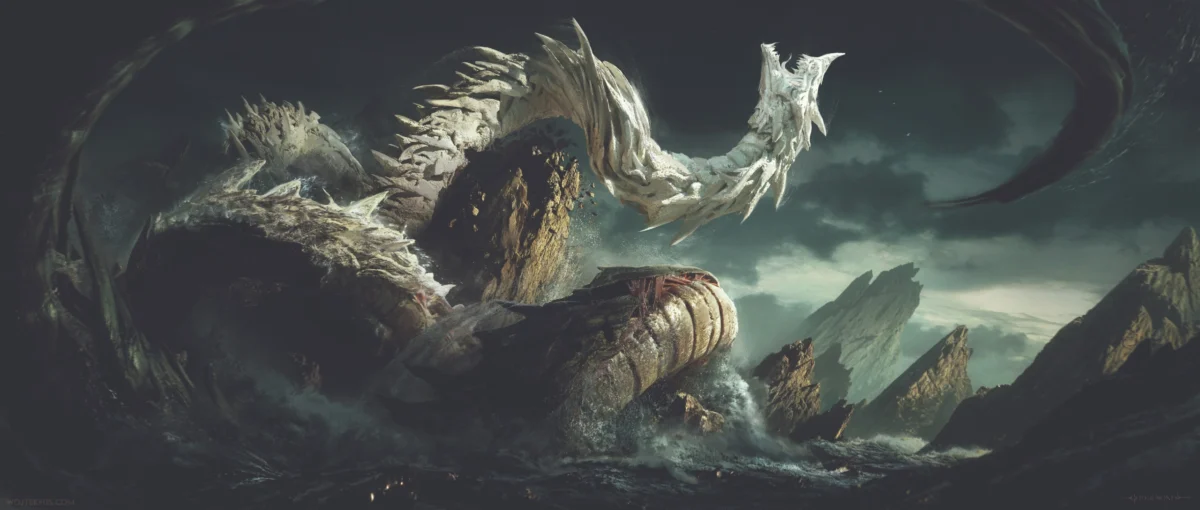
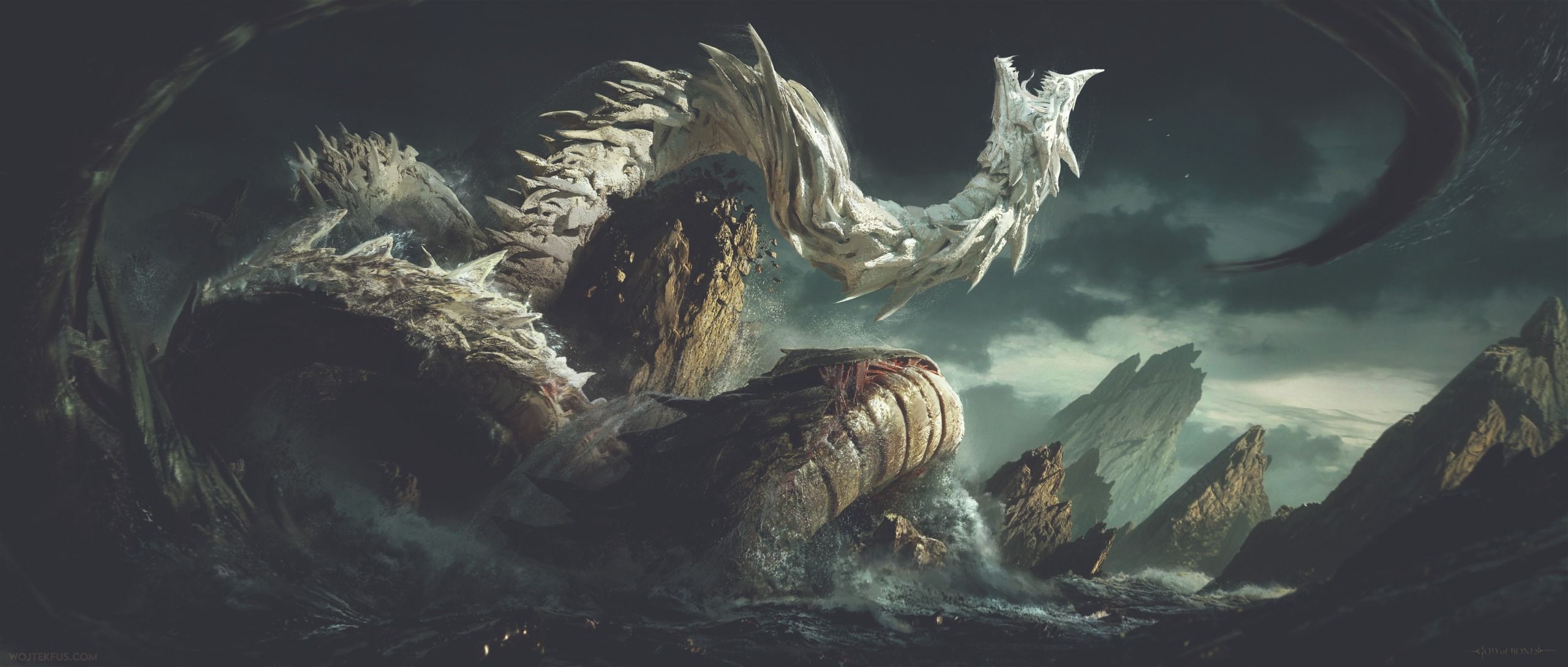
In the realm of contemporary digital filmmaking, the bridge between static concept art and moving imagery is often built upon a singular, defining visual anchor. For the upcoming short film God of Bones, helmed by director Paul Coulthard, that anchor is a breathtaking vista featuring a gargantuan serpent, captured in the agonizing, final moment of its life—calcified into stone as it collapses.
The creation of this shot was a monumental undertaking that required a delicate balance of scale, anatomical precision, and atmospheric storytelling. Bringing this vision to life involved a cross-disciplinary team of artists, including Wojtek Fus, whose expertise in environmental storytelling and digital lighting proved instrumental in elevating the film’s visual narrative.
The Genesis of a Mythic Scale
The core challenge of the God of Bones project was to communicate a sense of "halted motion." The team aimed to depict a creature so vast that its death throes would feel like a geological event. Initial compositions, while technically proficient, struggled to convey the crushing weight and the tragic, frozen finality required by Coulthard’s vision.
"The goal was to establish mood, violence, and vast scale in a single moment," explains the artist. "We needed the audience to feel the transition from organic life to mineral permanence. The serpent couldn’t just be dead; it had to be in the process of becoming the landscape itself."
To achieve this, the creative team shifted their focus from mere creature design to environmental integration. By treating the serpent’s body as a topographical element, they successfully transformed a static creature model into a foundational piece of the world-building, effectively selling the idea of a titan reclaimed by the earth.
Chronology of a Masterpiece: From Sketch to Stone
The transformation of the God of Bones serpent was a non-linear process that relied on iterative feedback loops between the production team and the creative leads.
Phase 1: Conceptualization and Narrative Sketching
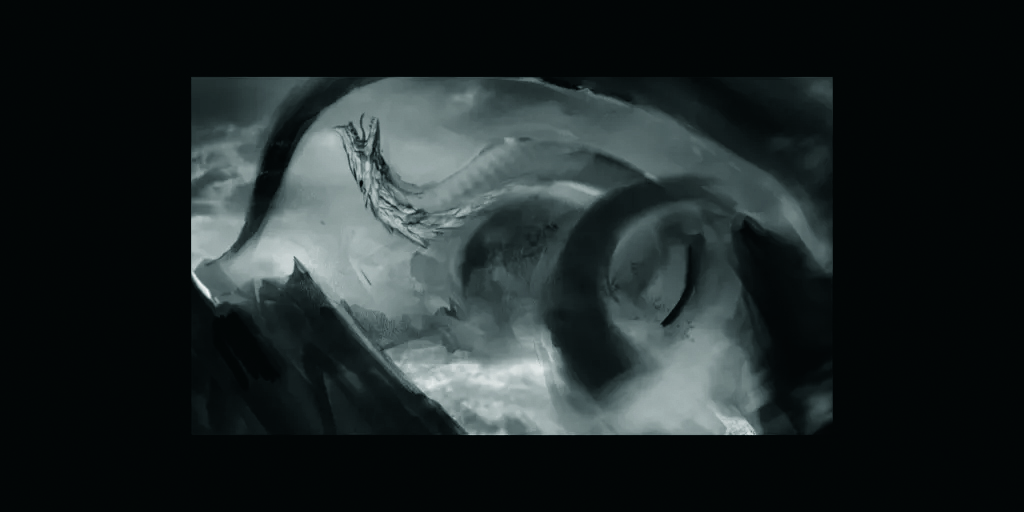
The process began with a foundational sketch by Paul Coulthard. This initial drawing served as the North Star for the project, defining the rhythm of the serpent’s collapse. By outlining the creature’s trajectory through the frame, the sketch established the necessary "violence" of the scene—the kinetic energy of a dying god crashing into the earth. This phase was less about technical detail and more about capturing the raw, emotional weight of the narrative beat.
Phase 2: The 3D Layout in Blender
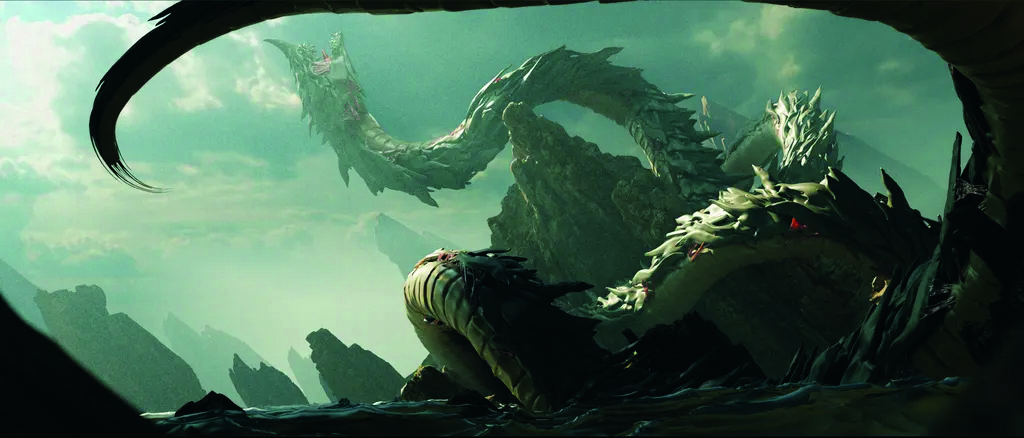
Once the rhythm was established, the team transitioned into the digital workspace. Using Blender, the artists began the arduous process of blocking the scene. This phase was critical for establishing the "unstable cinematic arrangement" requested by the director.
"The environment had to complement the serpent, not just house it," the team noted. By placing the creature within a complex, rocky formation, they were able to use parallax and depth-of-field cues to emphasize its sheer size. The collaboration here was intense; balancing readability—ensuring the viewer instantly recognizes the serpent’s form—with the chaotic, crumbling aesthetic of the environment required constant adjustments to lighting and camera positioning.
Phase 3: Texturing, Rendering, and the Final "Flip"
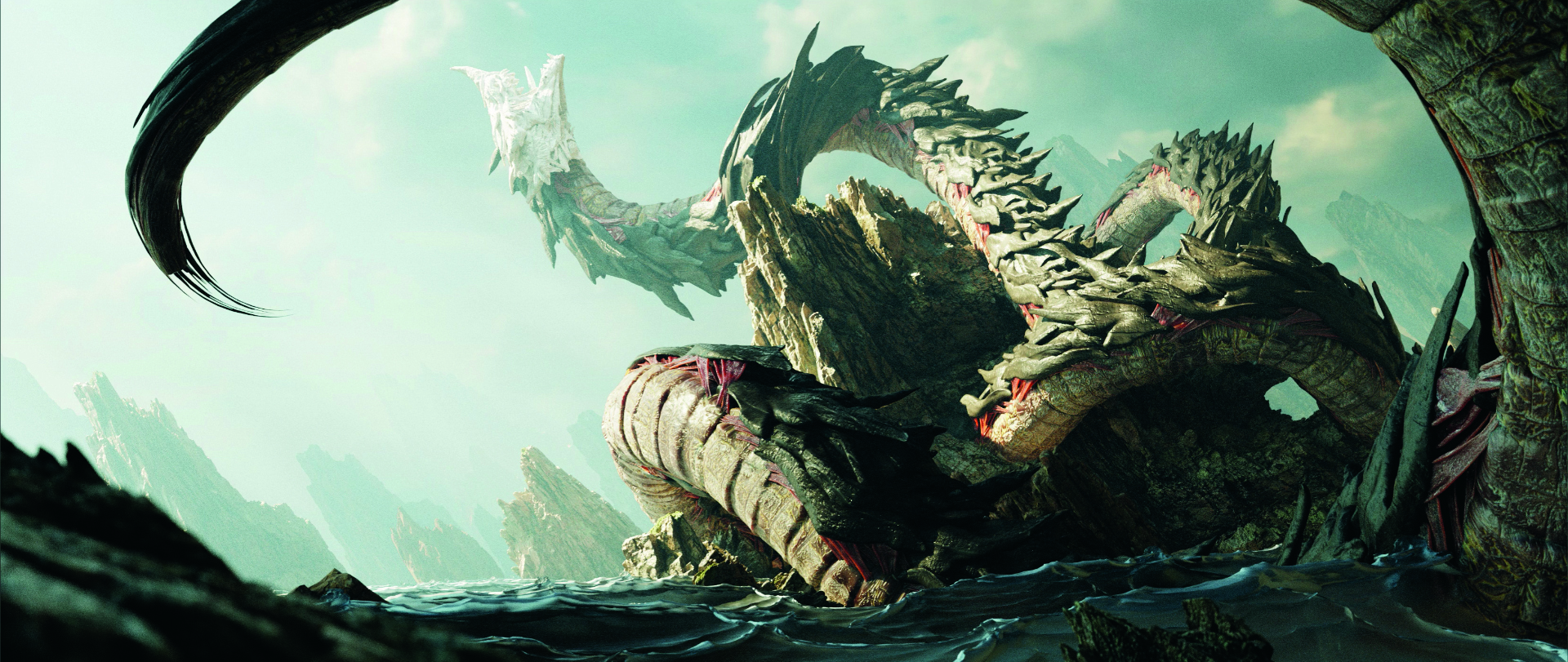
The final phase of production involved bringing the scene into its high-fidelity form. The serpent’s design, supervised by Christian Bull and modeled by Laurens Rasti and Wilmar Ballespi of Shoot First, provided the essential base for the final look.
The technical team integrated real-world photography and custom paint layers to simulate the harsh environmental conditions of the scene. Adding ocean spray, rock debris, and atmospheric haze helped ground the digital asset in reality. A particularly difficult hurdle was the calcification effect—the visual representation of flesh turning to porous stone. This required multiple passes of shader work to ensure the transition looked like a biological process rather than a texture swap.
In a final, bold creative decision, the team decided to flip the entire composition. This inversion changed the viewer’s perspective on the motion, turning the serpent’s collapse into a downward, gravity-defying plunge that maximized the dramatic impact of the scene.
Supporting Data and Technical Infrastructure
The creation of a scene with this level of detail is rarely a solo endeavor. It requires a robust technical pipeline. For artists looking to replicate this workflow, the hardware requirements are significant.
The industry standard for such complex environments necessitates high-performance workstations capable of handling millions of polygons alongside high-resolution fluid simulations. When working with assets as detailed as the God of Bones serpent, the ability to iterate in real-time is vital.
For those looking to build or upgrade their own artistic setups, the following categories of hardware are considered essential:
- Drawing Tablets: Precision is paramount when painting fine textures onto a 3D model. Tablet sensitivity ensures that the artist can apply wear-and-tear to the serpent’s scales with organic variation.
- 3D-Ready Laptops: Portability is often sacrificed for power, but modern mobile workstations are bridging this gap, offering the GPU capacity required to render complex scenes without tethering the artist to a desktop.
Official Perspectives: The Collaborative Effort
The success of the God of Bones vista is a testament to the power of specialized collaboration. By separating the responsibilities—supervision by Christian Bull, modeling by the team at Shoot First, and environmental composition by Wojtek Fus—the production was able to maintain high standards across every facet of the frame.
"Working closely with Paul allowed us to push the atmosphere to where it needed to be," said the lead compositor. "It wasn’t just about making a cool creature. It was about making the audience feel the weight of a god hitting the ground."
This division of labor allowed for the "calcification" effect—the hallmark of the scene—to be treated as a character in its own right. The feedback loop between the modelers and the environment artists ensured that the stone textures on the serpent’s head were consistent with the rocky crags surrounding it, creating a seamless, believable union of biology and geology.
Implications for Digital Cinematography
The God of Bones project serves as a compelling case study for the future of digital environment design. As short-form content continues to push the boundaries of what is possible with independent budgets, the reliance on high-fidelity "hero shots" becomes increasingly important.
This project demonstrates that scale is not necessarily a function of budget, but of composition and lighting. By focusing on the "moment of death" rather than the entire lifecycle of the creature, the team was able to create a memorable image that punches well above its weight class.
The industry is moving toward a model where specialized artists are brought in for specific "hero" sequences, a trend that allows for a higher degree of visual polish in independent films. As technology continues to lower the barrier to entry for high-end rendering, we can expect to see more projects of this nature—where a single, perfectly crafted vista defines the identity of an entire production.
For those following the God of Bones journey, the project remains a beacon for how classic principles of cinematography—framing, lighting, and composition—remain just as vital as the cutting-edge 3D software used to execute them. As the project moves toward its full release, the "serpent in stone" stands as a reminder that in the world of digital art, the most powerful stories are often told in the brief, frozen seconds of a grand collapse.
This article originally appeared in ImagineFX. For more insights into digital artistry and behind-the-scenes looks at modern productions, subscribe to ImagineFX for expert tutorials, artist interviews, and industry-leading advice.


 Asep Darmawan
 Siti Muinah