Pevita Pearce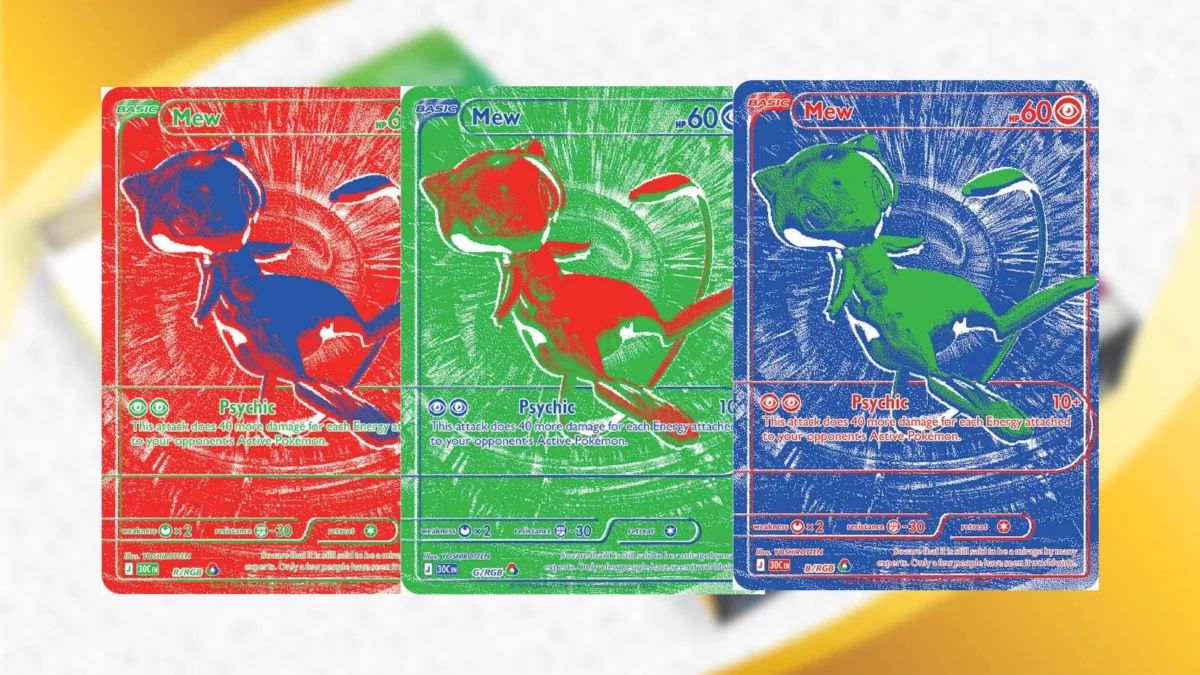
For months, the Pokémon Trading Card Game (TCG) community was gripped by a digital whodunit that threatened to fracture the hobby. Was the mysterious "Blue Mew" a sophisticated counterfeit, a factory error, or the first look at a legendary chase card for the 30th Anniversary celebration? As of September 15, 2026, the speculation has finally reached a definitive conclusion. With the official discovery of the Red and Green counterparts, the "RGB Mew" trio has been confirmed as a genuine, albeit elusive, centerpiece of the upcoming 30th Celebration expansion.
The Genesis of a Mystery: The July 25 Breakthrough
The saga began on July 25, 2026, during a routine Whatnot livestream hosted by Australian retailer PokeAus Hits. Amidst the hum of card pack openings, a peculiar card emerged: a holographic Mew featuring a striking blue aesthetic, an unusual card design, and a mysterious "B/RGB" designation.
The card immediately sent shockwaves through the collecting community. It lacked the standard anniversary stamp expected of the 30th Celebration set, and its artwork—a stylized, modern depiction of the Mythical Pokémon—felt markedly different from traditional TCG aesthetics. Skepticism was the default response. Veteran collectors took to forums and social media, dissecting the card’s font, the holo-pattern, and the lack of inclusion in official set lists. For several weeks, the prevailing consensus was that the card was an elaborate hoax—likely a high-quality "proxy" card designed to stir controversy and drive viewership to the stream.
A Chronology of Discovery
The journey from "elaborate fake" to "official chase card" was marked by a series of escalating reveals that kept the community in a state of high alert.
- July 25: The first "Blue Mew" (B/RGB) is pulled by PokeAus Hits. The community immediately labels it a potential counterfeit due to its departure from known set patterns.
- August 28: Lightning strikes twice, and then a third time. Two additional blue copies appear during separate livestream events. This recurrence effectively ended the "one-off hoax" theory, forcing collectors to acknowledge that the cards were, at the very least, appearing in official product, even if their origin remained opaque.
- September 12: As retail stores began receiving early stock of the 30th Celebration sets, reports from outlets like PokeBeach confirmed the existence of all three variants: Red, Green, and Blue. Photographic evidence showed these cards appearing in multiple languages, including French and Japanese, dispelling fears that they were restricted to a single, localized printing error.
- September 15: The final nail in the coffin of skepticism arrived when the PokeGuardian database officially updated its set list, featuring high-resolution English images of the full trio. Major industry voices, including Pokémon Deals UK, publicly pivoted from doubt to excitement, confirming the cards’ legitimacy to their massive followings.
Anatomy of the Trio: Design and Artistic Intent
The RGB Mew cards serve as a thematic love letter to the franchise’s roots. By categorizing the cards as R/RGB, G/RGB, and B/RGB, The Pokémon Company has explicitly referenced the original Pokémon Red, Green, and Blue titles that launched the phenomenon in the late 1990s.
The artistic direction of these cards is attributed to the renowned Japanese artist YOSHIROTTEN. The design is a radical departure from the standard "Ken Sugimori" style, opting for a contemporary, minimalist aesthetic that feels both premium and experimental.
Each card features a specific color palette that corresponds to its designation. The Red variant, for example, displays a blue-toned Mew set against a vivid, deep red background, framed by distinct green lettering and borders. The visual contrast is deliberate, designed to stand out as a "Secret Rare" that sits outside the standard numerical set list. The fact that these cards are absent from the Elite Trainer Box (ETB) booklets—the very omission that fueled the original "fake" claims—is now being reinterpreted as a strategic move by The Pokémon Company to maintain the allure and mystery of these ultra-rare pulls.
The Economics of Scarcity: The 1-in-20,000 Debate
While the existence of the cards is no longer in doubt, the question of their scarcity remains a subject of intense mathematical and social debate.
Early in the investigation, a rumor began circulating, attributed to an anonymous source claiming to be an employee of the Millennium Print Group. The claim suggested that the RGB Mew cards were inserted at a rate of one per every 20,000 packs. If accurate, this would make the RGB Mew one of the rarest chase cards in the history of the modern Pokémon TCG, significantly eclipsing the rarity of "Gold Star" cards from the mid-2000s or the elusive "Illustrator" promotional cards.
However, industry experts remain cautious. PokeBeach has publicly stated that the sample size from current early-release openings is insufficient to determine true pull rates. Without an official statement from The Pokémon Company, the "1-in-20,000" figure remains speculative. Collectors are currently tracking pack-opening data across global forums to build a more accurate statistical model, but until a larger volume of product hits the shelves following the official September 16, 2026, launch, the true probability of pulling a full set remains a tantalizing "known unknown."
Implications for the Hobby
The confirmation of the RGB Mew cards marks a turning point for the 30th Anniversary celebration. For years, the TCG has relied on "Rainbow Rares," "Full Art Trainers," and "Illustration Rares" to drive sales. The introduction of the RGB Mew signifies a shift toward "secret meta-rarity," where the card’s value is derived not just from its power in the game, but from the narrative surrounding its discovery.
The implications for the secondary market are profound. Professional grading services, such as PSA and BGS, are likely to see an influx of these cards immediately following the release. Because the cards are not explicitly listed in the standard set guide, they occupy a unique space in the "Master Set" community—a space that will likely force collectors to redefine what constitutes a "complete" 30th Celebration collection.
Furthermore, the controversy has highlighted the role of livestreaming platforms like Whatnot in shaping the modern TCG landscape. The fact that a "mystery" could be documented, debated, and verified in real-time by a global audience proves that the era of the "armchair detective" in the card collecting world has arrived. The community’s ability to cross-reference data, share high-definition imagery, and hold retailers accountable has effectively replaced the slower, more centralized gatekeeping of the past.
Final Thoughts: A Celebration of Nostalgia
As the world prepares for the global launch of the 30th Celebration expansion on September 16, 2026, the RGB Mew cards stand as the ultimate trophy. They are more than just pieces of cardstock; they are a bridge between the 1996 origins of the franchise and the high-tech, globalized hobby that it has become today.
Whether or not they are truly as rare as one-in-20,000 packs, their status as a "holy grail" is cemented. For the collector, the hunt is no longer about proving the cards are real—it is about the thrill of opening a pack and finding a piece of Pokémon history that, for several weeks, everyone believed was impossible. The mystery may have been solved, but the excitement has only just begun. Collectors, prepare your sleeves; the hunt for the RGB trio is officially open.


 Dwi Wanna
 Rifan Muazin