Suro Senen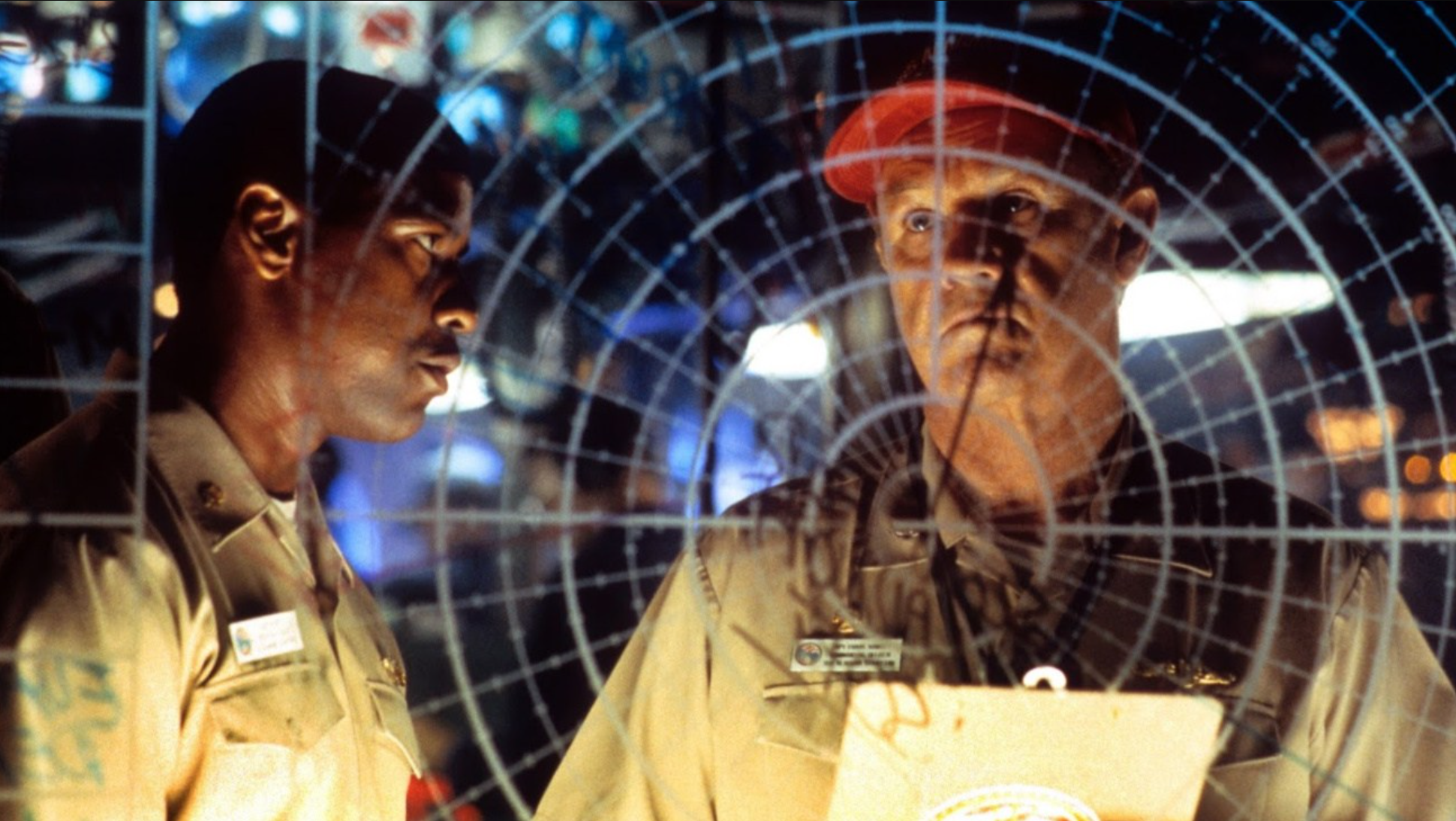
In the vast, ever-expanding galaxy of Star Trek, the franchise has long oscillated between optimistic exploration and the stark, claustrophobic realities of military command. As writers and directors Jonathan Goldstein and John Francis Daley begin the developmental phase of their upcoming Star Trek feature film, they have revealed a surprising creative compass. Eschewing the typical references to space opera epics or high-fantasy sagas, the duo has anchored their vision in the grounded, high-stakes intensity of Tony Scott’s 1995 submarine thriller, Crimson Tide.
This decision is not merely a stylistic preference; it represents a significant pivot in how the Star Trek creative community views the franchise’s future. By citing Training Day and Crimson Tide as their primary “comps,” Goldstein and Daley are signaling a desire to strip away the artifice of the 24th century to reveal the raw, human friction that occurs when the weight of the world rests on the shoulders of two conflicting leaders.
The Philosophical Shift: From Exploration to Escalation
For decades, Star Trek functioned primarily as a series of diplomatic encounters and scientific discovery. However, the modern era of the franchise—specifically the work currently being produced for Paramount+—has shifted toward the "Badmiral" narrative: a trope where the institution of Starfleet is pitted against its own internal moral decay.
When Goldstein and Daley told Inverse that they intend to examine the humanity at the heart of the Starfleet "institution," they were implicitly acknowledging that the most compelling version of the Federation is one that is tested by internal dissent. "It takes place almost in real time," Goldstein noted, "and it just is a whole other look at what a Star Trek movie could be without betraying the fundamentals of what it should be."
This real-time approach is a direct stylistic lineage from the submarine genre. By limiting the scope of the film, both geographically and chronologically, the creators can focus on the pressure cooker of command. In Crimson Tide, the conflict between Denzel Washington’s Lieutenant Commander Ron Hunter and Gene Hackman’s Captain Frank Ramsey is the primary engine of the plot. It is a debate about the ethics of nuclear annihilation, framed within the narrow, pressurized corridors of a vessel submerged beneath the waves. For a franchise like Star Trek, which often deals with the "Kobayashi Maru" of morality, this template is remarkably efficient.
Chronology of an Obsession: A History of Naval Inspiration
The connection between Star Trek and submarine warfare is not a new development, but it has become increasingly overt in recent years. The bridge of a Starship, after all, is essentially a high-tech submarine—a self-contained vessel operating in a hostile, lightless medium.
1. The TOS Foundation (1966)
The original Star Trek series, particularly the episode "Balance of Terror," established the "cat-and-mouse" dynamic that would define space combat for decades. Director Vincent McEveety’s vision for the episode was explicitly modeled on submarine warfare, with the Enterprise and a Romulan Bird-of-Prey playing out a silent, deadly game of sonar (or sensor) pings and tactical maneuvering.
2. The Tarantino Connection (The 2010s)
Before his own Star Trek project was shelved, Quentin Tarantino—who famously provided an uncredited "punch-up" for the Crimson Tide screenplay—brought a distinct, pop-culture-literate edge to the submarine genre. His additions to the Crimson Tide script included references to the Silver Surfer and, most notably, Star Trek itself. The irony, of course, is that while Tarantino helped cement the idea that modern naval officers see Star Trek as a professional shorthand, his own pitch for a Star Trek film reportedly leaned into the "gangster" aesthetic of the TOS episode "A Piece of the Action."
3. The Modern Era (2020–Present)
The trend has hit a fever pitch in the current streaming cycle. The Picard creative team frequently cited Crimson Tide as a direct inspiration for the volatile relationship between Jean-Luc Picard and William Riker. More recently, the Star Trek: Strange New Worlds episode "Among the Lotus Eaters" and, even more clearly, "Orders of Magnitude," have been lauded for their tense, claustrophobic structures. Reviewers have pointed to these episodes as the "submarine thrillers" of the modern Trek canon, where the conflict is not with an alien threat, but with the fallibility of one’s own commanding officer.
Analyzing the "Badmiral" Narrative
The term "Badmiral" has become a shorthand among fans for the recurring plot point where a high-ranking Starfleet officer abandons their ideals for the sake of "security" or "efficiency." While often criticized as a cynical trope, the Crimson Tide lens offers a more nuanced reading.
In the film, Captain Ramsey is not a cartoon villain. He is a career veteran with a lifetime of service who believes, with absolute sincerity, that the chain of command is the only thing keeping the world from total chaos. Hunter, conversely, represents the modern, analytical officer who questions the morality of a launch order issued during a communication blackout.
By applying this structure to Star Trek, writers can move away from "good vs. evil" dynamics and into the grey area of "duty vs. conscience." If the future of the franchise is to remain relevant, it must grapple with the fact that its "utopian" military is still, at its core, a military. The friction caused by that realization is exactly what Goldstein and Daley are looking to exploit.
Supporting Data: Why This Direction Matters
The industry data suggests that audiences are increasingly drawn to "prestige" genre storytelling—narratives that take familiar settings and apply the weight of serious drama. Star Trek has often been accused of being too "light" in its cinematic iterations, particularly the Kelvin timeline films, which prioritized spectacle over the philosophical debates that defined the television shows.
The pivot toward the Crimson Tide model provides several distinct advantages:
- Cost-Effectiveness: A film focused on internal character conflict within a confined space is significantly less expensive to produce than a galaxy-spanning space opera requiring endless CGI environments.
- Narrative Focus: By anchoring the film in a "real-time" thriller structure, the directors can build tension naturally rather than relying on escalating action sequences.
- Cultural Resonance: The "crisis of leadership" theme resonates with contemporary audiences who are increasingly skeptical of institutional authority.
Implications for the Future of the Franchise
What does this mean for the future of the Star Trek brand? If the industry is moving toward a more grounded, morally ambiguous depiction of Starfleet, it suggests that the franchise is moving away from the "Wagon Train to the Stars" concept and toward something more akin to a political thriller.
This shift carries risks. Some fans argue that Star Trek should remain an optimistic beacon of hope, a vision of the future where we have transcended the petty political squabbles of the present. If every Star Trek story becomes a debate about the morality of an Admiral, the franchise risks becoming just another military-themed drama, losing the "exploration" aspect that made it unique in the first place.
However, the success of Strange New Worlds suggests that fans are willing to accept this darkness, provided it is handled with care. The key, as seen in Crimson Tide, is to treat the conflict as a battle of philosophies, not just a battle of egos.
Conclusion: A New Horizon for Starfleet
Jonathan Goldstein and John Francis Daley are clearly aiming to do something different with their Star Trek project. By looking to the past—not to Star Trek itself, but to the films that Star Trek inspired—they are attempting to find a new vocabulary for the franchise.
Whether this move will lead to a new golden age of Trek cinema remains to be seen. But in choosing to focus on the humanity behind the uniform, and the agonizing difficulty of making the "right" choice when no one is watching, they have tapped into the very thing that made the original series work in 1966. They have recognized that the most terrifying and beautiful place in the universe is not the edge of the galaxy, but the distance between the hearts of two men standing on the bridge of a ship, waiting for the order to fire.
As we look toward the future of the franchise, one thing is clear: the era of the "Badmiral" is not ending. Instead, it is being refined, elevated, and placed under the microscope of a submarine thriller. The waters are deep, the pressure is high, and for the first time in a long time, the future of Star Trek feels like it has something truly urgent to say.

 Reynand Wu
 Lina Hope