

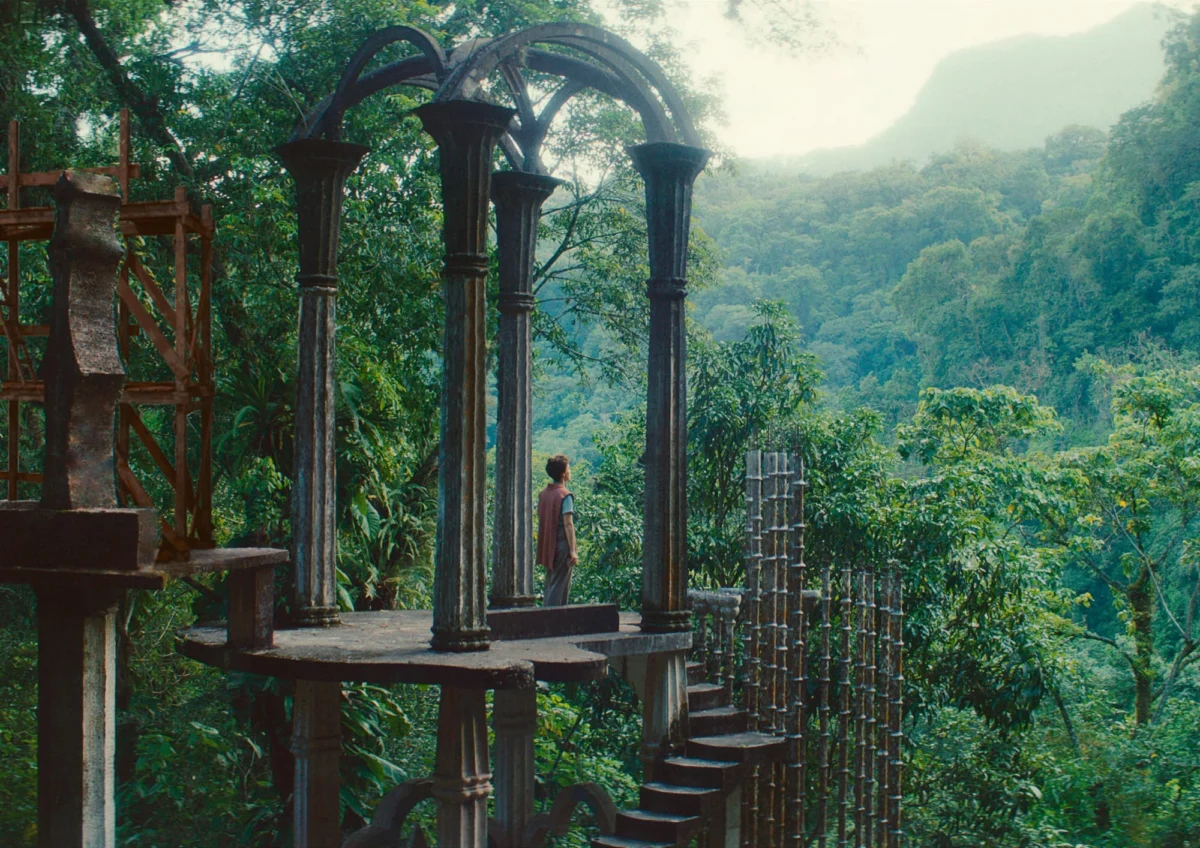
"Don’t you think it’s dangerous to blur the distinction between abstraction and reality?"
This evocative inquiry, delivered by actress Olivia Vinall, serves as the thematic heartbeat of Leonora in the Morning Light, a striking new biopic that seeks to unravel the enigmatic life and psyche of Surrealist titan Leonora Carrington (1917–2011). Directed by Thor Klein and Lena Vurma and produced by the acclaimed Modern Films, the feature film serves as a long-overdue cinematic exploration of one of the 20th century’s most profound, yet historically sidelined, artistic voices.
Main Facts: A Portrait of a Transgressive Artist
Leonora in the Morning Light is not a traditional cradle-to-grave biopic; rather, it is a focused, atmospheric study of Carrington’s formative and most turbulent years. The film centers on her early immersion in the 1930s Parisian avant-garde, where she moved in the orbit of legends such as Salvador Dalí and André Breton. At the heart of this narrative is her intense, creative, and volatile relationship with the older Surrealist painter Max Ernst.
The film, adapted from the biographical novel by the esteemed Mexican journalist and writer Elena Poniatowska, captures the high-stakes environment of pre-war Europe. As the political landscape shifted toward the abyss of World War II, Carrington’s life became a harrowing trajectory from the salons of Paris to the confines of a Spanish psychiatric institution, eventually finding sanctuary and artistic rebirth in Mexico.

Modern Films, the production house behind the project, has built a reputation for bringing the stories of marginalized or misunderstood artistic geniuses to the screen. With previous successes like the documentary on the visionary Hilma af Klint and Boom For Real, which chronicled the early years of Jean-Michel Basquiat, the studio continues its mission to illuminate the origins of modern creative movements.
Chronology: From European Turmoil to Mexican Rebirth
To understand the weight of Leonora in the Morning Light, one must trace the timeline of a life that spanned nearly a century of radical change.
The Parisian Crucible (1937–1939)
In her early twenties, the British-born Carrington rejected the expectations of her wealthy upbringing to join the Surrealist movement in Paris. It was here that she produced some of her most iconic early works, blending the uncanny with domestic subversion. Her relationship with Max Ernst was a symbiotic fire, characterized by an intense exchange of ideas that blurred their personal and professional identities.
The War and the Abyss (1940–1941)
The outbreak of World War II shattered this idyll. Ernst was arrested as an "enemy alien," and a traumatized Carrington fled to Spain. The psychological toll of the conflict and her subsequent abandonment resulted in a nervous breakdown. She was committed to a psychiatric hospital in Santander, where she endured brutal treatment. It is here that the film finds its most poignant resonance; the trauma of this confinement became a source of both profound suffering and, eventually, a unique, visceral aesthetic that would define her later career.

Exile and Evolution in Mexico (1942–2011)
Escaping to Mexico City, Carrington found a culture that embraced her occult interests and deep-seated symbolism. Mexico became more than a residence; it became her muse. Surrounded by a circle of exiles and local artists, she matured into a prolific painter, sculptor, and novelist. Her later life was marked by a synthesis of Celtic mythology, Mesoamerican mysticism, and the lingering, sharp-edged memories of her confinement.
Supporting Data: The Rediscovery of the Lost Works
The timing of Leonora in the Morning Light is far from coincidental. It coincides with a global resurgence of interest in Carrington’s work, specifically a major cultural event involving the recovery of her "lost" paintings.
For eight decades, a collection of fantastical, dream-like works that Carrington produced during her psychiatric confinement in Spain remained hidden from the public eye. These pieces, which serve as a visual diary of her mental state and her struggle for autonomy, were recently brought to light. Experts suggest that these works bridge the gap between her early European Surrealism and her mature, highly symbolic Mexican period.
The recent archival research confirms that these works were not merely the products of illness, but a sophisticated, visual language of resistance. According to curators, the "lost" works demonstrate a level of technical precision and narrative complexity that rivals the established masters of the Surrealist canon. This recovery has recalibrated the art historical consensus, moving Carrington from a peripheral figure—often relegated to the role of "Max Ernst’s muse"—to a central, independent protagonist of the Surrealist movement.

Official Responses and Creative Direction
Directors Thor Klein and Lena Vurma have emphasized that their goal was to avoid the "biographical trap" of explaining an artist’s work through their trauma. "We wanted to look at how Leonora transformed her reality," says Klein. "The distinction she makes in the film between abstraction and reality is central. She didn’t just paint dreams; she painted the reality of her internal experience, which was often more tangible than the world outside."
Modern Films has expressed that the film serves as a tribute to the "female gaze" within the Surrealist movement. By centering on Poniatowska’s novel, the film leans into the literary tradition of the artist’s own memoirs, ensuring that the narrative retains the surreal, non-linear quality that defined her prose and her paintings.
"It is about reclaiming a voice that was often spoken for by men," a spokesperson for the production team noted. "The film asks the audience to look at the art not as an object of mystery, but as a map of a survival strategy."
Implications: A New Era for Surrealist Scholarship
The release of Leonora in the Morning Light carries significant implications for the contemporary art market and academic study.

- Market Re-evaluation: With the rediscovery of the lost psychiatric-period paintings, the market value of Carrington’s oeuvre has surged. Collectors are now prioritizing her mid-century work, which had previously been undervalued compared to her male counterparts.
- Gendered Art History: The film is part of a larger, systemic shift in art history that seeks to redress the gender imbalance of the mid-20th century. By highlighting her transition from a "muse" to a master, the film forces a re-examination of how we categorize female artists in the canon.
- The Interdisciplinary Approach: By blending the narrative of the film with the historical reality of the lost works, the project encourages a multidisciplinary approach to art history—one that combines biography, political history, and visual analysis.
As the film prepares for its U.K. and Ireland release on May 29, it serves as more than a piece of entertainment. It is a catalyst for a conversation about the nature of sanity, the role of the artist in times of global conflict, and the enduring power of the female imagination.
In the end, Leonora in the Morning Light challenges viewers to consider their own "abstraction and reality." If, as Carrington suggested, the line between the two is dangerous, then the film argues that it is a danger worth courting. Through her eyes, the world is not merely a collection of objects to be painted, but a landscape of spirits, myths, and deep, persistent truths waiting to be excavated from the morning light.
As the world continues to rediscover her legacy, one thing is certain: Leonora Carrington is no longer a ghost in the shadows of the male Surrealists. She is, finally, the architect of her own legend, and this film is the long-awaited window into that singular, masterful vision.











No comments yet. Be the first to join the conversation!