Azzam Bilal Chamdy
In a landmark achievement that blurs the lines between biology and computer science, researchers at Maynooth University in Ireland have unveiled a "first-of-its-kind" molecular computer. Unlike traditional silicon-based processors that rely on the flow of electrons, this new system—termed a Scaffolded DNA Computer (SDC)—harnesses the structural elegance of DNA to perform complex mathematical operations. Published on September 16 in the prestigious journal Nature, this development marks a significant shift in how we might conceive of computation in the coming decades, offering a vision of technology that is not only energy-efficient but biologically integrated.
Main Facts: The Architecture of Life as Hardware
The SDC operates on a principle that is fundamentally different from the binary logic gates found in the CPU of a smartphone or a supercomputer. At its core, the system utilizes DNA strands as the physical medium for information processing. By abandoning electricity, the researchers have created a platform that performs "molecular programs"—a series of biochemical interactions that process data at a structural level.
The system is defined by its ability to execute 10 distinct molecular programs, including high-complexity 100-bit calculations. By utilizing a "scaffold" approach, the researchers have overcome previous limitations in molecular computing, such as instability and slow processing speeds. The result is a device that is among the fastest and most complex molecular computers ever constructed.
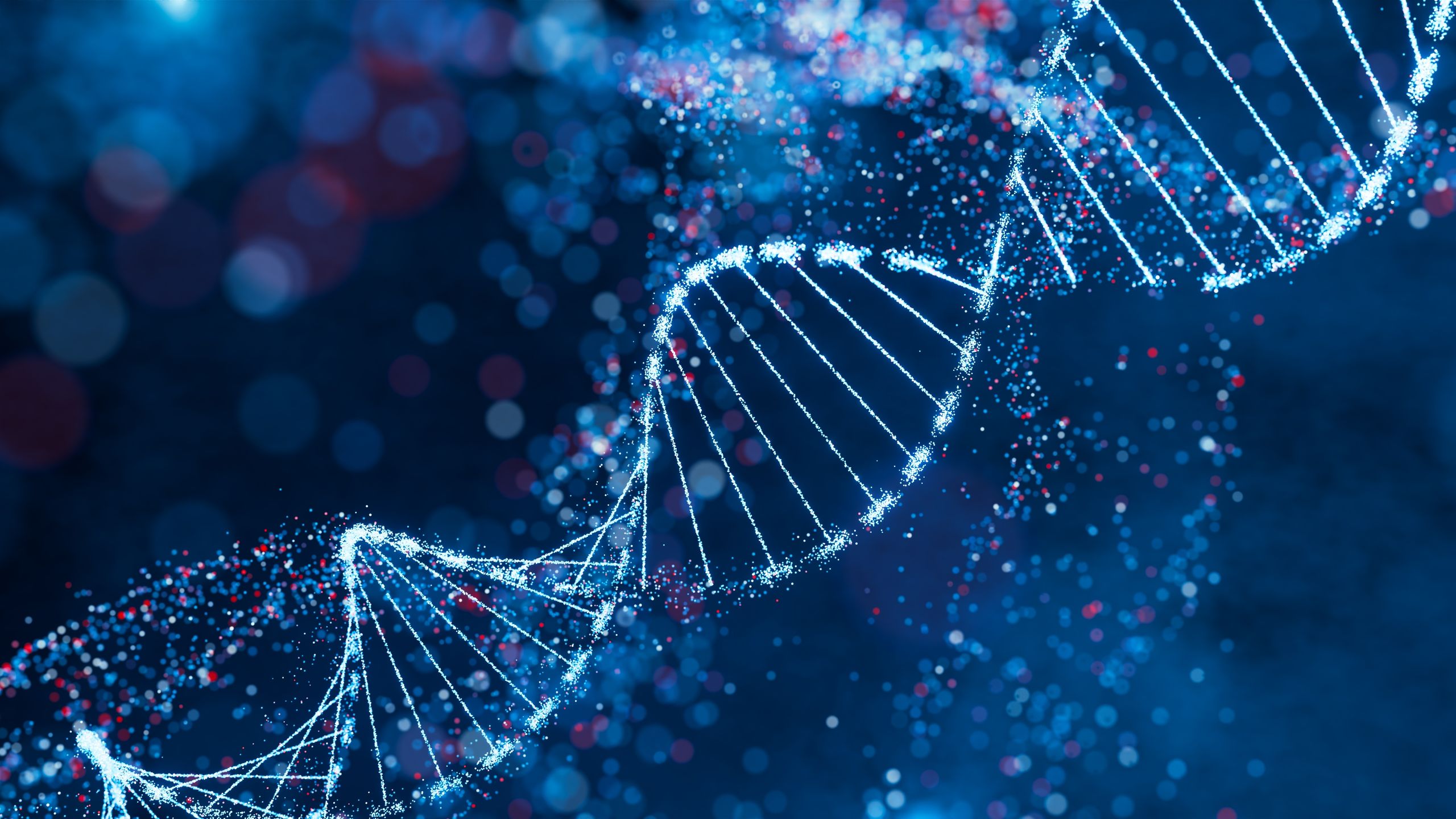
The mechanism relies on a technique known as "DNA origami." The researchers first utilized specialized computational modeling software to map out a long primary DNA strand. This strand serves as the backbone—the "scaffold"—to which hundreds of shorter, custom-synthesized "staple" strands are attached. When introduced into a simple aqueous solution containing water and salt, the mixture undergoes a controlled thermal cycle: heating and then cooling. This process triggers a self-assembly phenomenon where the strands spontaneously fold and snap into a highly organized, microscopic computing grid.
A Chronological Evolution of Molecular Computing
The journey to the Maynooth SDC did not happen overnight; it is the culmination of decades of research into bio-molecular engineering.
- The Theoretical Foundations (1994): The field was birthed by Leonard Adleman, who demonstrated that DNA could solve the "Hamiltonian path problem," a complex mathematical puzzle. This proved that DNA could serve as a computing medium.
- The Rise of DNA Origami (2006): Paul Rothemund introduced the concept of DNA origami, allowing scientists to fold long DNA strands into precise, pre-designed shapes. This provided the "hardware" necessary for future molecular machines.
- The Shift to Logical Processing (2010s): Throughout the last decade, researchers began creating DNA-based logic gates (AND, OR, NOT). However, these systems were often slow, prone to errors, and difficult to scale.
- The Maynooth Breakthrough (2024): The Maynooth University team successfully integrated the structural precision of DNA origami with complex logical processing, effectively creating a "CPU" that operates within a test tube. By formalizing the scaffolded approach, they moved the field from static structures to dynamic, programmable computing.
Supporting Data: Why DNA?
To understand the magnitude of this breakthrough, one must look at the limitations of current silicon-based technology. Silicon chips are reaching the physical limits of miniaturization—Moore’s Law is slowing as we approach the atomic scale. Furthermore, silicon processors generate immense heat and require constant electrical power.
The SDC offers a radical alternative:
- Energy Efficiency: The SDC requires virtually no external power to maintain its state. The computational "work" is performed by the chemical potential energy inherent in the DNA bonds.
- Density: DNA storage density is orders of magnitude higher than any hard drive or flash memory currently in existence. A single gram of DNA can theoretically hold 215 petabytes of data.
- Biological Compatibility: Because the computer is made of the same material as life itself, it can exist within a physiological environment—such as the human body—without being rejected as a foreign object.
The Maynooth team’s demonstration of 100-bit calculations is the "killer app" for this technology. In computing, bit-depth determines the complexity of the problems a system can solve. By hitting the 100-bit threshold, the researchers have proven that molecular computers are no longer just toys for simple logic, but capable of tackling sophisticated mathematical operations.
Official Perspectives and Academic Response
The scientific community has responded to the Nature publication with cautious optimism. Experts in the field of nanotechnology suggest that this architecture addresses the "wiring" problem that has plagued molecular computing for years. By using a scaffold, the researchers have effectively created a "printed circuit board" at the molecular level, ensuring that the inputs and outputs are correctly positioned for interaction.
While the researchers at Maynooth emphasize that this is a "first-of-its-kind" system, they are careful to frame it as a foundational step. "This points to new possibilities for long-term data storage, energy-efficient computation and, in time, molecular systems that could operate inside cells," the team stated in their report. They argue that the goal is not to replace the laptop or the smartphone, but to create a new class of "biocomputers" that can perform tasks impossible for traditional hardware.
Independent analysts suggest that the primary challenge moving forward will be the speed of chemical reactions. While the SDC is "fast" for a molecular computer, it is still exponentially slower than the gigahertz clock speeds of silicon processors. However, for applications like medical diagnostics—where the computer must wait for biological signals—the speed is more than adequate.
Implications: The Future of Medicine and Computing
The implications of this technology are vast, potentially transforming fields ranging from environmental monitoring to clinical medicine.
Medical Diagnostics and Targeted Therapy
The most promising application of the SDC is in healthcare. Because the system can "compute" based on the presence of certain DNA or RNA sequences, it could eventually act as a "smart drug." Imagine a microscopic computer circulating in the bloodstream, monitoring for the presence of cancer-cell-specific markers. Once the system detects the correct combination of markers (a complex 100-bit calculation), it could trigger the release of a therapeutic agent directly at the site of a tumor.
Archival Data Storage
As the world generates data at an exponential rate, our current infrastructure for data centers is becoming unsustainable. DNA-based storage represents a way to archive the entirety of human knowledge in a space no larger than a shoebox, with data potentially remaining readable for thousands of years, unaffected by electromagnetic pulses or power outages.
Sustainable Computing
The environmental cost of the digital age is significant. By shifting even a small fraction of computational tasks to molecular systems—which operate at room temperature in water-based solutions—the carbon footprint of global data processing could be drastically reduced.
Conclusion: A New Paradigm
The Scaffolded DNA Computer developed at Maynooth University represents more than just a clever engineering trick; it is a fundamental rethinking of what constitutes a "computer." By moving away from electrons and toward the chemical language of biology, researchers have opened a door to a future where our devices are not just built, but grown.
While the technology is currently confined to controlled laboratory settings and test tubes, the leap from a 100-bit calculation to a functioning, in-vivo diagnostic tool is a path now clearly marked. As we look toward the next decade of innovation, the SDC stands as a testament to human ingenuity, proving that the ultimate computer may not be found in a factory, but in the very molecules that form the code of life itself. We are entering an era of "wetware," and the possibilities for our digital and biological future are only beginning to unfold.

 Iffa Jayyana
 Dwi Wanna