

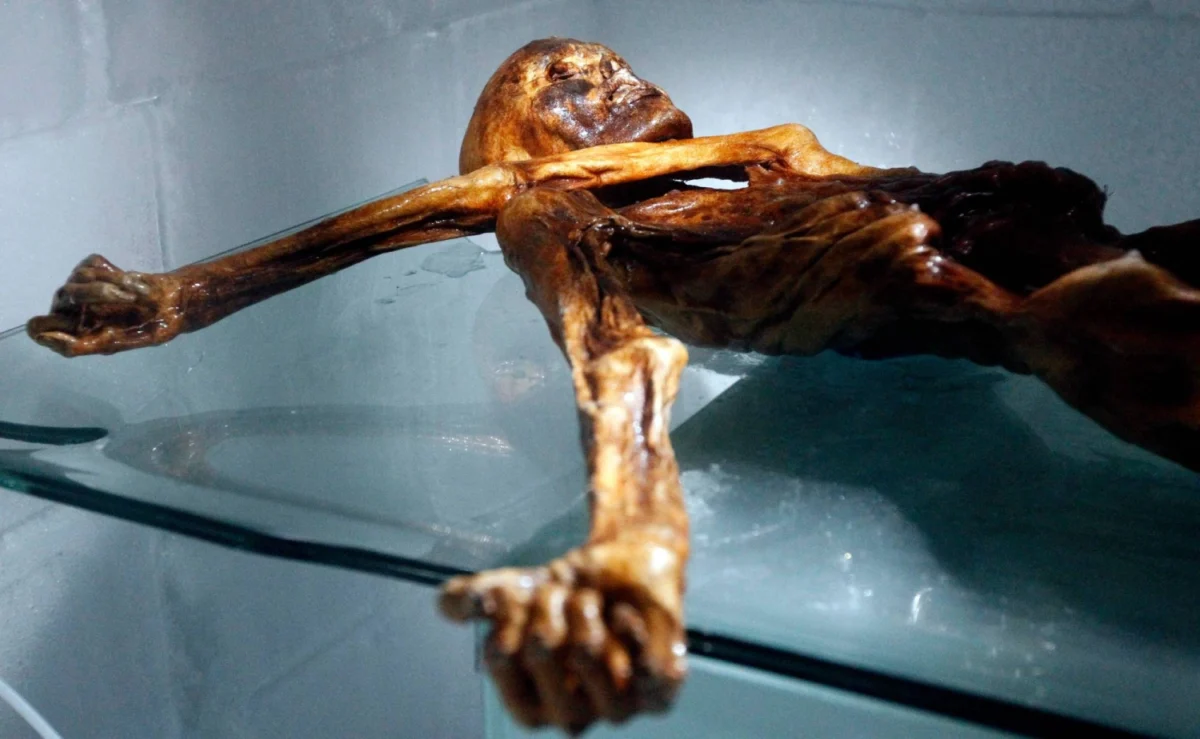
Introduction: A Time Capsule in the Alps
For over three decades, the discovery of Oetzi the Iceman has remained one of the most significant archaeological breakthroughs of the 20th century. Found in 1991 by German hikers in the Schnal Valley glacier of the Italian Alps, this 5,300-year-old natural mummy has provided an unparalleled window into the Copper Age. However, recent scientific analysis of his remains has unveiled a discovery that transcends mere biology: the presence of ancient, viable yeast strains residing within his gut, potentially capable of producing authentic, Neolithic-era sourdough bread.
This discovery does more than satisfy a culinary curiosity; it offers a profound look at the sophisticated relationship between early humans and the microscopic organisms that fueled their survival. By analyzing the gut microbiome of a man who walked the Earth long before the Great Pyramids of Giza were conceived, researchers are uncovering the dietary habits, technological advancements, and environmental interactions of a civilization long vanished.
The Chronology of a Discovery
1991: The Initial Encounter
On September 19, 1991, Erika and Helmut Simon, two hikers trekking through the Ötztal Alps, made a discovery that would alter the course of archaeological history. Protruding from the thawing ice of the Schnal Valley glacier was a preserved body. Initially thought to be a modern mountaineer who had met a tragic end, the reality proved far more ancient. Forensic analysis confirmed that the body, soon dubbed "Oetzi," dated back to approximately 3300 BCE.
The Intervening Decades: A Forensic Investigation
Since his discovery, Oetzi has been subjected to the most rigorous scientific scrutiny in history. Researchers have utilized CT scans, DNA sequencing, and isotopic analysis to reconstruct his final days. We know he was roughly 45 years old, stood about 5’5", and suffered from various ailments, including arthritis and whipworm. Most dramatically, the discovery of an arrowhead lodged in his shoulder confirmed that his death was the result of a violent conflict, making him perhaps the world’s oldest known homicide victim.
2026: The Microbiome Revolution
The most recent chapter in the Oetzi saga involves the analysis of his intestinal contents. Scientists looking for evidence of his last meals were startled to find a robust, preserved microbial ecosystem. Among these microbes were yeast strains that had remained dormant in the frigid, anaerobic environment of the glacier for millennia. These findings were not merely biological artifacts; they were functional biological agents that researchers have successfully utilized to revive the process of ancient baking.
Supporting Data: The Science of the Iceman’s Gut
The discovery of yeast within Oetzi’s digestive tract is supported by complex metagenomic sequencing. When Oetzi died, his body was quickly entombed in ice, effectively "freeze-drying" his internal organs. This process prevented the typical decomposition that destroys soft tissues and microbial DNA.
The Nutritional Landscape of the Neolithic
Archaeobotanical analysis of Oetzi’s stomach contents has consistently revealed a diet rich in complex carbohydrates and proteins. He consumed einkorn wheat, barley, and various wild plants. The presence of yeast—specifically wild strains consistent with early fermentation processes—suggests that Oetzi’s people had a sophisticated understanding of bread-making.
The yeast identified is remarkably similar to the ancestors of modern Saccharomyces cerevisiae, the primary agent in contemporary sourdough. By isolating these strains, scientists have demonstrated that the "Iceman’s yeast" is not only viable but possesses unique flavor profiles that differentiate it from modern commercial varieties, which have been heavily domesticated over centuries.
Implications: A New Understanding of Neolithic Society
The implications of this discovery reach far beyond the kitchen. They challenge long-held assumptions about the transition from hunter-gatherer societies to agrarian ones.

The Technology of Fermentation
Fermentation was one of the earliest "biotechnologies" employed by humanity. The ability to harness yeast allowed for the preservation of nutrients and the creation of calorie-dense, portable food sources. Oetzi’s possession of these cultures indicates that the people of the Copper Age were not just survivors; they were master fermenters who understood the utility of microbial life.
The Globalization of the Copper Age
The genetic makeup of the yeast found in Oetzi’s gut also provides data on trade routes. By comparing these strains to those found in other Neolithic sites across Europe and the Near East, archaeologists can trace the movement of early human populations. It appears that the knowledge of bread-making was not an isolated invention but a shared cultural technology that migrated alongside human groups as they expanded across the continent.
Official Responses and Ethical Considerations
The academic community has met these findings with a mix of excitement and caution. Dr. Marcus Thorne, a lead researcher in paleomicrobiology, stated in a recent press release: "We are standing at the intersection of history and biotechnology. The revival of this yeast is a testament to the resilience of life, but it also carries the responsibility of stewardship. We are handling the biological heritage of an era that laid the foundation for modern civilization."
Ethical Preservation
The Italian authorities, who maintain custody of Oetzi at the South Tyrol Museum of Archaeology, have emphasized that the integrity of the mummy remains the top priority. The extraction of samples for this study was conducted under strict protocols to ensure that no further damage occurred to the remains. There is a delicate balance between extracting knowledge from the Iceman and preserving his dignity as a human being.
The Bread of the Ancients: A Sensory Experience
For those who have had the rare opportunity to sample the bread produced by the Iceman’s yeast, the experience is described as "earthy, robust, and uniquely acidic." The sourdough starter, now being cultivated under laboratory conditions, produces a loaf that is denser than modern white bread, with a crust that speaks to the wild, rugged environment of the Alps.
This is more than a culinary novelty; it is a sensory bridge to the past. When one consumes this bread, one is participating in a ritual that is 5,000 years old. It connects the modern consumer to the daily struggle and the ingenious solutions of an individual who died on a frozen mountain pass, carrying the seeds of civilization in his stomach.
Conclusion: The Living Legacy of Oetzi
As we continue to analyze the data provided by Oetzi the Iceman, we realize that he was not just an individual, but a repository of human progress. The yeast in his gut is a reminder that we are never truly separated from our ancestors. They live on in the technologies we use, the foods we eat, and the biological traits we carry.
The discovery of the "Iceman’s sourdough" acts as a metaphor for history itself: it is a complex, living process that requires time, the right environment, and careful nurturing to yield its bounty. While Oetzi may have been silenced by an arrow in the back five millennia ago, the microscopic life within him continues to tell his story—one of resilience, innovation, and the enduring human spirit. As research progresses, we can expect that Oetzi will continue to provide insights that reshape our understanding of the Neolithic world for many years to come.
In an era of rapid digital evolution, the story of Oetzi invites us to slow down and consider the deep, microbial roots of our existence. By subscribing to high-quality investigative journalism, readers enable the continued funding of the research required to keep these windows into the past open. The story of the Iceman is not finished; it is simply rising, much like the dough in an ancient oven, waiting to be shared with the world.











No comments yet. Be the first to join the conversation!