Asep Darmawan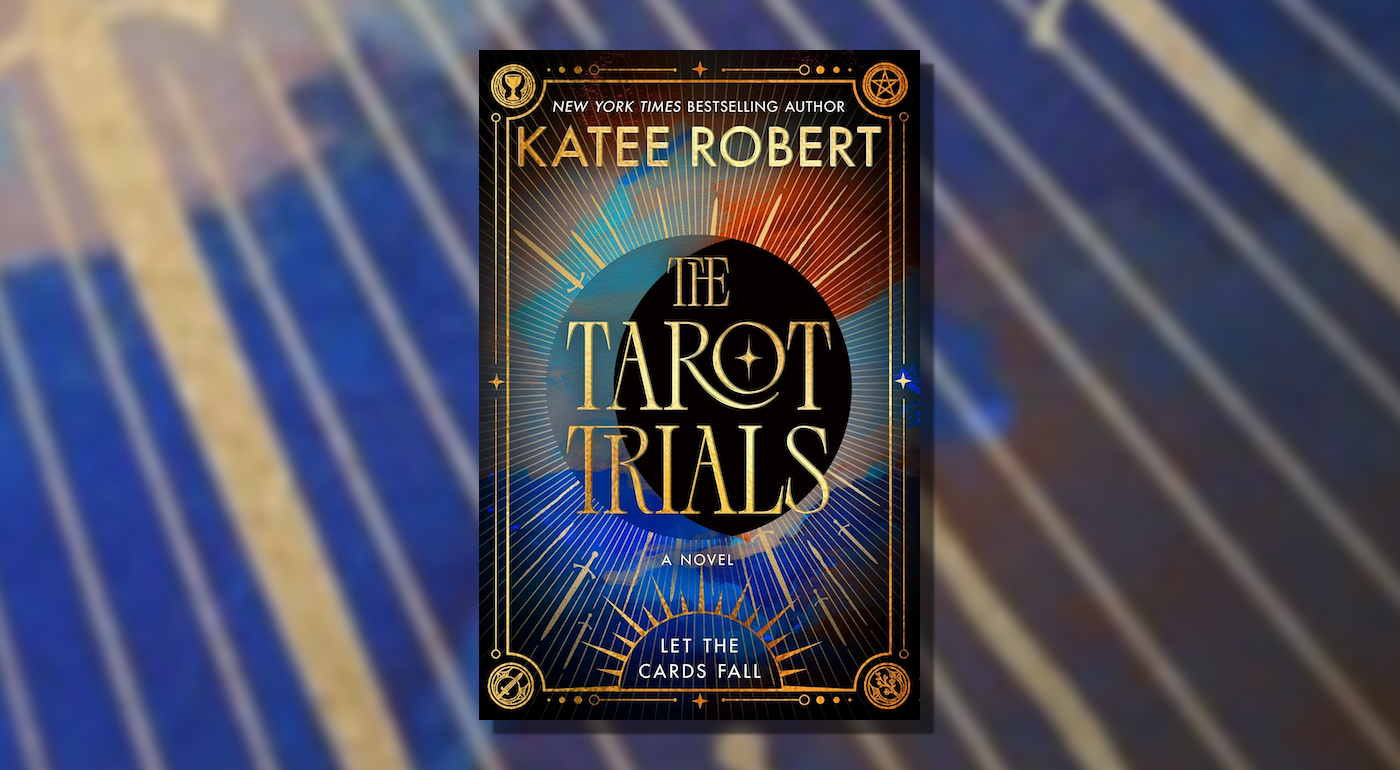
The fantasy literary landscape is set to undergo a seismic shift this October 20th with the release of The Tarot Trials, the latest high-octane epic from bestselling author Katee Robert. Published by Tor Books, the novel promises a visceral, fast-paced exploration of a world governed by tarot-based magic, systemic corruption, and a lethal competition that claims as many lives as it does crowns. With the publisher also confirming an immersive audiobook edition narrated by Lindsey Dorcus, The Tarot Trials is positioned to be one of the most significant releases of the autumn season.
The Crucible of Fate: Understanding the Trials
At the heart of the narrative is Kestrel, a protagonist whose life has been defined by the shadow of a mother who once reached the pinnacle of power only to be executed for alleged treason. The "Cinque"—a ruling body of five—stand as the ultimate objective for any competitor, but the path to ascension is paved with the corpses of those who came before.
Kestrel enters the Trials not merely as a hopeful competitor, but as a woman seeking to claim her mother’s mantle and, more importantly, the truth behind her death. She must navigate a landscape defined by "shadow and illusion," while surviving a brutal game where alliances are fleeting and betrayal is an inevitability rather than a possibility.
A Chronology of Conflict: The Excerpt Breakdown
The provided excerpt offers a harrowing glimpse into the reality of the Trials. The narrative structure follows Kestrel as she observes a lethal confrontation from the rooftops of the Minor Court districts—a setting that serves as a microcosm of the systemic inequality plaguing this world.
The Staged Massacre
The scene begins with Kestrel witnessing a brutal skirmish involving five champions: Death, Judgment, the Lovers, the Empress, and the Tower. The events that unfold demonstrate the volatile nature of these competitions:
- Strategic Alliances: The sequence highlights the complex, often shifting nature of alliances. The Lovers and the Empress align with Judgment, while the Tower is approached by Death, creating a tactical standoff that favors the powerful.
- The Display of Arcane Prowess: The combatants display unique magical affinities. The Empress utilizes nature-based magic (roots), the Lovers employs a psychological or mental weapon, and the Tower displays raw, destructive force.
- The Turning Point: The conflict reaches a zenith when the Tower, despite being immobilized by the Empress’s roots, executes a devastating counter-attack. The precision and lethality of the combatants suggest that the Trials are not merely about survival, but about the cold-blooded elimination of threats.
- The Fall of Judgment: In a shocking twist, the Tower manages to defeat the formidable Judgment—a member of the Cinque—signaling a potential shift in the power hierarchy of the world.
Supporting Data: The Mechanics of the Trials
To understand the gravity of The Tarot Trials, one must analyze the world-building mechanics revealed through Kestrel’s perspective. The "Minor Courts" are not merely symbolic; they provide tangible, if limited, advantages to their champions.
- Resource Disparity: Kestrel’s internal monologue underscores a massive wealth gap. The Cups District and other Minor Courts hoard resources while the populace—including those "me and mine"—suffers from starvation. This systemic oppression acts as a primary motivator for Kestrel, suggesting that the Trials are a tool for maintaining the status quo rather than an honest path to meritocracy.
- Magical Limitations: The excerpt reveals that magic is tied to physical exertion and environmental factors. The Empress, for example, is constrained by her distance from the gardens, illustrating that even the most powerful champions are bound by the physical laws of the arena.
- The "Shadow" Advantage: Kestrel’s own ability, a gift from the Moon, allows for stealth and the manipulation of shadows. This suggests that the Trials are designed to reward specific archetypal strengths, forcing champions into specialized roles that define their survival potential.
Official Commentary and Narrative Implications
Katee Robert has long been celebrated for her ability to weave complex power dynamics into high-stakes romance and fantasy. In The Tarot Trials, she appears to be elevating these themes to a new level. The publisher’s marketing materials describe the book as a "high-octane" competition, but the prose suggests something much darker: a commentary on generational trauma and the cycle of violence.

The implications for the story are vast. With Judgment—a pillar of the ruling Cinque—dead, the power vacuum left in his wake is likely to incite chaos across the districts. Furthermore, Kestrel’s precarious position at the end of the excerpt—caught in an ambush—suggests that the protagonist is entering a phase of the Trials where her survival will depend on her ability to manipulate her enemies rather than simply outfight them.
The Cost of the Crown: Philosophical Implications
The central question posed by the text—"winning the game isn’t about what she must do to win, but who she needs to survive"—serves as the novel’s thematic anchor. Throughout the excerpt, Kestrel is forced to grapple with the moral decay required to advance. She notes the "painful surprise" on the faces of the fallen, a stark reminder that every step toward the Cinque is a step away from her own humanity.
The interaction between Death and the Tower, and the subsequent "alliance" negotiation, suggests that the Trials are a self-correcting system. The strongest rise, the weakest are culled, and the survivors are hardened by the very acts they commit. Kestrel’s journey is not just a fight against the Cinque, but a fight against the transformation that the Trials demand of its participants.
Conclusion: A New Standard for Fantasy
As the October 20th release date approaches, anticipation for The Tarot Trials continues to mount. By blending the high-stakes tension of a battle royale with the intricate, symbolic richness of tarot-based magic, Robert is poised to deliver a narrative that is both physically thrilling and intellectually challenging.
Whether it is the haunting imagery of the Tower’s vengeance or the subtle, systemic critiques of the Minor Courts, the novel presents a world that is as dangerous as it is captivating. For readers who enjoy their fantasy with a heavy dose of political intrigue, high-stakes competition, and the constant threat of lethal betrayal, The Tarot Trials is an essential addition to the 2026 reading list.
As Kestrel herself realizes in her darkest moment, the game is rigged—but in the hands of a champion who knows how to manipulate the shadows, even a rigged game can be won. Readers can secure their copies through major retailers and experience the audio version narrated by Lindsey Dorcus to fully immerse themselves in the world of the Tarot.


 Laily UPN
 Iffa Jayyana