In a world where the definition of family is constantly evolving, a heartwarming trend has emerged from the heart of Ecuador. For many, a wedding is the most significant day of their lives, traditionally shared with human family and friends. However, for a growing number of couples in this South American nation, a marriage ceremony is incomplete without their most loyal companions: their pets.
Recent civil wedding ceremonies in Ecuador have begun to feature an unconventional addition to the registry: the paw print of a dog or cat. As pet ownership continues to skyrocket across the country, officials and citizens alike are redefining what it means to formalize a union, placing four-legged friends at the center of the altar.
The Cultural Shift: A Nation of Pet Lovers
To understand why pets are suddenly appearing as witnesses at weddings, one must look at the demographic landscape of Ecuador. Recent census data paints a vivid picture of a nation that has collectively opened its heart to animals. Among Ecuador’s 19 million residents, a staggering 7.6 million households now include dogs and cats.
Perhaps most tellingly, this figure is nearly double the number of children aged 12 or under residing in the country. This shift in domestic dynamics suggests that for many Ecuadorians, the traditional family unit has expanded to prioritize animal companionship. As the role of pets evolves from "guard dog" or "outdoor animal" to "integral family member," it was only a matter of time before these creatures began appearing in the most significant chapters of their owners’ lives.
Chronology of a Trend: From Idea to Altar
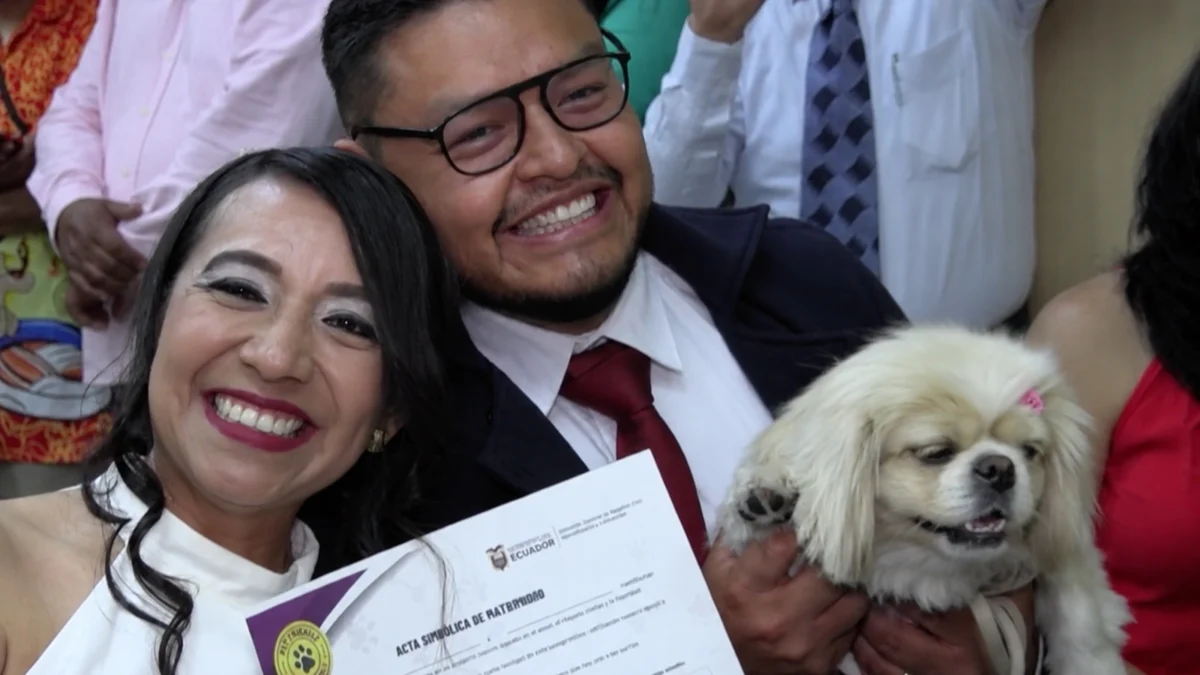
The trend gained significant momentum earlier this year, but it took a specific, high-profile case to capture the national imagination. Diana Tupiza and Andres Alquinga, a couple looking for a way to make their civil ceremony uniquely personal, decided that their Pekingese, Luna, should play a formal role in their vows.
The decision was not without its hurdles. When Andres first proposed the idea, the couple was met with skepticism from the older generation. Diana’s mother, in particular, was initially resistant to the notion. "It’s better to choose someone who knows what they’re signing," she famously remarked, echoing the traditional view that a witness must be a person of legal standing.
However, as the couple persisted, the mother’s skepticism melted into genuine enthusiasm. In a touching show of support, she even handcrafted a delicate pink tulle gown for Luna, ensuring the Pekingese looked the part for her role as the "witness."
On the day of the ceremony, the atmosphere was charged with emotion. After the couple exchanged their vows, the moment arrived for the witness signature. Luna was guided to the "symbolic marriage certificate," where a designated box labeled "Paw print of your furry friend" awaited. With the assistance of the couple, Luna pressed her paw onto the document, cementing her role in the union alongside the traditional human witnesses.
The Surge in Pet-Inclusive Ceremonies
While the paw print holds no legal weight in the eyes of the state, its sentimental value is undeniable. Since May of this year, the phenomenon has exploded. Over 50 couples in Ecuador have since opted to include their pets in their civil wedding ceremonies, a testament to the deep-seated bond between humans and their animals.
For many, these weddings are less about the legal document and more about the symbolic inclusion of their pets in the family foundation. As Diana Tupiza noted following her ceremony, the experience was "really spectacular." For her husband, Andres, the choice was about acknowledging the unspoken support their pet provides. "Pets may not be able to speak to us, or give us advice," he said, "but they are there to give us all the love that they have."
Official Responses and the Legal Gray Area
The reaction from Ecuadoran officials has been one of quiet accommodation. While the civil registry offices cannot legally recognize a dog as a valid legal witness—as the law requires human witnesses who can sign and swear to the validity of the marriage—officials have chosen to facilitate the request by providing space for the "symbolic" signature.
This pragmatic approach highlights a broader institutional flexibility. By allowing these "pet-friendly" additions, the civil registry is acknowledging the evolving social mores of the population. It is a subtle but profound recognition that for a large portion of the electorate, their dog or cat is not merely property, but a sentient member of their household.
The legal community, however, remains cautious. Lawyers emphasize that these paw prints are, for now, purely decorative. A marriage certificate remains a legal document that must be signed by legally competent humans to be binding. Yet, there is a growing conversation about whether this trend could eventually lead to more formal recognition of animals in legal contexts, such as pet trusts or custody arrangements in divorce, which are already gaining traction in other parts of the world.
Implications for Future Traditions
The implications of this trend extend far beyond a single ceremony. The inclusion of pets in weddings reflects a shift toward "humanizing" pets, a trend that is reshaping industries ranging from pet food and healthcare to travel and event planning.
In Ecuador, businesses have already begun to pivot. Wedding planners are now offering packages that include pet-sitting services during the ceremony, custom-made ring-bearer collars, and pet-safe wedding cakes. This indicates that the "pet-witness" phenomenon is not a passing fad, but a structural change in how social events are organized.
Furthermore, this trend highlights a changing demographic reality. As couples delay marriage or opt for smaller families, the role of the pet as a companion becomes even more central. For these couples, a wedding is not just the start of a marriage between two people; it is the public acknowledgment of an existing, multi-species family unit.
A Wider Context: The Historical Human-Animal Bond
While the sight of a dog signing a marriage certificate might seem like a modern quirk, it is rooted in a history of human-animal companionship that spans millennia. Recent archaeological findings, such as the analysis of ancient dog DNA, have revealed that humans and dogs have shared a symbiotic relationship for over 16,000 years.
This deep-rooted history explains why we feel such an acute need to include these animals in our milestones. We are not just bringing them to weddings; we are acknowledging that they have been our partners through the evolution of civilization itself. Whether it is a dog helping a Neolithic hunter or a Pekingese witnessing a 21st-century civil union, the core of the relationship remains unchanged: loyalty, presence, and silent support.
Conclusion: A New Standard for "I Do"
The story of Luna the Pekingese and the dozens of other pets who have followed in her paw-steps is a reminder that tradition is never static. It is a living, breathing entity that changes as our values change.
In Ecuador, the inclusion of pets in weddings is a heartwarming reflection of a society that prizes the bond between humans and animals. While a paw print may not carry the weight of a judge’s gavel or a legal signature, it carries something perhaps more enduring for the couples involved: the acknowledgment of a bond that is, in its own way, as permanent as any vow.
As more couples across the globe seek to personalize their nuptials, we may well see the "pet witness" become a standard feature of the modern wedding. It is a simple, tender gesture that asks little of the animal and offers much to the couple—a reminder that in the presence of those we love, both human and animal, our promises are made that much stronger.