Apple has officially ushered in a new era of computing with the launch of MacOS 27, codenamed "Golden Gate." Alongside the highly anticipated iPhone 18 Pro and the introduction of iOS 27, the Cupertino-based tech giant has rolled out a suite of updates designed to integrate artificial intelligence more deeply into the desktop experience than ever before. However, while critics and power users have praised the refined performance and the sophisticated "Liquid Glass" design language, the launch has been overshadowed by an unexpected digital mystery: a masking error in the operating system’s default live wallpaper.
The Launch: What’s New in MacOS 27
MacOS 27 Golden Gate represents a significant pivot for Apple’s desktop ecosystem. The headline feature is the integration of an advanced, context-aware Siri. Unlike its predecessors, the new Siri utilizes on-screen awareness, allowing it to interpret visual data within open windows and applications. Whether a user is drafting a document, editing a complex graphic, or browsing the web, the AI can now provide actionable suggestions based on the specific content displayed on the screen.
Beyond the AI enhancements, the "Liquid Glass" design update introduces a translucent, fluid aesthetic that blurs the lines between hardware and software. The interface feels lighter, more responsive, and visually harmonious, aiming to reduce eye strain for professional creatives.
However, this transition comes at a cost. Apple has officially discontinued support for all Intel-based Macs. This move, while expected as Apple completes its transition to proprietary Silicon, has left a significant portion of the user base on older hardware—some of which are still perfectly capable machines—without access to the latest security patches and feature sets.
A Visual Anomaly: The Golden Gate Controversy
While the professional community has spent the last few weeks stress-testing the new AI capabilities and performance benchmarks, a more pedestrian issue has captured the attention of social media. Users have identified a recurring visual glitch in the default "Golden Gate" live wallpaper.
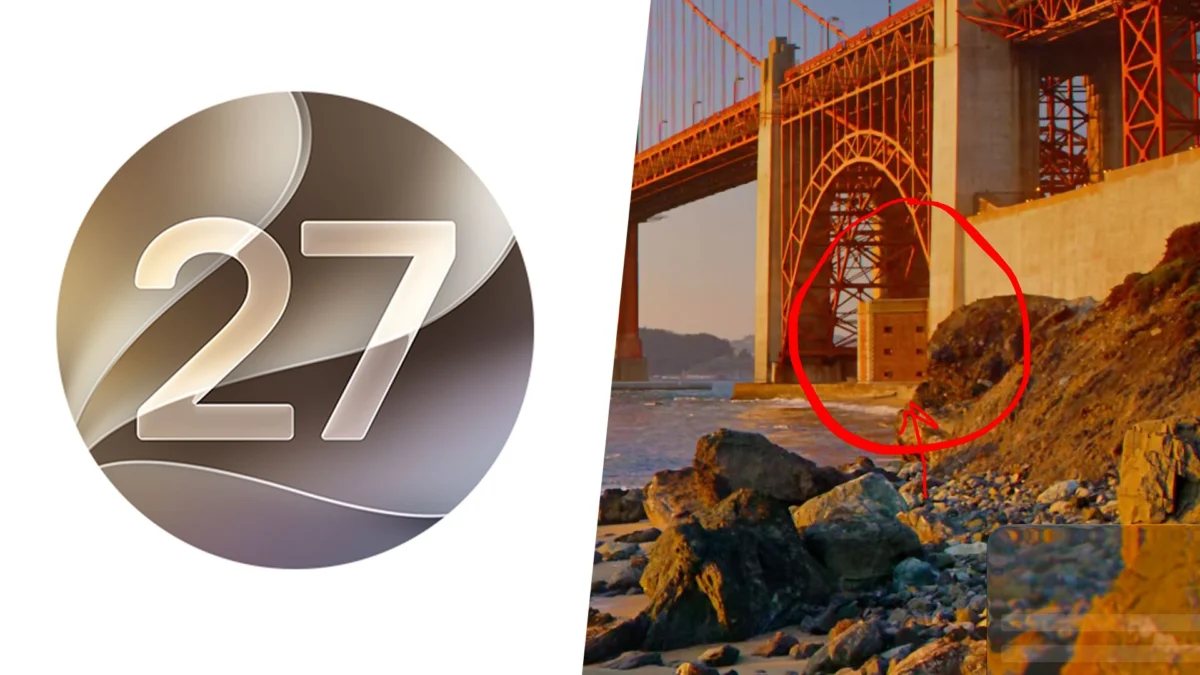
The wallpaper, which features a sweeping, cinematic pan of the iconic San Francisco landmark, appears to suffer from a botched masking layer. As noted by tech influencer Sam Hlabangana in a viral post on X (formerly Twitter), there is a specific frame where a brick-walled building appears to overlap a rock formation that should, by all laws of perspective and depth, be in the foreground.
“I just found a MacOS 27 Golden Gate bug on the default live wallpaper,” Hlabangana wrote. “If you look closely, you’ll notice a brick wall or building overlapping a rock. I’ve talked to a few people, and they also see it too. I think there must have been a mistake with masking the video.”
Chronology of the Discovery
The timeline of this discovery highlights how quickly modern digital communities can dissect a product launch:
- Launch Day: MacOS 27 is released to the public. Initial discourse focuses on the speed of the new M-series optimizations and the efficiency of the on-screen AI.
- Day 3: Early adopters begin sharing high-resolution screenshots of the new interface, praising the high-fidelity assets included in the "Golden Gate" theme.
- Day 5: The first reports of the "glitch" appear on enthusiast forums and Reddit. Skepticism is high, with many users attributing the anomaly to monitor calibration or compression artifacts.
- Day 7: Sam Hlabangana publishes his video analysis on X, providing clear, slowed-down footage of the transition. The community reaches a consensus: this is an error in the asset’s production.
- Day 10: Speculation shifts from "human error" to "AI generation" as users debate whether the video was produced using synthetic assistance.
Analyzing the Glitch: Theories and Speculation
The nature of this visual anomaly has sparked a series of intense, often humorous debates within the creative community. The consensus that it is a "masking error" is the most technical explanation, suggesting that during the post-production process—likely involving rotoscoping or green-screen compositing—the layering order was accidentally inverted.
However, the "why" remains a subject of heated debate:
1. The "Hidden Ugly" Theory
One popular hypothesis among VFX professionals is that the editors were forced to remove something unsightly from the original footage—perhaps a utility pole, a construction site, or a piece of graffiti—and utilized a "patch" or a building texture to cover it. The theory suggests the masking was botched during the final render of the live wallpaper’s transition, leading to the overlapping effect.
2. The AI Upscaling Side Effect
As Apple pushes AI deeper into its ecosystem, some observers suggest that the wallpaper itself might have been processed through a machine-learning upscaler to reach 6K or 8K resolution. These tools are notorious for "hallucinating" details or misinterpreting depth in complex scenes, particularly when dealing with the fine details of masonry versus natural stone.
3. The "Natural Geometry" Defense
A small, contrarian contingent of users argues that the glitch might not be a glitch at all, but rather a deceptive camera angle. This group suggests that the perspective of the original footage, combined with the lighting conditions on the rock, creates an optical illusion. This has led to a call-to-action for local San Francisco residents to visit the location and photograph the exact vantage point to prove whether the physical reality matches the OS asset.
Implications for Apple’s Brand Image
Why does a wallpaper glitch matter in the grand scheme of an operating system launch? For a company as obsessed with "pixel-perfect" design as Apple, such an error is more than just a bug; it is a brand-identity issue.
Apple’s marketing often leans heavily on the idea of human-centric design—the notion that every corner, shadow, and transition is meticulously considered by a designer. A masking error in a flagship asset undermines this perception of perfection. It highlights a potential lapse in the quality assurance (QA) pipeline, particularly regarding the high-fidelity assets that users interact with daily.
Furthermore, it raises questions about the role of automation in Apple’s internal design workflows. If this mistake was indeed the result of an automated process, it serves as a cautionary tale for the creative industry regarding the dangers of over-reliance on AI-assisted workflows without rigorous human oversight.
What’s Next?
As of this writing, Apple has not issued an official statement regarding the "Golden Gate" wallpaper. It is highly probable that the company will address the issue in a minor point release (e.g., MacOS 27.1). Typically, Apple does not acknowledge small cosmetic bugs in press releases, preferring to quietly swap out the asset during a standard security update or performance patch.
For now, the mystery remains. The MacOS 27 update continues to be a powerhouse for professional workflows, providing much-needed improvements to performance, AI integration, and interface aesthetics. Yet, for the eagle-eyed user, the Golden Gate bridge remains a testament to the fact that even in the most polished digital environments, the human element—and its capacity for error—persists.
Whether you are a professional content creator looking to leverage the new AI tools or an enthusiast waiting for the next update, the conversation surrounding the "Golden Gate" wallpaper serves as a reminder to look closer at the details. If you are currently in the market for a new machine to run the latest MacOS, it is worth checking the technical requirements and ensuring your current hardware is supported, as the shift away from Intel marks a definitive turning point in the Mac’s long history.
For those in San Francisco who decide to hunt for the source of the shot: stay safe, keep your cameras steady, and let the community know if the rock is indeed just a rock, or if the "Golden Gate" mystery is a permanent fixture of our digital landscape.