Ammar Sabilarrohman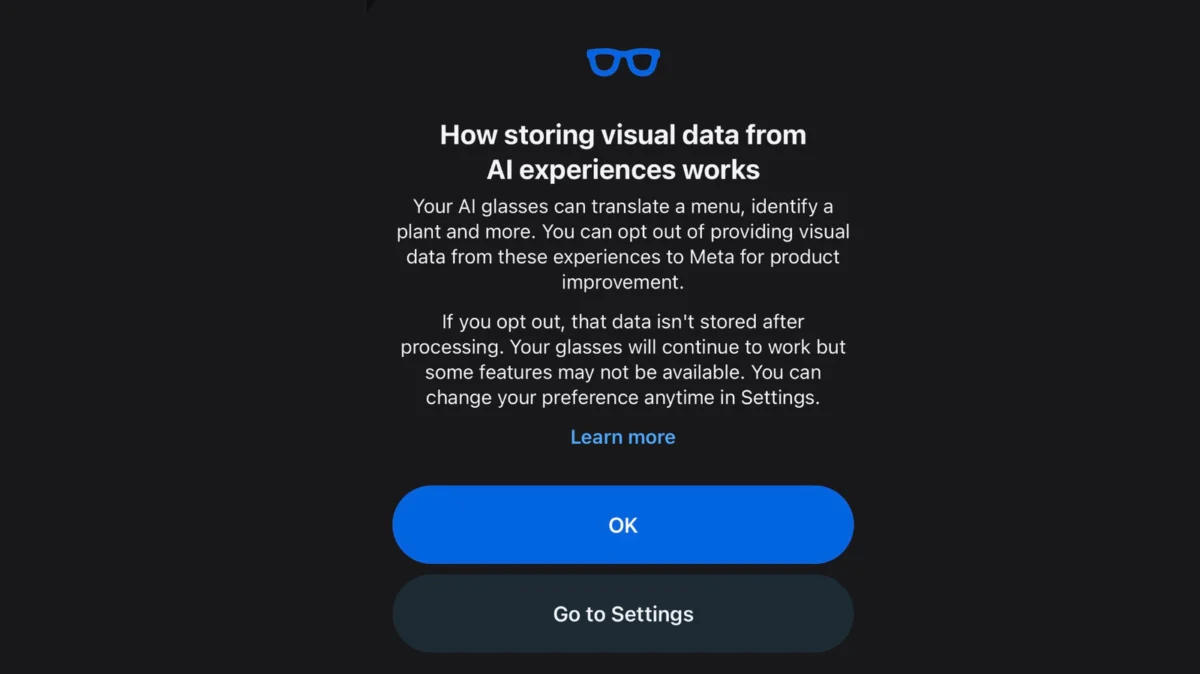
In an era where artificial intelligence is becoming inextricably linked with wearable technology, the boundary between personal utility and data harvesting has never been more porous. Meta, the parent company behind the Ray-Ban Meta smart glasses, has recently initiated a significant privacy update, granting users the long-awaited ability to opt out of having their visual data used for the training of the company’s AI models.
This move follows increasing scrutiny from privacy advocates and regulators regarding how consumer-grade AI devices—which constantly "see" the world through the wearer’s perspective—process, store, and utilize intimate environmental data. For owners of these devices, the change represents a vital shift in agency, though it comes with caveats regarding functionality and the future of machine learning development.
The Core Facts: What Has Changed?
Meta has officially begun pushing out a new setting within the Meta AI application that serves as a privacy firewall for users of its smart glasses. For those who prioritize data sovereignty over the absolute maximum utility of the device’s predictive features, this update provides a straightforward mechanism to halt the ingestion of their visual data into Meta’s massive AI training pipelines.
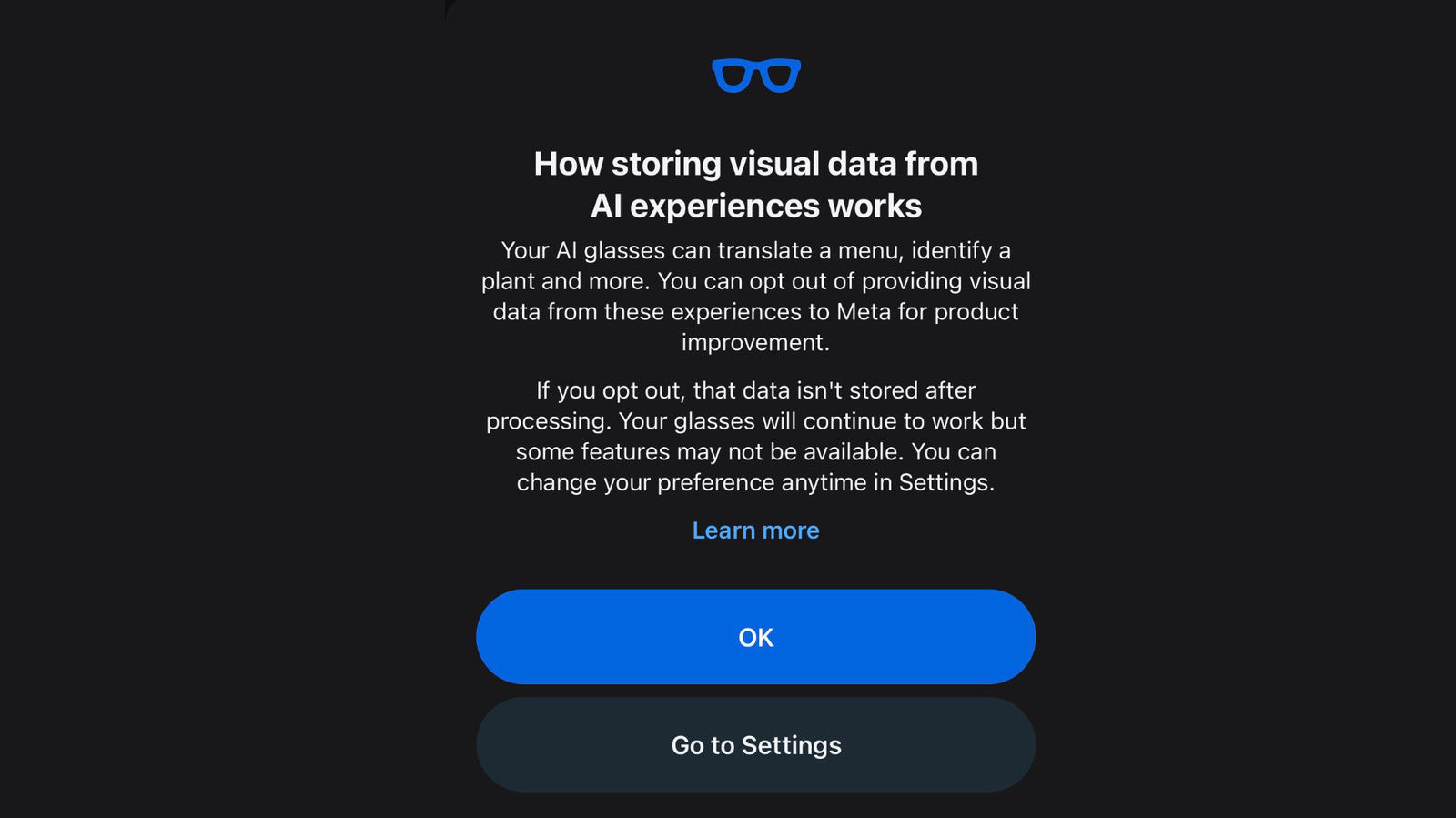
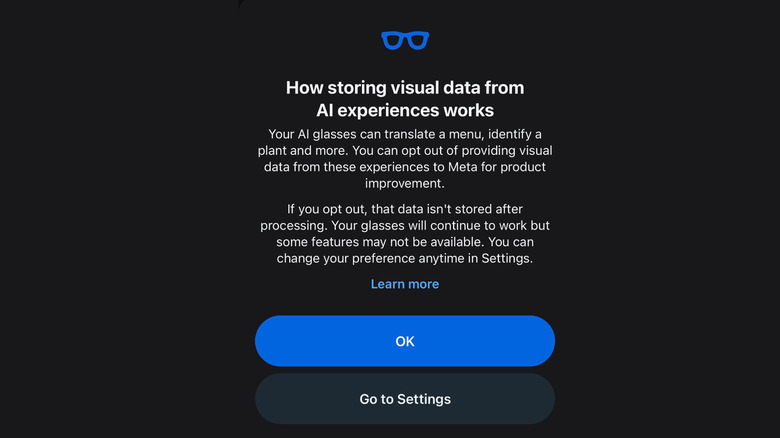
The notification appearing in the Meta AI app informs users that their glasses can perform advanced tasks—such as translating foreign menus, identifying flora and fauna, and providing context-aware information—but clarifies that this utility historically came at the cost of data retention. By toggling the "Store visual data from AI experiences" setting to the "off" position, users can ensure that their visual input is discarded immediately after processing.
Crucially, this change does not affect the standard capture functionality of the glasses. Meta has explicitly stated that the photos and videos you intentionally record—signified by the glowing capture LED—are treated differently than the "visual data" captured during real-time AI interactions. However, for those "AI experiences" like Live AI, where the camera acts as a conduit for the AI to "see" what the user sees, the data was previously being hoarded for model improvement.
Chronology: The Path to User Agency
The road to this privacy update was not paved by Meta’s proactive altruism alone; it was carved out by a sustained climate of skepticism surrounding big tech’s data practices.
- Launch Phase: When Meta first introduced its smart glasses collaboration with Ray-Ban, the focus was heavily on the seamless integration of multimodal AI. Users were encouraged to ask the AI questions about their surroundings, effectively inviting the company into their private field of vision.
- The "Human Review" Revelation: As the capabilities of the glasses grew, so did the documentation regarding how that data was handled. Updated support pages revealed that "visual data" was not only being used for automated machine learning but was also subject to manual, human review to fine-tune model accuracy. This sparked a wave of concern regarding the potential for sensitive personal information—or even bystander data—to be analyzed by human contractors.
- Regulatory and Public Pressure: Throughout late 2023 and early 2024, privacy watchdogs and digital rights organizations pressured Meta to provide clearer disclosures and opt-out mechanisms.
- The Rollout: In response to this mounting pressure, Meta initiated the current software update, effectively decoupling the use of AI features from the mandatory submission of training data.
Technical Implications: How to Opt Out
The process for disabling data collection is intentionally granular, requiring a physical connection between the glasses and the user’s smartphone. To enact the change, users must follow these steps:
- Ensure Connectivity: The smart glasses must be removed from their charging case and actively paired with the phone via Bluetooth.
- Navigate Settings: Open the Meta AI application or the companion app associated with the glasses.
- Locate Privacy Settings: Navigate to the specific settings menu for the glasses, select "Meta AI," and locate the toggle labeled "Store visual data from AI experiences."
- Repeat for Multiple Devices: Meta has confirmed that this setting is device-specific. If a user owns multiple pairs of smart glasses, they must manually update the setting for each individual unit.
By turning this setting off, Meta guarantees that the visual data transmitted during AI queries is purged from their servers once the specific request has been fulfilled.
Official Responses and Documentation
Meta’s official stance on this matter highlights the tension between providing a "smart" experience and maintaining user privacy. In their updated help center documentation, the company clarifies the distinction between user-captured media and AI-processed visual streams.
"When you use AI experiences on your Meta glasses—like asking about something you’re looking at or using live AI—Meta stores the resulting visual data and may use it to power glasses features and improve Meta products," the company states. They further explain that this training process "may be automated or manual (human)."
This acknowledgment of human review is the most contentious aspect of the policy. By opting out, users are effectively protecting themselves from the possibility that their real-time, real-world observations might one day be scrutinized by a human annotator tasked with improving Meta’s neural networks.
Implications: The Trade-off of Privacy
While the ability to opt out is a win for privacy, it is not without functional consequences. Meta has warned that disabling the storage of visual data may degrade the performance of certain "predictive" or "memory-based" features.
The Loss of "Visual Reminders"
One of the most notable features affected is the use of "visual reminders." If a user looks at an object—such as a specific brand of coffee they want to purchase—and asks the AI to remind them to buy it later, the system requires context retention to function. If the user has disabled visual data storage, the AI may lose the ability to link the visual context of that specific object to a future task.
The Future of Multimodal AI
The industry at large is currently moving toward "multimodal" AI, where models are trained on a combination of text, image, and video to better understand the world. By allowing users to opt out, Meta is essentially creating a bifurcated user base: those who contribute their data to the collective intelligence of the AI, and those who treat the AI as a transient tool.
The long-term implication is that the AI experience on these glasses may eventually become "smarter" for users who opt in, as their data will be used to iterate on model accuracy and environmental recognition. Users who opt out, while safer from a privacy standpoint, may find that their AI assistant remains static, failing to adapt to their specific habits or visual environment as effectively as it might have otherwise.
Conclusion: A Balancing Act
The privacy landscape for wearable AI is still in its infancy. As Meta continues to push the boundaries of what its glasses can see and understand, the debate over who owns the "vision" captured by these devices will only intensify.
For the average consumer, this update is a necessary step toward transparency. It acknowledges that users have a reasonable expectation of privacy, even when using devices that are fundamentally designed to observe. However, it also serves as a reminder of the "data-for-utility" bargain that characterizes the modern AI economy.
As we move forward, the onus remains on the consumer to stay informed. With the ability to opt out now embedded in the settings, users are no longer passive subjects in a massive data-gathering experiment. Instead, they are being given the agency to decide exactly how much of their personal reality they are willing to share in exchange for the convenience of an AI-powered future. Whether the trade-off is worth it—or whether the loss of certain features is a price worth paying for peace of mind—is a decision that every user must now weigh for themselves.


 Jia Lissa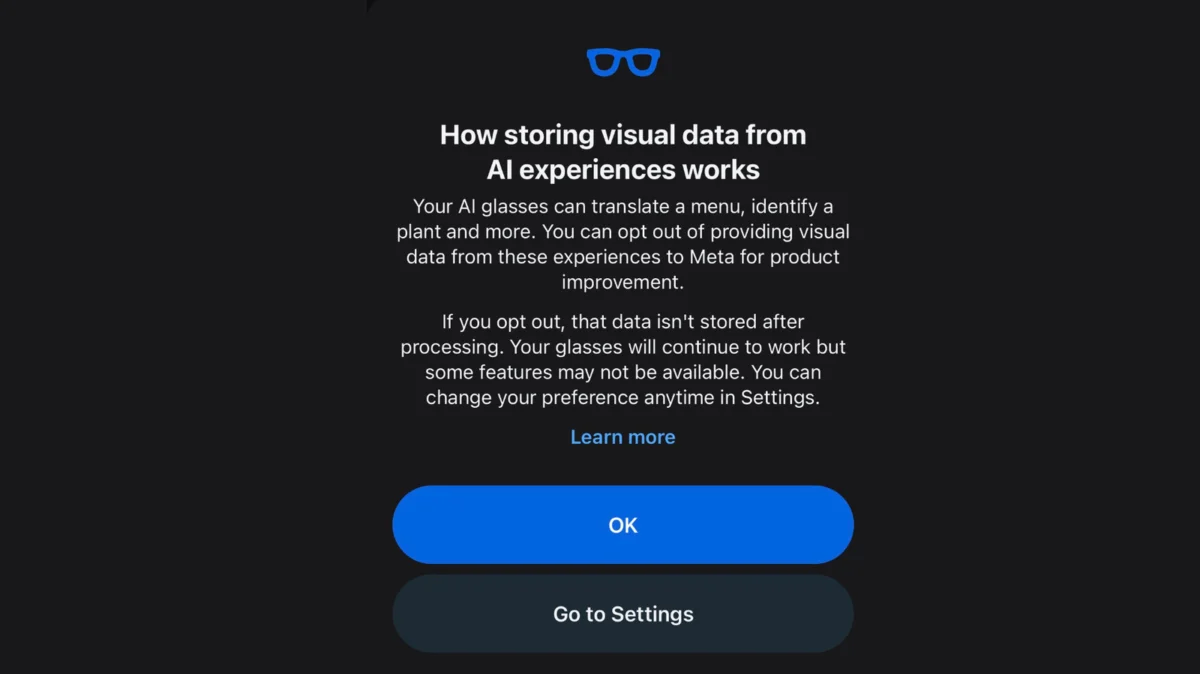
 Iffa Jayyana