Siti Muinah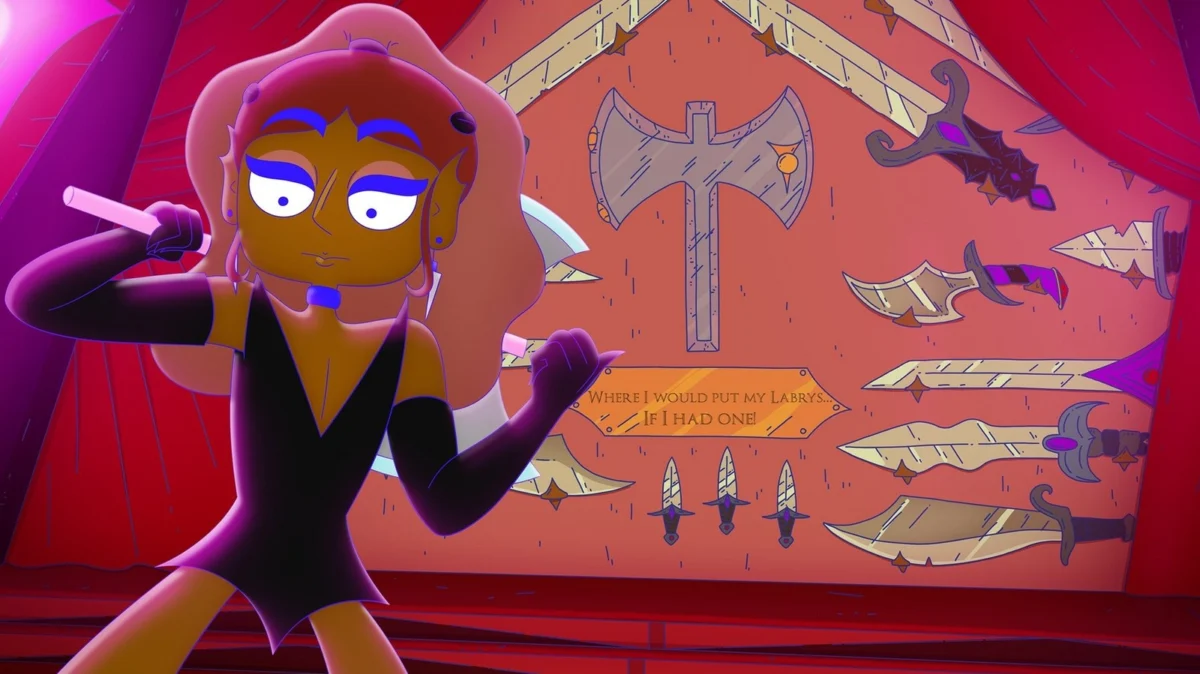
To American audiences, the name Shabana Azeez has recently become synonymous with the intense, high-stakes corridors of the medical drama The Pitt, where she delivers a compelling performance as Victoria Javadi. However, to pigeonhole Azeez solely within the confines of prestige television would be to overlook one of the most vibrant, audacious, and critically acclaimed projects in recent animation history: the 2025 cult hit Lesbian Space Princess.
While Azeez has been a fixture of the Australian entertainment landscape since her 2018 debut in F Off, We’re Full, her turn as the lead protagonist, Saira, in Lesbian Space Princess represents a career-defining moment. The film, which has garnered a near-perfect 98% approval rating on Rotten Tomatoes, is a riotous, neon-soaked exploration of identity, queer culture, and interstellar absurdity.
The Evolution of a Rising Star: A Chronology of Success
Shabana Azeez’s career is a study in versatility. Since her entry into the professional acting sphere in 2018, she has navigated a diverse array of genres, from biting social commentary to character-driven comedy.
- 2018–2020: Azeez established her footing in the Australian television landscape, appearing in notable projects such as Why Are You Like This? and Metro Sexual. These roles showcased a naturalistic timing that would eventually serve her well in more stylized, surrealist works.
- 2024–2025: The shift toward international recognition arrived with her casting in The Pitt. Simultaneously, she anchored Lesbian Space Princess, a project that proved her ability to carry a film with both emotional depth and comedic precision.
- 2026 and Beyond: Looking forward, Azeez’s trajectory shows no signs of slowing down. With upcoming roles in The Airport Chaplain and a guest appearance on the cult-favorite panel series Guy Montgomery’s Guy Mont-Spelling Bee, she is firmly cementing her status as an international talent to watch.
A Galaxy of Its Own: Understanding Lesbian Space Princess
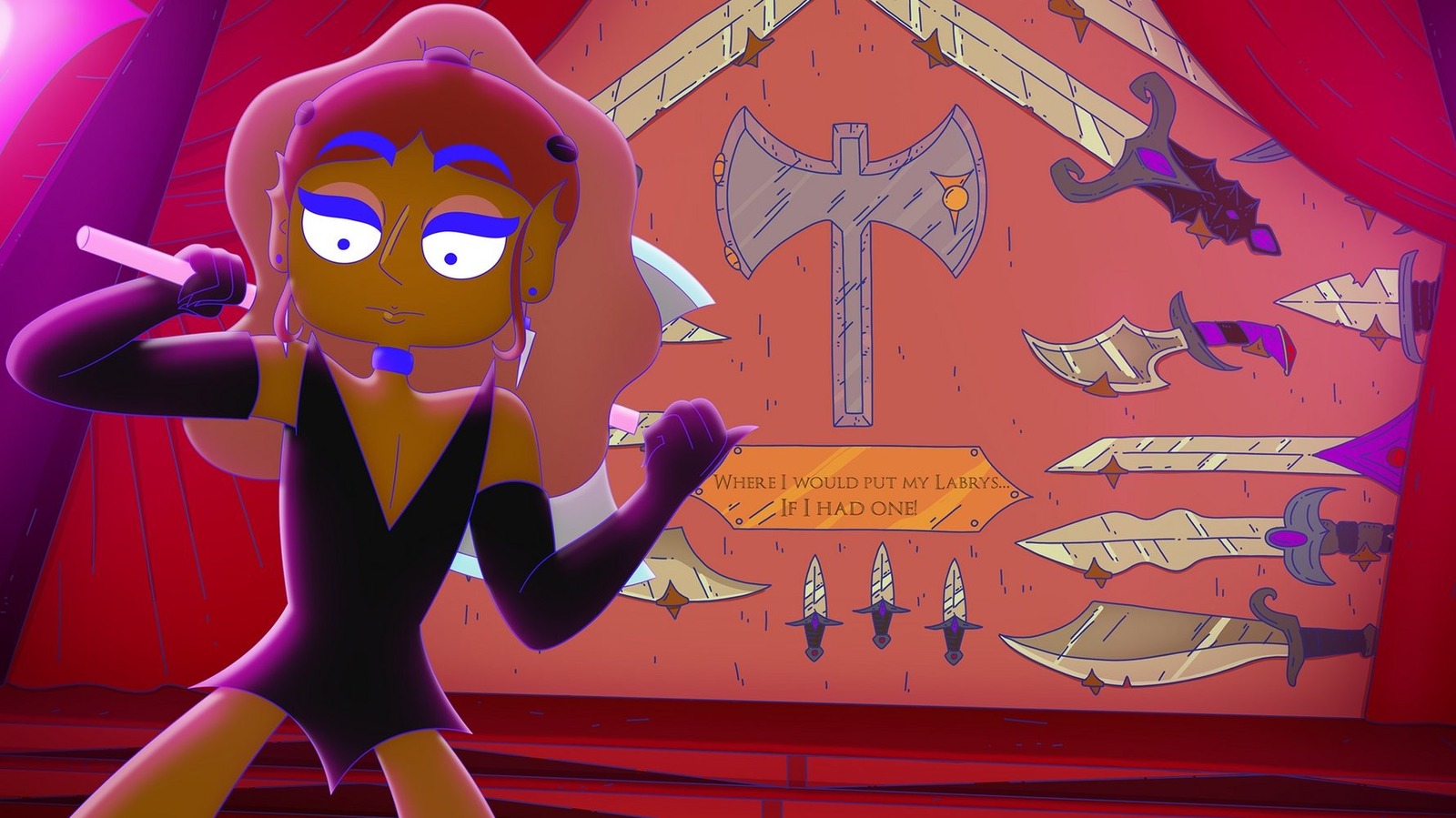
Directed by the creative duo Emma Hough Hobbs and Leel Varghese, Lesbian Space Princess is a masterclass in low-fi charm and high-concept satire. The film’s aesthetic—characterized by bold, colorful animation and signature glowing blue outlines instead of traditional black line art—creates a visual language that is immediately distinct.
The story follows Saira (Azeez), a princess living in "Clitopolis," a sanctuary located in the heart of "Gay Space." The film’s premise is unabashedly queer, treating the subject matter with a blend of reverence and irreverent, John Waters-esque humor. The conflict is set in motion when Saira’s ex-girlfriend, the ultra-cool Kiki (Bernie Van Tiel), is abducted by the "Straight White Maliens"—a species that ironically resembles rectangular pieces of paper and lives in the barren, uninspired reaches outside of Gay Space.
What follows is a quintessential quest narrative subverted at every turn. Saira is forced to command a "Problematic Ship"—an AI-driven vessel voiced by veteran actor Richard Roxburgh—that embodies the very essence of a confused, out-of-touch bachelor. The ship serves as a brilliant satirical foil, constantly questioning why a princess would bother with space travel when she could be at a nail salon.
The Mythology of the Labrys and Queer Symbolism
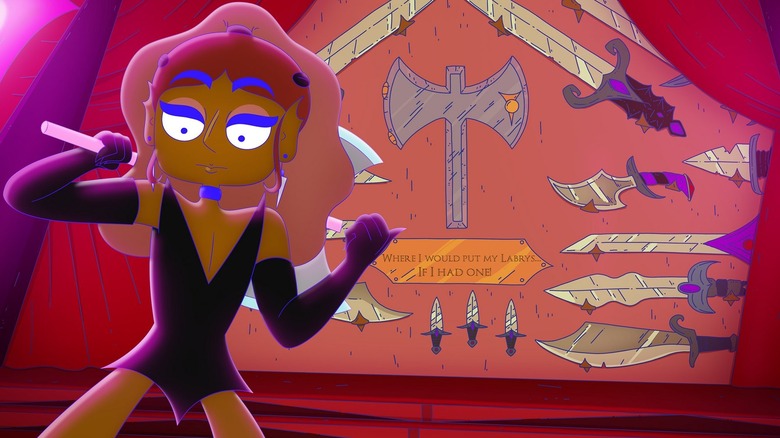
The world-building in Lesbian Space Princess is deeply rooted in queer history. Central to the film’s lore is the "labrys," a double-headed axe that serves as a powerful symbol in lesbian culture. In the film, the labrys is not merely a weapon; it is a manifestation of "lesbian strength." As Saira’s character arc progresses, she discovers the ability to summon this magical weapon, serving as both a literal tool for survival and a metaphorical representation of self-actualization.
The film’s antagonistic force, the Straight White Maliens, seeks to harness this power to fuel their "Chick Magnet," a device intended to compensate for their lack of genuine charisma or cultural awareness. This dynamic serves as a biting critique of modern misogyny and homophobia, handled with a level of wit that prevents the film from feeling didactic.
Critical Reception: A Near-Perfect Score
With a 98% approval rating on Rotten Tomatoes based on 50 reviews, Lesbian Space Princess has firmly established itself as a critical darling. The consensus among reviewers highlights the film’s "queerpunk" attitude and its refusal to compromise its vision for mainstream sensibilities.
Writing for The Guardian, critic Cassie Tongue praised the film’s unrelenting commitment to its own specific brand of humor, noting that for every groan-worthy pun, there is a "stealthier, stronger joke" waiting in the wings. Tongue highlighted the script’s meta-commentary, where characters occasionally acknowledge the absurdity of their own plot points by referencing the script itself.
Variety’s Carlos Aguilar echoed these sentiments, writing that while the film’s structure may lean on familiar tropes, the "queer lens" through which the story is told acts as a profound and effective statement. Aguilar noted that the film’s "earnest queer energy" is infectious, creating a viewing experience that feels both radical and welcoming.
The cast, which features a "who’s who" of Australian queer icons—including Jordan Raskopoulos, Madeline Sami, Reuben Kaye, and Kween Kong—adds a layer of authenticity and community spirit that elevates the project beyond standard animation.
Implications for Future Storytelling
The success of Lesbian Space Princess carries significant implications for the animation industry. It proves that there is a massive, underserved audience for projects that are unapologetically queer, experimental in their visual style, and willing to take risks with tone.
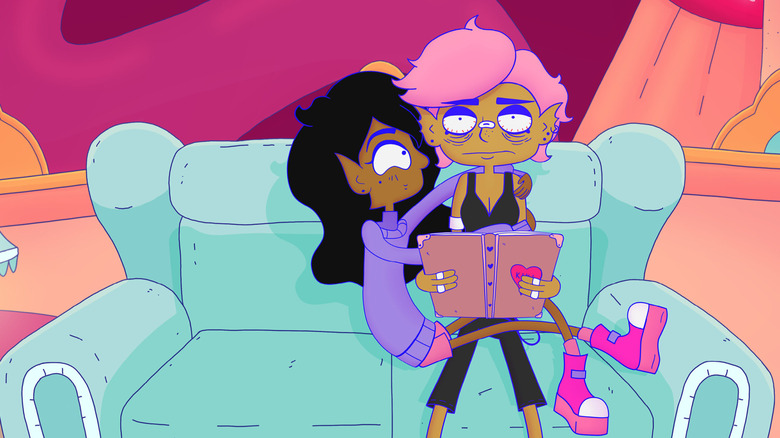
By centering a story around a "wimpy" princess who finds her strength through community—specifically her bond with the nonbinary pop star Willow (Gemma Chua-Tran)—the film challenges traditional notions of the "hero’s journey." It argues that vulnerability and kindness are not antithetical to being a protagonist, but are in fact essential components of a more modern, inclusive mythos.
Furthermore, the film’s availability across multiple platforms—including a collector’s edition Blu-ray from Umbrella Entertainment, as well as streaming availability on Prime Video, Apple TV, Kanopy, and Hoopla—ensures that it remains accessible to a wide demographic, effectively democratizing the "cult" experience.
Conclusion: A New Chapter for Shabana Azeez
As Shabana Azeez continues to rise through the ranks of the television and film industry, Lesbian Space Princess will likely remain a cornerstone of her filmography. It is a project that highlights her capacity to lead, her comedic range, and her commitment to projects that push boundaries.
Whether she is navigating the high-pressure environment of The Pitt or battling "Straight White Maliens" in the far reaches of the galaxy, Azeez brings a sense of grounded humanity to every role. As the animation world continues to evolve, films like Lesbian Space Princess serve as a reminder that the most compelling stories are often the ones that are not afraid to be loud, queer, and absolutely, unapologetically themselves.
For those who have yet to experience this "blast of glorious gay energy," the path is clear: the film is readily available for viewing. It is a rare, delightful entry in the cinematic canon—one that is, quite literally, out of this world.

 Asep Darmawan
 Layla Zulfa