Muslim
In the hyper-competitive landscape of artificial intelligence, where computing power is the primary currency of progress, Elon Musk is aggressively accelerating his pursuit of a massive, industry-leading supercomputing infrastructure. Nearly two years after he first unveiled his ambitious plans to scale xAI’s "Colossus" supercomputer to a unprecedented million-GPU cluster, the finish line is finally coming into focus.
Musk’s latest update, shared via the X (formerly Twitter) platform, reveals a staggering deployment schedule. The billionaire confirmed that 220,000 of Nvidia’s cutting-edge GB300 GPUs are set to be fully operational within the coming week. The expansion does not stop there; Musk projects that an additional 220,000 units will come online in November, with a final tranche of 220,000 units expected to be integrated by late December, provided the supply chain and logistics remain favorable.
This expansion marks a pivotal moment in the infrastructure arms race, signaling that xAI is moving beyond the research and development phase into a stage of massive, industrial-scale deployment designed to power the next generation of generative AI models.
The Chronology of the Colossus Project
The development of Colossus has been characterized by rapid, almost frantic construction, reflecting the urgent nature of the current AI boom.
Early Foundations and Initial Deployment
The journey began with the original Colossus 1 project, a testament to what is possible when immense capital is paired with top-tier engineering. Colossus 1 was anchored by a foundational cluster consisting of 150,000 H100 GPUs, 50,000 H200 GPUs, and 30,000 GB200 units. This initial cluster was built with the goal of training Grok, xAI’s flagship Large Language Model (LLM), and establishing a foothold in the competitive landscape against giants like OpenAI, Google, and Meta.
The Shift to Colossus 2
With the inception of Colossus 2, the scale of operations increased exponentially. The architecture of this second phase is built around 110,000 GB200 units, which provide a significantly higher performance ceiling compared to the previous H-series chips. The decision to pivot to the GB300 series for the remainder of the expansion highlights the speed of technological turnover in the semiconductor sector.
The Current Acceleration
The current phase—the integration of 660,000 GB300 GPUs—represents the largest single hardware expansion in the company’s history. By breaking this rollout into monthly tranches (October, November, and potentially December), Musk is attempting to circumvent the traditional bottlenecks of rack-level installation, power distribution, and thermal management that typically plague supercomputer construction.
Technical Specifications: Powering the Future
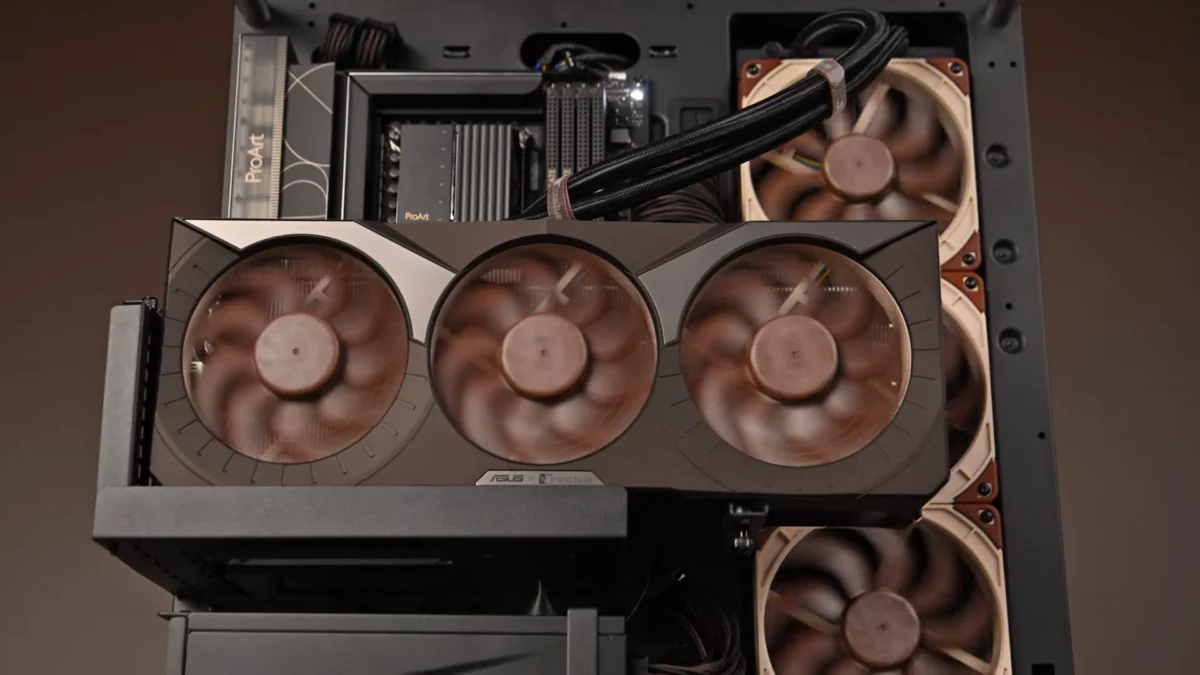
To understand the magnitude of this project, one must analyze the hardware that powers it. The Nvidia Blackwell-based GB300 is a significant leap forward in AI-focused computing.
The Blackwell Advantage
The GB300 is designed to handle the massive memory bandwidth requirements of training Large Language Models. Unlike standard GPUs, these units are specifically optimized for the high-concurrency demands of transformer architectures. For xAI, this means the ability to train models with trillions of parameters in a fraction of the time it took using the previous generation of H100s.
Power and Thermal Challenges
Operating a cluster of this magnitude is not merely a matter of purchasing chips; it is an engineering feat of immense complexity. A cluster containing hundreds of thousands of high-performance GPUs requires hundreds of megawatts of power—roughly equivalent to the energy consumption of a small city.
The thermal management required to keep these chips from overheating is equally daunting. xAI has had to develop advanced liquid-cooling infrastructure to ensure that the chips can operate at peak performance 24/7 without experiencing the thermal throttling that could degrade training efficiency.
Implications for the Artificial Intelligence Industry
The deployment of a million-GPU supercomputer has far-reaching implications for the AI sector.
1. The Scaling Law Thesis
Musk is a staunch proponent of the "Scaling Laws of AI," which posit that as you increase the amount of compute, data, and parameters, the model’s performance improves predictably. By building the world’s largest GPU cluster, Musk is betting the future of xAI on the idea that the "bigger is better" paradigm will eventually lead to the development of Artificial General Intelligence (AGI).
2. Market Disruption
The sheer volume of Nvidia chips being procured by xAI creates a massive ripple effect in the supply chain. While Nvidia has prioritized xAI as a key customer, this level of demand puts pressure on other tech companies, including Meta and Microsoft, to compete for the same supply. It reinforces the "compute-constrained" nature of the modern AI economy.
3. Training Latency and Model Sophistication
For the end user, this hardware expansion means that Grok 3 and future iterations will likely be trained faster and exhibit more sophisticated reasoning capabilities than current models. The ability to perform massive parallelization allows for the ingestion of broader datasets—including real-time data from the X platform—giving xAI a unique competitive advantage in terms of data freshness and conversational nuance.
Official Responses and Strategic Outlook
While Nvidia has remained relatively quiet regarding the specifics of its contracts with xAI, the company’s financial reports consistently highlight the massive demand from "hyperscalers" and private AI labs. Nvidia’s leadership has repeatedly acknowledged that demand for the Blackwell architecture is "insane," a sentiment that Musk’s recent updates validate.
Musk’s approach has not been without its critics, particularly regarding the environmental impact and the sustainability of such rapid growth. However, for the investors backing xAI, the focus remains squarely on the potential return on investment. If the Colossus cluster succeeds in producing an AGI-level model, the economic value generated would dwarf the billions currently being spent on hardware and energy.
Challenges and Future Outlook
Despite the optimism, the path to a fully functional million-GPU cluster is fraught with risks:
- Supply Chain Volatility: As evidenced by Musk’s "if we get lucky" caveat regarding the December deployment, the semiconductor supply chain is still vulnerable to geopolitical tensions, manufacturing defects, and logistical delays.
- Energy Infrastructure: The ability of local power grids to accommodate the massive energy draw of the Colossus facility is a recurring concern. Musk has hinted at the need for dedicated energy solutions, potentially involving nuclear or large-scale battery storage, to maintain the reliability of the cluster.
- Software Bottlenecks: Simply having the hardware is not enough; the software stack must be optimized to distribute workloads across hundreds of thousands of GPUs simultaneously. If the software cannot keep up with the hardware, the cluster will suffer from diminishing returns.
Conclusion
Elon Musk’s expansion of the Colossus supercomputer is more than just a procurement spree; it is a declaration of intent. In a field dominated by the likes of Google and OpenAI, xAI is positioning itself as the infrastructure leader. By pushing the boundaries of what is technologically possible with the Nvidia GB300 platform, Musk is attempting to force a breakthrough in AI development.
As we move into the final quarter of the year, all eyes will be on the Colossus facility. Whether this massive investment will yield a transformative leap in AI capabilities or hit the physical limits of current compute architectures remains to be seen. However, one thing is certain: the race to build the world’s most powerful brain has moved into a new, high-stakes dimension.

 Siti Muinah
 Raul Delapena Setiawan