

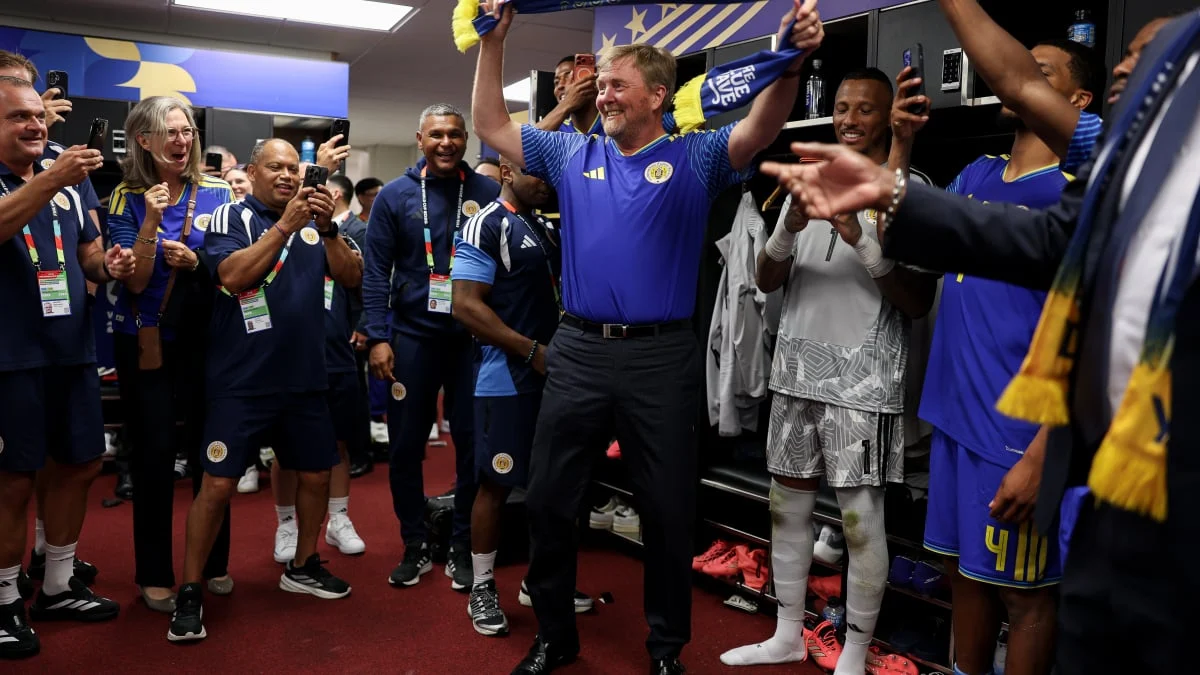
Since the inaugural tournament in 1930, the FIFA World Cup has been mythologized by the gold-plated image of a captain hoisting the Jules Rimet trophy. Yet, as the 2026 edition unfolds, history is being written not in the annals of championship winners, but in the gritty, impassioned, and often improbable moments captured by the tournament’s underdogs.
This year’s iteration of the beautiful game has discarded the predictability of traditional powerhouses, opting instead to elevate nations that have long existed on the periphery of the sport. From the island spirit of the Caribbean to the stoic resilience of Central Asia and the long-awaited breakthroughs of African titans, the 2026 World Cup has evolved into a global celebration of the "impossible."
The Anatomy of the Underdog: Shifting the Narrative
The 2026 tournament has effectively dismantled the notion that success is measured solely by three points. For nations like Curaçao, Cape Verde, and Uzbekistan, the "win" is a relative concept, tethered to national identity and historical milestones.
The tournament has seen a surge in fan engagement that transcends the sport itself. When a nation with a population smaller than a mid-sized city earns a draw against a global giant, or when a veteran goalkeeper becomes a household name overnight, the World Cup reaffirms its status as the only event capable of unifying the globe through the language of football.
Chronology of Courage: Key Moments
1. Curaçao: A Masterclass in Defensive Defiance
Curaçao entered the 2026 tournament as the smallest nation to ever qualify, with a population of just 156,000. Their debut was a baptism of fire—a crushing 7-1 defeat at the hands of Germany. Most pundits expected the team to fold.
Instead, they did the opposite. In their second match against Ecuador, goalkeeper Eloy Room turned in a performance for the ages. Faced with nearly 30 shots and an expected goals (xG) metric that suggested a rout, Room produced 15 saves. The resulting 0-0 draw felt, to the people of Willemstad, like a championship victory. It was the first point ever earned by the island nation, a testament to tactical discipline and the indomitable human spirit.
2. The Blue Sharks of Cape Verde: From LinkedIn to Legend
Cape Verde has arguably become the "people’s choice" of the 2026 tournament. The team arrived with a clear sense of mission, but their performance has far exceeded initial projections. Holding powerhouse Spain to a scoreless draw before securing a 2-2 result against Uruguay has turned the "Blue Sharks" into a global sensation.
The squad’s narrative is peppered with the surreal. Kevin Pina’s 31-meter free-kick goal will likely be replayed for decades, while Hélio Varela’s second-half equalizer against Uruguay proved that the team possesses the depth to compete at the highest level.
3. Iran: Dignity in the Face of Complexity
While the on-field result against Belgium was a 0-0 stalemate, the true story of Iran’s campaign unfolded within the confines of the locker room at SoFi Stadium. Navigating the logistical hurdles of being based in Tijuana and facing restricted entry into the U.S., the Iranian team operated under immense pressure.
Their response was a handwritten note left behind for their hosts and their fans. "We came to Los Angeles with pride, competed with honour, and leave with dignity," the message read. It served as a poignant reminder that for some teams, the World Cup is a platform for existence and respect, a brief moment to command the stage regardless of the political climate.
4. Uzbekistan and Haiti: The Weight of History
Uzbekistan’s 3-1 loss to Colombia did little to dampen the significance of their debut. As the first Central Asian nation to reach the World Cup, the match was a milestone for an entire region. Early-morning crowds and public screenings across the country signaled that for Uzbekistan, the journey had only just begun.
Similarly, Haiti’s return after a 52-year absence carried the emotional weight of a nation. Playing their entire qualifying campaign away from home, the Haitian squad represented a beacon of hope for their supporters, providing a narrative of resilience that pushed back against the often-bleak international headlines regarding their homeland.
5. Egypt’s 92-Year Wait
Finally, the "Pharaohs" of Egypt delivered the breakthrough that had eluded them for nearly a century. Their 3-1 victory over New Zealand was not just a win; it was a release of 92 years of pent-up national expectation. Spearheaded by Liverpool icon Mohamed Salah, the victory ignited celebrations from Vancouver to the streets of Cairo, proving that even for established footballing nations, the hunger for a first-ever World Cup win remains as potent as ever.
Supporting Data: The Viral Factor
The 2026 World Cup has also redefined the "breakout star." The rise of Cape Verde’s 40-year-old goalkeeper, Vozinha, is a case study in modern digital impact. Following a clean sheet against Spain, his Instagram following skyrocketed from 50,000 to over 15 million.
This digital surge is not merely vanity; it often acts as a catalyst for real-world support. Vozinha’s tearful admission regarding his mother’s inability to attend the opening match due to visa costs caught the attention of U.S. policymakers, including House Minority Leader Hakeem Jeffries. The subsequent diplomatic intervention ensured her attendance for the match in Miami—a tangible example of how the tournament can leverage visibility to bridge bureaucratic divides.
Furthermore, the "LinkedIn recruitment" of a dual-national Irish player into the Cape Verde squad—initially dismissed as a spam message—highlights the unorthodox and scrappy nature of modern international scouting, where talent is no longer confined to traditional academies.
Official Responses and Diplomatic Implications
The official reaction from FIFA and participating governments has been one of tempered acknowledgement. While FIFA rarely comments on the political logistics of individual teams, the presence of nations like Iran, operating under specific travel restrictions, has highlighted the unique complexities of a World Cup hosted in North America.
The diplomatic efforts behind the scenes, such as those assisting the families of players like Vozinha, underscore the soft power of the tournament. The World Cup, in its 2026 form, is functioning as a temporary embassy for nations, allowing them to showcase their culture, their struggles, and their triumphs to a global audience of billions.
Conclusion: The New Definition of Success
The 2026 FIFA World Cup is proving that the tournament’s legacy is not found solely in the final match at MetLife Stadium. It is found in the sweat-stained jerseys of a goalkeeper making his 15th save, the ink on a thank-you note left in a locker room, and the collective roar of a nation seeing its flag on the world stage for the first time in half a century.
As the tournament moves toward the knockout stages, the "underdogs" have already secured their place in history. They have forced the world to expand its focus, reminding us that for every titan of the sport, there is a nation—be it Curaçao, Cape Verde, or Uzbekistan—waiting for their moment to prove that in football, as in life, the journey is often more significant than the trophy at the end of the road.
The 2026 World Cup is no longer just a competition; it is a tapestry of human stories, and for the first time in a long time, the underdogs are the ones weaving the most compelling chapters.










