Main Facts: A Cult Legend Reborn
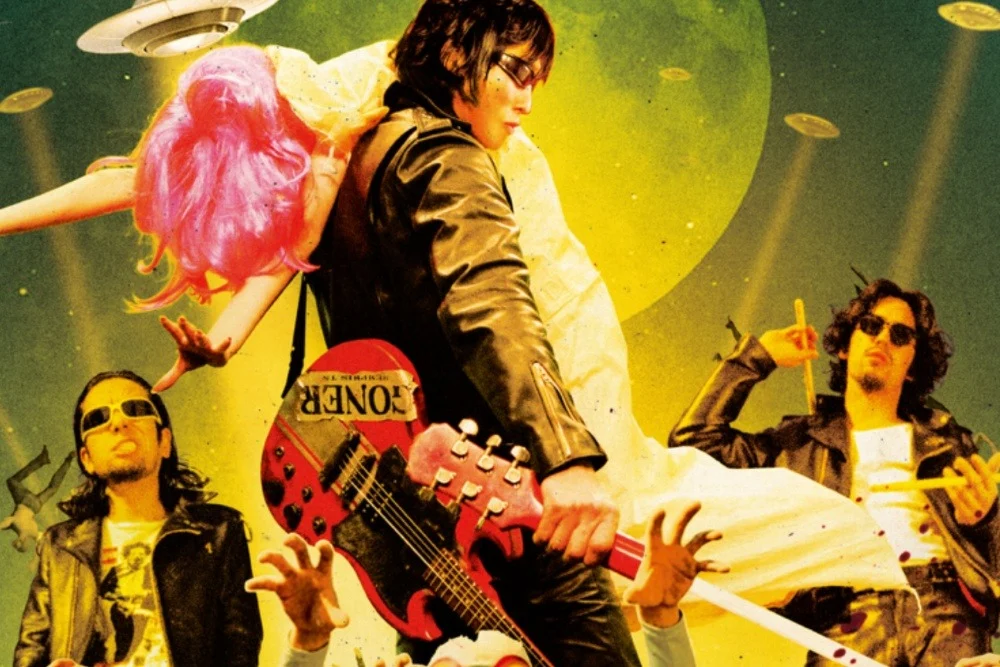
More than two decades after their 1999 cinematic collaboration redefined the intersection of Japanese punk rock and B-movie chaos, director Takeuchi Tetsuro and the legendary garage-punk trio Guitar Wolf are reuniting. The project, officially titled Wild Zero Overdrive, is a direct successor to their cult classic Wild Zero—a film that remains a cornerstone of midnight-movie culture worldwide.
The announcement of the project at this year’s Tokyo Gap-Financing Market (TGFM) has sent ripples of excitement through the independent film circuit. As the production team prepares to pitch the film to international distributors and financiers, the core message remains as abrasive and energetic as the feedback from a Guitar Wolf amplifier: rock ‘n’ roll is not just alive; it is a necessary, primal antidote to the sterile, algorithm-driven world of modern media.
The production is a Japan-Canada co-production helmed by Takegei Company Limited. While Takeuchi is currently seeding the project with his own capital to establish a foundational budget, the team is actively seeking strategic distribution partners and international sales agents to bring this high-octane vision to a global audience.
Chronology: From 1999 to the Digital Age
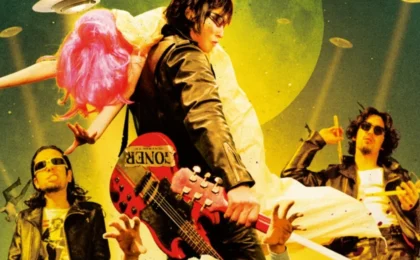
To understand the significance of Wild Zero Overdrive, one must revisit the original Wild Zero. Released in 1999, the film was a frenetic, low-budget masterpiece that followed Guitar Wolf as they navigated a zombie apocalypse. With its iconic catchphrases, outrageous pyrotechnics, and an aesthetic that fused leather-clad rockabilly cool with Japanese splatter-film sensibilities, it became a global cult phenomenon.
For twenty-five years, fans have clamored for a follow-up. According to director Takeuchi, the gap between the original and the present day has only made the need for such a film more urgent. Takeuchi describes the new project not merely as a sequel, but as a "template" that has been modernized for the contemporary viewer.
"Precisely because we’re living in the age of AI, I want to convey the heat that comes from raw, primal punk rock," Takeuchi stated during the TGFM presentation. This philosophical approach defines the production’s timeline: moving from the analog, tactile world of the late 90s into a present where the human element—the "heat"—is increasingly under threat of automation.
Supporting Data: The Production Landscape
The transition from a cult classic to a multi-national production is a complex undertaking. Wild Zero Overdrive is currently in its pre-production phase, with casting underway to find the talent capable of matching the frenetic energy of the original.
The financial structure of the project relies on a hybrid model. By utilizing his own finances as the bedrock, Takeuchi has maintained creative autonomy while simultaneously signaling a high level of personal commitment to potential investors. At the Tokyo Gap-Financing Market—a crucial component of the Tokyo International Film Festival’s (TIFF) industry wing, TIFFCOM—the project is seeking the final pieces of the budgetary puzzle.
Key Financial and Logistical Goals:
- Budgetary Foundation: Self-funded base capital provided by Takegei Company Limited.
- Target Partners: International distribution entities, private equity with an interest in genre film, and global sales agents.
- Co-production Strategy: Leveraging the Japan-Canada partnership to tap into international tax incentives and co-production treaties.
- The Pitch: Utilizing the Frontières Tokyo platform to access industry professionals specializing in genre and independent cinema.
The inclusion of Toronto-based producer Takabatake Aki adds a vital layer of international reach. Takabatake’s involvement was born of serendipity—a chance meeting with the film’s cinematographer in Toronto that he described as a "sign." This fusion of Japanese creative DNA with North American production infrastructure is designed to ensure that Wild Zero Overdrive receives a robust release in both domestic and Western markets.
Official Responses and Creative Vision
The creators are not shy about the "rock ‘n’ roll pact" they have formed. For them, the film is a mission statement.
"Rock ‘n’ roll never dies. And love for Japanese subculture and rock ‘n’ roll. UFOs. Motorcycles. Love," Takeuchi said, summarizing the thematic pillars of the movie. His dedication to the aesthetic of the original is total, yet he acknowledges the need for an evolution in the film’s "voice."
Takabatake Aki, whose devotion to the franchise is so profound that he named his dog "Ace" after the protagonist of the original film, spoke to the emotional weight of the project. "I’ve been a huge fan of Wild Zero ever since it came out," he remarked. "The project and I are bound together by an unbreakable rock ‘n’ roll pact."
The team’s pitch at the Tokyo Gap-Financing Market is focused on finding partners who understand that this film is not just a commodity, but a cultural artifact. "Hopefully, we’ll be able to connect with some great potential partners who share our passion for the project," Takabatake added, emphasizing that the search for partners is as much about shared philosophy as it is about financial solvency.
Implications: Why "Overdrive" Matters Now
The implications of Wild Zero Overdrive go beyond the film industry. In an era where cinema is increasingly dominated by corporate-mandated franchises and computer-generated spectacles, a project that emphasizes "raw, primal punk rock" serves as a defiant stance against homogenization.
The Anti-AI Aesthetic
Takeuchi’s explicit mention of AI as the antithesis of his film is a rallying cry for proponents of traditional filmmaking. By emphasizing "heat," he is championing the imperfections, the grit, and the human spirit that define rock ‘n’ roll. The film promises to be a tactile experience, prioritizing practical effects and high-energy performances over digital polish.
The Sustainability of Cult Cinema
The success of Wild Zero Overdrive will be a litmus test for the viability of long-dormant cult properties in the current market. Can a film that relies on the specific, niche energy of 90s Japanese garage rock resonate with a new generation of audiences raised on streaming algorithms? The producers believe that the universality of the themes—motorcycles, love, and the end of the world—transcends the passage of time.
The Role of TIFFCOM
The project’s prominence at the Tokyo Gap-Financing Market highlights the growing importance of Tokyo as a hub for genre-bending international co-productions. By providing a platform for projects like Wild Zero Overdrive, TIFFCOM is fostering a bridge between traditional Japanese subculture and the global independent film market.
Conclusion: A High-Octane Future
As the industry turns its eyes toward the upcoming development cycle, all eyes are on Takeuchi and his team. Wild Zero Overdrive represents a rare breed of project: one that is deeply rooted in nostalgia but intensely focused on the present.
Whether it is through the roar of a motorcycle engine or the wail of a Guitar Wolf guitar solo, the film promises to deliver the "heat" that the creators believe is missing from modern media. As they continue their search for distributors and sales agents, one thing is certain: the pact has been signed, the engines are running, and the apocalypse is set to look and sound exactly like a Guitar Wolf concert—chaotic, loud, and gloriously, defiantly alive.
The Tokyo Gap-Financing Market serves as the starting line. From here, the project moves into the next phase of its lifecycle, carrying the hopes of a generation of fans who have waited twenty-five years to see their heroes return to the screen, armed with nothing but their instruments and an unshakeable belief that rock ‘n’ roll is the ultimate answer to the end of the world.