Laily UPN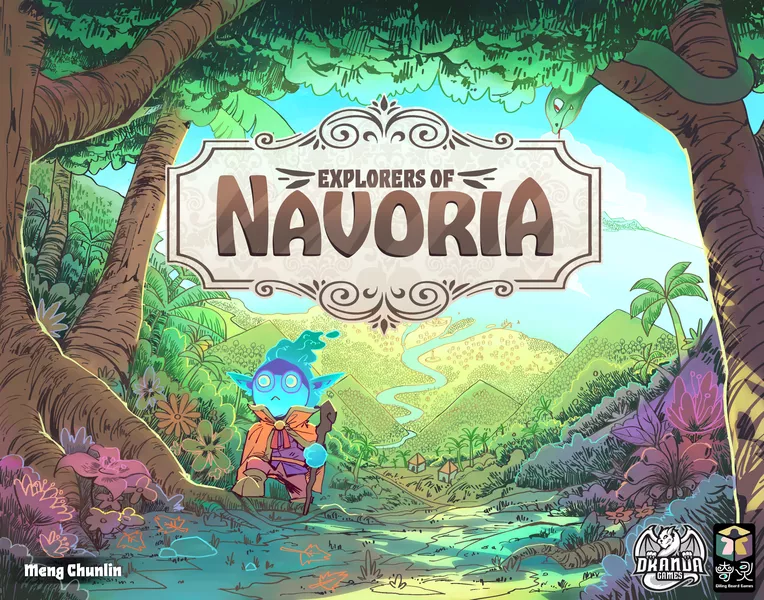
In the ever-expanding landscape of modern board gaming, finding a title that perfectly balances mechanical accessibility with strategic depth is the "holy grail" for publishers. Explorers of Navoria, the latest release from Qiling Board Games, designed and illustrated by Meng Chunlin, appears to have found that sweet spot. As a lightweight drafting and tableau-building game, it invites two to four players to chart new continents, recruit specialized adventurers, and manage resources over a brisk three-round campaign. With a playtime ranging from 40 to 80 minutes, it positions itself as an ideal "gateway-plus" experience—a title that welcomes newcomers while offering enough nuance to satisfy seasoned hobbyists.
The Core Mechanics: A Study in Fluid Design
At its heart, Explorers of Navoria is driven by two distinct but interconnected phases that define the rhythm of play: the Recruit Phase and the Gather Phase.
The Recruit Phase: Drafting with Intent
Each round commences with a drafting session. Players draw action tokens from a communal bag, introducing an element of controlled randomness. These tokens dictate which cards can be recruited from the central display. If the luck of the draw does not favor a player’s strategy, the game offers a clever mitigation mechanic: players may opt to forgo their drawn tokens to pull from the "town center"—a shared pool of discarded or unclaimed tokens from previous turns. This simple, elegant design ensures that players are never truly "locked out" of their desired path, rewarding those who can pivot when their primary plans are disrupted.
The Gather Phase: Execution and Synergy
Once the recruitment of adventurers is complete, the game shifts to the Gather Phase. Here, the tokens collected during the Recruit Phase act as the "engine" for the board. Players place these tokens on specific spaces on the main board to trigger actions—exploration, resource collection, military deployment, or income generation. The brilliance of this phase lies in how these actions interact with the cards recruited earlier. Your tableau isn’t just a collection of points; it is a suite of ongoing abilities that modify, multiply, or facilitate the actions taken on the main board. By the end of the third round, players have effectively constructed a unique, functional machine that reflects their individual playstyle.
Chronology of a Campaign: Three Rounds to Glory
The pacing of Explorers of Navoria is one of its strongest attributes. The game is structured into three distinct rounds, each serving as a structural milestone for the player’s expedition.
- Round One: Foundation. Players focus on establishing a resource engine. The drafting pool is broad, and the stakes are relatively low, allowing players to experiment with different specializations—military, exploration, or economic.
- Round Two: Expansion. As the game progresses, the cards available in the display become more potent. The decisions made here are more high-stakes, as players begin to identify which "sets" they are collecting for end-game scoring. Interaction increases as players start to "hate-draft" pieces their opponents clearly need to complete their own engine.
- Round Three: Optimization. The final round is a race for efficiency. With limited turns remaining, the focus shifts to maximizing the value of every action token. The final scoring—a tally of bonus objectives, exploration progress, and military strength—provides a satisfying conclusion that feels earned rather than dictated by luck.
Supporting Data: Accessibility and Table Presence
When analyzing the "gateway" status of a game, two factors are paramount: ease of entry and sensory appeal. Explorers of Navoria excels in both departments.
The Language of Icons
The game minimizes the barrier to entry by eschewing heavy text in favor of an intuitive, icon-based language. Once a player learns the meaning of the various symbols, the barrier to play drops significantly. This makes the game exceptionally friendly for families. During our testing, younger players (as young as six) were able to navigate the mechanics with minimal assistance, though the complexity of long-term planning remained a healthy challenge for them.
Visual and Tactile Sophistication
Meng Chunlin’s art direction deserves significant praise. The game features a "cozy fantasy" aesthetic that feels vibrant and inviting. From the whimsical, bird-faced hot air balloons to the detailed illustrations of fantasy critters, every component feels like it belongs in the world of Navoria. The tactile nature of the game—the canvas bag for token drafting, the wooden explorer meeples, and the sturdy card stock—elevates the physical experience. In an era where many games rely on digital companion apps or overly complex boards, the simplicity of Explorers of Navoria is a breath of fresh air.

The Designer’s Perspective: Intent and Interaction
While Qiling Board Games has not released a formal "designer diary," the mechanics speak for themselves. The game is designed to be "indirectly interactive." Unlike war games or cutthroat economic sims, Explorers of Navoria avoids direct confrontation. Instead, conflict arises from the scarcity of the draft. When a player snatches a card that would have provided a key synergy for their neighbor, it is a moment of tactical tension rather than a direct attack.
This approach creates a "side-by-side" gameplay experience. Players are building their own empires in a shared space, making it perfect for groups who enjoy low-conflict, high-satisfaction games. It avoids the "multiplayer solitaire" trap by ensuring that the draft is always a shared concern, forcing players to pay attention to their opponents’ boards even while they focus on their own.
Implications: The Future of the "Gateway-Plus" Market
Explorers of Navoria occupies a very specific niche. It is more sophisticated than a entry-level game like Ticket to Ride, yet it lacks the "brain-burning" complexity of heavy Eurogames like Terraforming Mars or Brass: Birmingham.
Strategic Ceiling
For the hardcore hobbyist, the primary criticism may be the "strategic ceiling." Once a player has mastered the optimal paths to victory, the game may lose some of its mystery. While the variable card display and shifting objectives provide significant replayability, there is an argument to be made that the game is a stepping stone. It acts as a perfect introduction to the mechanics of drafting and tableau building, but experienced players may eventually crave the "next level" of difficulty.
The Potential for Growth
The game feels like a complete, polished package, but it also feels like a foundation. With the right expansion—perhaps introducing new, asymmetrical player powers or a modular board—Explorers of Navoria could easily transition from a great "gateway" game to a staple of any gaming library. The current iteration is excellent for what it is: a fast, beautiful, and rewarding adventure that leaves players wanting one more round.
Conclusion: Is It Right for Your Table?
Explorers of Navoria is a triumph of design for its intended audience. It is a game that respects the player’s time, finishing in well under 90 minutes regardless of player count. It provides a satisfying loop of recruitment and resource management that is easy to learn but offers enough depth to keep the mid-game engaging.
For families, it is a top-tier choice that avoids the pitfalls of aggressive play. For groups of friends, it provides a light, social experience where the competition is fierce but friendly. While those looking for extreme, long-term strategic complexity might find the game’s horizon arrives a bit too soon, the journey to that horizon is undeniably charming.
In a market saturated with high-complexity titles, Qiling Board Games has managed to create something that feels refreshingly grounded. Explorers of Navoria is not trying to reinvent the wheel; it is simply trying to make the journey as enjoyable as possible. And in that regard, it succeeds in every category. If you are looking for a title that brings people together, offers beautiful visuals, and rewards smart, quick-thinking play, look no further than the shores of Navoria.


 Sagoh
Sagoh
 Ammar Sabilarrohman