In the traditional comic book industry, success is often measured by a narrow set of metrics: Previews orders, direct market sales, and the volatile shifting of the Top 300 list. However, for veteran writer Justin Jordan—a name synonymous with gritty, high-octane hits like Luther Strode and Spread—the most significant success of his career is currently unfolding entirely outside the traditional retail ecosystem.
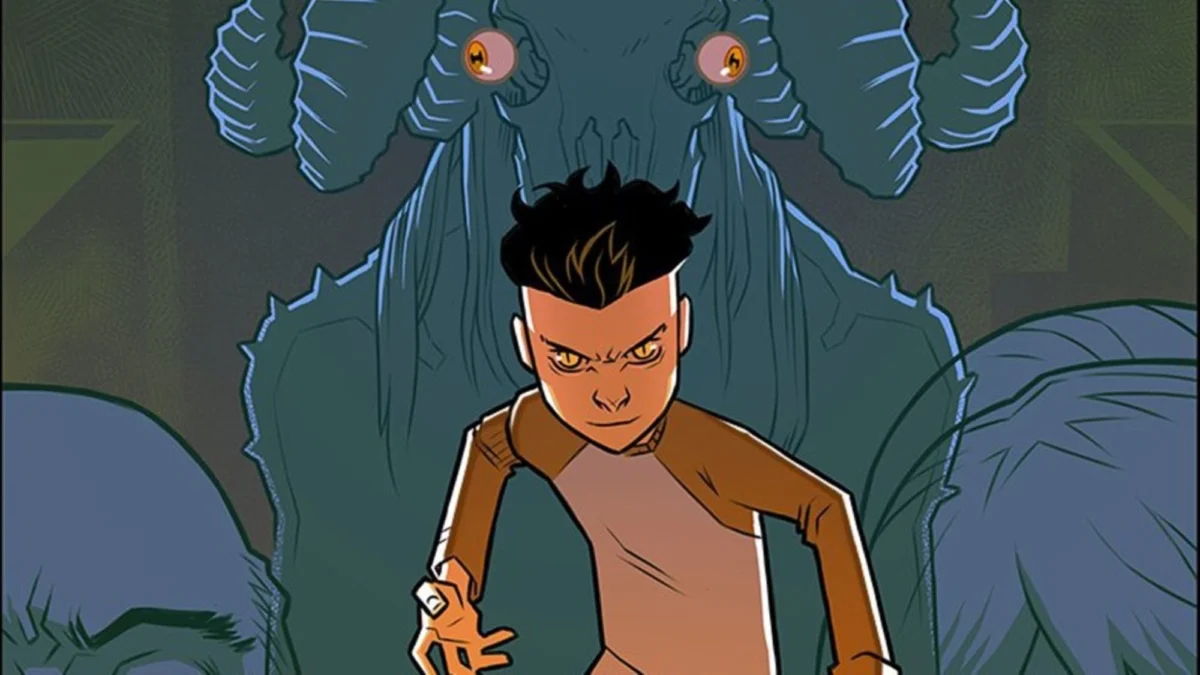
Jordan’s latest project, Urban Animal, a super-powered narrative illustrated by John Amor with lettering by Micah Myers, has quietly become a juggernaut on the Webtoon platform. With nearly half a million subscribers and a consistent weekly readership of up to 100,000, Jordan finds himself at the forefront of a seismic shift in how comics are produced, distributed, and, most importantly, monetized.
The State of the Industry: A False Dichotomy
For years, the industry narrative has been dominated by the health of the "Direct Market"—the network of local comic shops that serve as the bedrock for publishers like Marvel, DC, and Image. Jordan, who has written for DC’s New Guardians and Superboy and Valiant’s Shadowman, acknowledges that while he has a history in these spaces, his perspective has evolved.
"I have a bad habit of saying ‘comics’ when what I am actually talking about is ‘direct market comics,’" Jordan notes. "We talk about comics being in trouble based on what’s happening in the direct market. But while the direct market has its ups and downs, comics as a medium—sequential storytelling—is enormously popular."
Jordan points to the staggering success of Dav Pilkey’s Dogman, which boasts print runs in the millions, as proof that the appetite for sequential art has never been higher. He suggests that the direct market is merely one distribution channel among many, and perhaps not even the most vital one for reaching a modern, digital-first audience.
Chronology of a Webtoon Hit
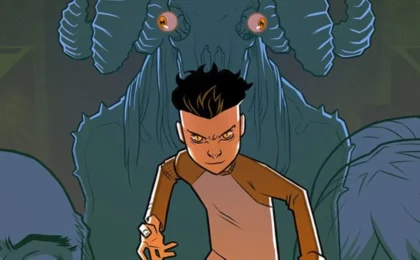
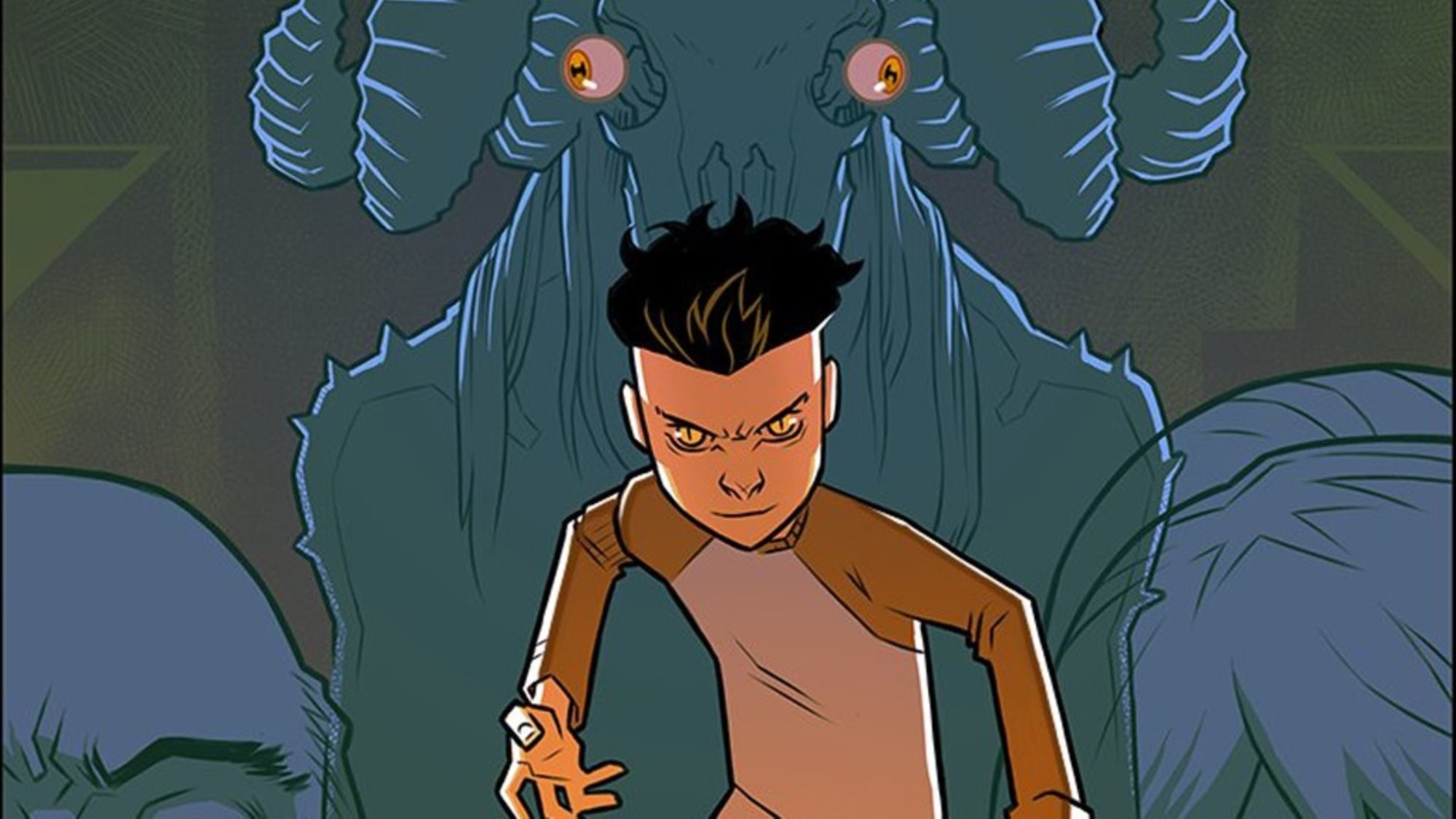
Urban Animal follows the story of Joe Gomez, a teenager navigating the trials of high school, a band, and social life, only to discover he is a "Chimera"—a shape-shifting nature spirit capable of transforming into a saber-toothed tiger. The series tasks Gomez with saving humanity, forcing a balance between the mundane horrors of adolescence and the existential threats of a supernatural world.

- Development: Jordan conceived Urban Animal as a high-concept, serialized narrative tailored for the vertical-scroll format of Webtoon.
- Launch: The series launched on Webtoon to immediate interest, leveraging the platform’s massive global reach.
- Growth: Over the course of three seasons, the comic has amassed over 465,000 subscribers, placing it in a healthy, "middle-of-the-pack" tier within the highly competitive Webtoon ecosystem.
- The Present: With the series currently deep into its third season, the creative team is now transitioning toward a physical print model, partnering with Rocketship Entertainment to bring the digital experience to bookshelves.
Supporting Data: The Math of Digital Monetization
The primary challenge for digital creators has always been the "free-to-read" hurdle. If the content is free, how does the creator earn a living? Jordan explains that the Webtoon model utilizes a tiered approach that effectively blends licensing, advertising, and micro-transactions.
"Webtoon pays us a license fee per episode, plus we get a split of the ad revenue as well as the ‘Fast Pass’ system," Jordan explains. In this system, readers can pay roughly 50 cents to access future episodes ahead of the general public.

While Jordan keeps specific earnings private, he notes a startling conclusion: "If you work out all the income we have coming in from Webtoons, my part of that is usually almost identical to what I’d get paid to write a comic for DC for the same amount of content. It’s considerably more than I’d make from many of my creator-owned books, at least on a per-issue basis."
By his estimation, at least 4,000 readers a week engage with the Fast Pass system—a "minimum" that provides a stable, predictable income stream that far exceeds the erratic nature of royalty checks in the traditional print market.

Official Perspectives: The Licensing Paradigm
One of the most profound differences in Jordan’s experience is the shift from "Work for Hire" to a "Licensing" model. In the traditional direct market, creators often trade ownership for the privilege of working on established intellectual property (IP). Even in many creator-owned scenarios, the publisher retains a stake in the property.
Urban Animal operates more like a short story in the prose market. Jordan and his team license the rights to Webtoon for a specified period, after which they retain full ownership. This allows for immediate exploitation of secondary rights, such as merchandise and, crucially, physical book publishing.

"From a business standpoint, it’s a pretty good deal," Jordan says. "It makes it hard to say how financially profitable it is because the time horizon is fairly long. The sheer volume and length of it mean I will probably eventually make more money from this than from any other series I’ve done."
The Pivot to Physical: Kickstarter and Rocketship
Despite the digital success, the physical book remains the holy grail for many creators. To facilitate this, Jordan has turned to Kickstarter—a platform that is increasingly becoming the new "Direct Market" for independent creators.

Partnering with Rocketship Entertainment, a company that has successfully brought titles like Let’s Play to print, Jordan aims to collect the first season of Urban Animal into a single, cohesive volume. "Reformatting it for print is something I am not technically capable enough to do, and John [Amor] is too busy, you know, actually drawing the comic," Jordan admits.
This strategy serves two purposes: it provides a tangible product for fans who want a bookshelf copy, and it acts as a proof-of-concept for the bookstore market. By bypassing the traditional publisher-led path, Jordan is utilizing the direct connection he has built with his 465,000 subscribers to fund the production of the book before a single copy is printed.

Implications for the Future of Comics
Justin Jordan’s experience with Urban Animal signals a broader shift in the comic book industry. The "hyperserialized" format—which demands constant engagement and provides immediate feedback—is fundamentally altering the pacing and structure of modern storytelling.
- The Death of the "Wait for the Trade": In the digital world, readers are engaged weekly. The model rewards cliffhangers and episodic satisfaction, which can be translated back to physical trades as "seasons" of a larger story.
- Crowdfunding as a Distribution Channel: As creators like Scott Snyder, Keanu Reeves, and now Jordan utilize crowdfunding, the traditional "Solicitation" process through distributors like Diamond is being challenged. Creators now have the data to prove demand before they ever approach a printer.
- The Global Reach of Digital: The reach of platforms like Webtoon is inherently global. A comic written in a small home office can find a dedicated audience in South Korea, Brazil, or France simultaneously, without the logistical hurdles of international shipping and distribution.
Conclusion
Justin Jordan’s move from the halls of DC and Image to the vertical-scrolling landscape of Webtoon is more than just a change of scenery; it is a tactical shift in how to build a sustainable career in a changing media environment.

By prioritizing direct engagement, leveraging digital-native monetization, and embracing crowdfunding as a viable route to print, Jordan is demonstrating that the "trouble" often cited in the comic book industry is merely the sound of a system evolving. For fans of Urban Animal, the future is bright—and for the rest of the industry, it is a blueprint worth studying. As the lines between webcomics, graphic novels, and digital serials continue to blur, the creators who can master this hybrid model will likely define the next generation of the medium.