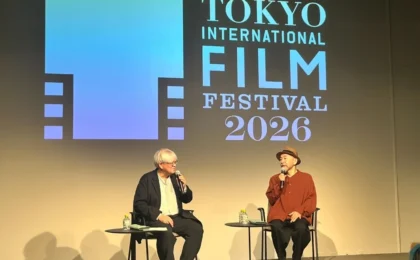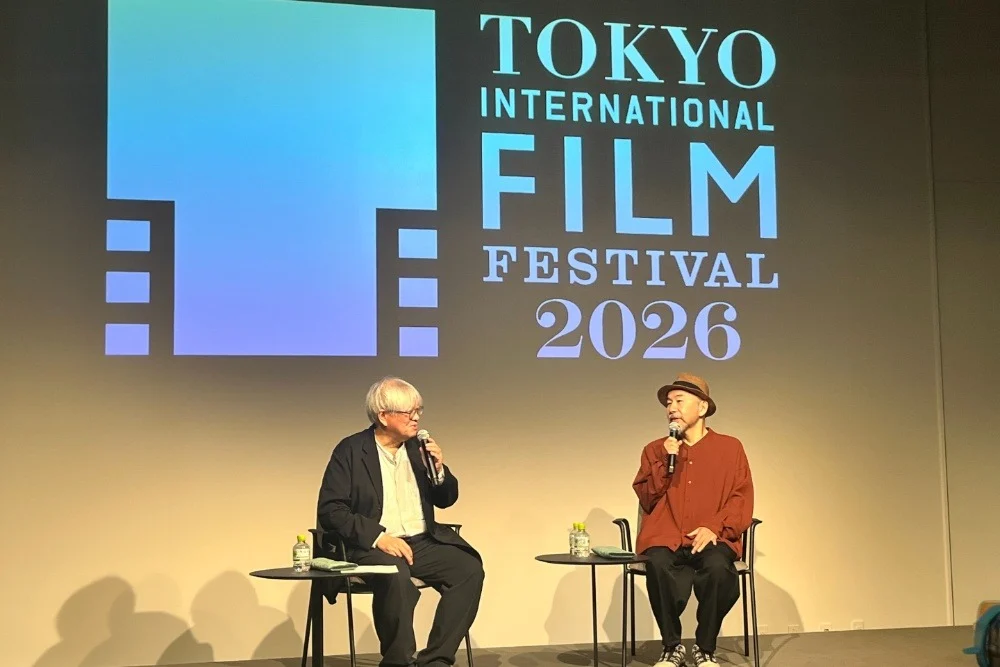
At the 39th Tokyo International Film Festival (TIFF), the atmosphere inside the masterclass venue was one of hushed reverence. The man at the center of the room, Shinya Tsukamoto, is more than a director; he is the patron saint of Japanese independent cinema. As he spoke, his words traced a career defined by a singular, uncompromising defiance against the traditional studio system. The session, moderated by TIFF programming director Ichiyama Shozo, offered a rare, intimate look into the psyche of a creator whose work has defined the landscape of body horror and psychological intensity for over three decades.
The Genesis of an Icon: From Scrapyards to Cinema
The conversation naturally gravitated toward Tsukamoto’s 1989 breakout feature, Tetsuo: The Iron Man. To a contemporary audience, the film remains a visceral experience, but Ichiyama Shozo reminded the room that in 1989, the film was a "shock" that reverberated far beyond its genre. It wasn’t just the jarring, metallic body horror that stunned critics; it was the sheer impossibility of its existence. At a time when the Japanese film industry was rigid and hierarchical, Tetsuo was a masterclass in ingenuity born of necessity.
"No CG," Tsukamoto said, recalling the production process with a modest smile. "We had a little bit of tokusatsu technology at the time, but this didn’t use any of that. This used stuff which was thrown out on the street, and we basically stuck it onto Taguchi Tomorowo’s face."
The film was shot on 16mm film, a medium that demanded precision and physical labor. Tsukamoto described the iconic sequences of the protagonist gliding through Tokyo’s streets as "really rough stop motion." The production took roughly a year, but as the director confessed, the support dwindled toward the finish line. "A lot of the time towards the end, I was working alone—like the sparks flying off at the end of the clip, that was something I worked on alone." This isolation during production became a recurring theme in his career—not as a failure of resources, but as a deliberate choice to maintain the purity of his vision.
Chronology of Autonomy: Building a Career Outside the Gates
The success of Tetsuo catapulted Tsukamoto onto the international stage, opening doors to festivals across the globe. This newfound visibility led to his second feature, Hiruko the Goblin, which afforded him a significantly larger budget. When asked by Ichiyama whether the transition to a larger-scale production brought with it the crushing weight of studio pressure, Tsukamoto remained pragmatic. His experience working in the world of commercials had prepared him for the logistics of a larger set.
However, the allure of the studio system never truly took hold. Throughout his career, Tsukamoto has consistently opted to produce his films independently, a streak that includes cult classics like Bullet Ballet and Tokyo Fist.
"I did receive offers from studios," Tsukamoto admitted, "but I didn’t want to become a director for hire. I didn’t think that suited me, and there are certain things you want to do as a filmmaker. You want to be able to play with the material to maintain that interest, that first impulse. Without that, because I’m not that strong-willed, I thought it would be very difficult for me. I think my impulse as a creator is stronger with my own material, which is why I went down that path."
The "Fires on the Plain" Odyssey
Perhaps the most telling testament to Tsukamoto’s tenacity is his 2014 war drama, Fires on the Plain. Based on the 1951 novel by Ooka Shohei—previously adapted by Kon Ichikawa in 1959—the project was a lifelong obsession. Tsukamoto’s pursuit of the film spanned decades. "I wanted to do this from my teens to my 20s to my 30s," he shared. "I went to the Philippines to try to finance it in my 40s, and in my 50s."
When financing proved elusive through traditional channels, Tsukamoto took the radical step of self-distribution. While he joked that the process was so grueling he would hesitate to repeat it, the project highlighted his belief in the power of social media and grassroots reach. What began as a plan for a limited release in a handful of small theaters eventually expanded to an 80-screen run. It was a victory for independent distribution, proving that a director’s unwavering commitment to a subject can dictate the market, rather than the other way around.
The Weight of History: "Mr. Nelson, Did You Kill People?"
The masterclass pivoted to his most recent endeavor, Mr. Nelson, Did You Kill People?, his second English-language feature following 2009’s Tetsuo: The Bullet Man. The film, which recently competed at the Venice Film Festival, chronicles the life of Allen Nelson, a New Yorker who enlisted in the Marines at 18 and spent the rest of his life grappling with the psychological scars of the Vietnam War. Featuring performances by Rodney Hicks, Geoffrey Rush, and Lily Franky, the film represents the latest evolution of Tsukamoto’s focus on the human cost of conflict.
The road to completion was anything but straightforward. Originally conceived while he was working on Fires on the Plain, the production was stalled by the dual pressures of the COVID-19 pandemic and the Hollywood actors’ strike. The delay was significant enough that he released Shadow of Fire—a film initially intended to follow Mr. Nelson—before completing his English-language project. The total gestation period for Mr. Nelson reached seven years, yet Tsukamoto views this preoccupation with war not as a choice, but as an inevitability.
"The theme of war wasn’t something that I was going to linger on this long," he noted. "I was going to be happy just creating Fires on the Plain. But it’s the state of the world which made me continue to focus on war. I think I made [previous comments about wanting to move on] wanting to alleviate some of the darkness I was experiencing. I don’t think I can pry myself away from it."
Philosophy and Pedagogy: Advice for the Next Generation
During the audience Q&A, the conversation turned toward the practical realities of modern filmmaking. For young directors, Tsukamoto’s advice was grounded in the radical shift from celluloid to digital. In his early years, the scarcity of film stock—and the high cost of processing—meant that every frame was a precious commodity. Today, he argues, the digital age has democratized the process.
"Anything is a canvas now, whether it’s done by a grammar school student or Van Gogh," he said, citing YouTube as an essential educational tool. By removing the financial gatekeeping of film processing, the barrier to entry has lowered, allowing young filmmakers to focus their budgets on production design and execution rather than raw materials.
When asked about his multifaceted role on set—often serving as director, writer, editor, and cinematographer—Tsukamoto explained that it is not merely about cost-cutting. It is about the tactile pleasure of creation. "Filmmaking is an accumulation of everything I love," he explained. "I studied art in high school and university, and I love drawing. Once I became a filmmaker, I stopped drawing, but I’m using the same brainpower when coming up with composition and blocking. It feels very close to drawing or painting to me."
Implications: The Future of Independent Vision
The masterclass at TIFF was more than a retrospective; it was a manifesto. Tsukamoto’s career serves as a reminder that the "independent" label is not a synonym for low-budget, but a badge of creative autonomy. His ability to navigate the shifting sands of the film industry—from the scrapyards of 1980s Tokyo to the global stage of Venice—without sacrificing his artistic voice is a rarity.
As the industry faces increasing pressure from corporate consolidation and the homogenizing effects of algorithm-driven content, Tsukamoto’s philosophy offers a counter-narrative. His work demonstrates that when a creator is willing to shoulder the burdens of production—from self-distribution to manual composition—they retain the ability to tell stories that are inconvenient, dark, and profoundly human.
For the attendees at the 39th Tokyo International Film Festival, the takeaway was clear: the strength of a film does not lie in the magnitude of its budget or the safety of its backing. It lies in the "first impulse" of the creator and the courage to see that impulse through to the very end, whether that requires building a set from street-trash or waiting seven years for a story to find its moment in the sun. Shinya Tsukamoto remains, as ever, a director who does not just make films; he builds them from the ground up, one frame, one spark, and one difficult truth at a time.