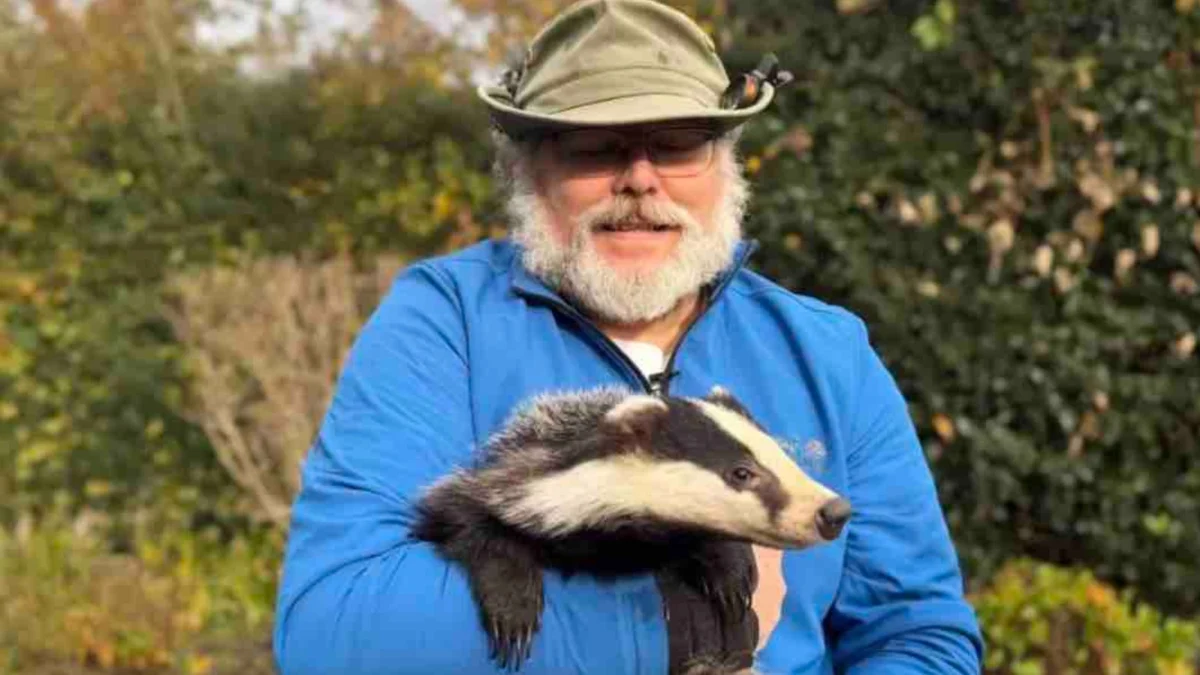
In the quiet, rolling landscape of the Scottish Borders, a high-stakes standoff is unfolding—not between warring nations, but between a dedicated wildlife rescuer and the rigid framework of national conservation law. At the center of this controversy is Harriet, a young badger whose survival has sparked a heated debate over the ethics of wildlife rehabilitation, the nature of human-animal bonds, and the bureaucratic challenges of modern conservation.
Graeme Wilson, a 55-year-old ecologist and the operator of GW Ecology, is currently embroiled in a legal struggle with NatureScot, Scotland’s wildlife agency. The point of contention is simple yet profound: whether a badger, imprinted on humans during a brush with death, can be forced back into a wild existence she is fundamentally unequipped to handle, or if she should be condemned to the confines of a zoo.
The Rescue: A Life Hanging in the Balance
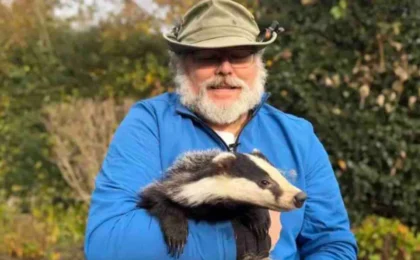
The story of Harriet began in April 2026, when Wilson discovered the young badger in a state of critical distress. Found trapped within a cattle trough only 300 feet from her original sett, the animal was severely underweight, dehydrated, and coated in filth. To a seasoned ecologist like Wilson, it was clear that without immediate intervention, the badger would not have survived the night.
Wilson, whose professional life is dedicated to wildlife rehabilitation, took the animal into his care, treating her with the urgency required for an orphaned or abandoned cub. However, as the initial shock of the rescue subsided, Wilson began to observe behaviors that defied the typical instincts of a European badger (Meles meles).
Despite being only a few months old, Harriet exhibited an eerie, practiced familiarity with human intervention. When Wilson offered her a bottle, she didn’t cower or strike; she accepted it with the confidence of an animal raised in a domestic environment. It was a realization that fundamentally altered the trajectory of her rehabilitation.
A Chronology of Conflict
The timeline of Harriet’s journey from a starving cub to a subject of national debate highlights the growing friction between human compassion and wildlife management policy.
- April 2026: Graeme Wilson rescues Harriet from a cattle trough in the Scottish Borders.
- Late April – May 2026: During the rehabilitation process, Wilson identifies "imprinting"—the phenomenon where an animal forms a strong social bond with another species, in this case, humans.
- June 2026: Attempting to adhere to standard protocols, Wilson conducts two separate "soft release" efforts at different badger setts. In both instances, the attempts were disastrous; Harriet showed extreme distress and an unwavering determination to return to Wilson’s side.
- July 2026: Recognizing that the wild is no longer a viable option for Harriet, Wilson files an application for an educational license with NatureScot, which would allow him to provide her with a permanent, secure habitat.
- August – September 2026: NatureScot rejects the application, citing a lack of compliance with legal frameworks regarding the possession of protected wild animals. The agency suggests release or transfer to a zoo.
- October 2026 – Present: A public awareness campaign, supported by a GoFundMe initiative, gains momentum as the standoff between Wilson and the government continues.
The Imprinting Dilemma: Why Harriet Cannot Go Back
The core of Wilson’s argument is rooted in the biological reality of animal development. Badgers are intensely social creatures, and their survival in the wild depends on being integrated into a clan. When a cub is raised by humans during its critical developmental window, it identifies its "social group" as human, not badger.
"Badgers are companion animals, they are social animals, and unfortunately for Harriet, she has decided that humans are her social group," Wilson explained in a recent interview.

Wilson argues that releasing Harriet is not a return to nature, but a death sentence. Her lack of fear toward humans makes her a liability to herself and potentially dangerous to the public. "Can you imagine Harriet approaching someone on a dog walk or in the street?" Wilson poses. "There is only one way that that would end."
Furthermore, Wilson is deeply concerned about the prospect of relocating her to a zoo. He believes that for an animal that has grown accustomed to a familiar human caretaker, the isolation and lack of individualized attention in a public exhibition setting would be a form of psychological cruelty. To him, Harriet is not a specimen; she is an individual with emotional needs that a commercial or educational facility cannot replicate.
Official Responses: NatureScot’s Stance
NatureScot, the public body responsible for Scotland’s natural heritage, finds itself in the unenviable position of upholding laws that are designed to protect wildlife, even when those laws conflict with the emotional desires of individual rescuers.
In an official statement, the agency defended its decision, noting that the legislative requirements for keeping a protected wild animal in captivity are stringent for a reason. The primary objective of wildlife law is to prevent the domestication of wild animals, which can lead to the spread of disease, the disruption of natural behaviors, and the creation of dangerous human-wildlife encounters.
However, the agency has shown a slight willingness to compromise. They have indicated that while a formal "educational license" to keep the badger as a pet or exhibit remains off the table, they are open to an arrangement where Harriet could remain on Wilson’s property, provided she is not legally "restricted." In this scenario, she would be free to roam, while Wilson would continue to provide supplemental food and shelter.
This middle ground, however, remains legally murky. Wilson contends that without a clear license, he remains in a constant state of legal jeopardy, susceptible to prosecution or the sudden seizure of the animal by authorities.
The Broader Implications: A Pattern of Controversy
The case of Harriet the badger is not an isolated incident; it reflects a growing cultural tension in the Western world regarding the rights of wildlife versus the authority of the state.
Many observers have drawn direct comparisons to the 2024 seizure of "Peanut the Squirrel" in New York. In that case, a social-media-famous squirrel was taken from his owner by state officials, leading to a public outcry that reached a fever pitch of political rhetoric. Like the Peanut case, the Harriet saga highlights the disconnect between the "letter of the law" and the "spirit of compassion."

Critics of current wildlife policies argue that agencies are often too rigid, failing to distinguish between animals that can be rehabilitated and those that are "human-imprinted." They contend that when an animal is clearly non-releasable, the law should prioritize the individual welfare of that animal over the blanket enforcement of "wild-only" policies.
The Future for Harriet
As it stands, the future of the Scottish badger remains uncertain. The GoFundMe campaign, which has attracted significant public support, is not merely a financial safety net; it is a signal to regulators that there is a constituency of citizens who believe that Harriet’s life is worth more than a policy manual.
Wilson is currently consulting with legal experts to determine if there is a way to frame his property as a private sanctuary, which might satisfy the regulatory requirements of NatureScot while ensuring Harriet stays in the environment she understands.
"Harriet never asked for any of this," Wilson says, reflecting on the long road ahead. "She deserves to live happily, and she deserves a future where she isn’t treated as a threat or a statistic."
The outcome of this case will likely serve as a precedent for future wildlife disputes in Scotland. If Wilson is successful, it could signal a shift toward more flexible, case-by-case assessments in wildlife management. If he fails, it will serve as a stark reminder that in the eyes of the law, the line between "rescued" and "captured" remains as thin as it is unforgiving.
For now, in the quiet of the Scottish Borders, a man and a badger wait for a resolution, bound by a bond that no regulation has yet been able to sever.