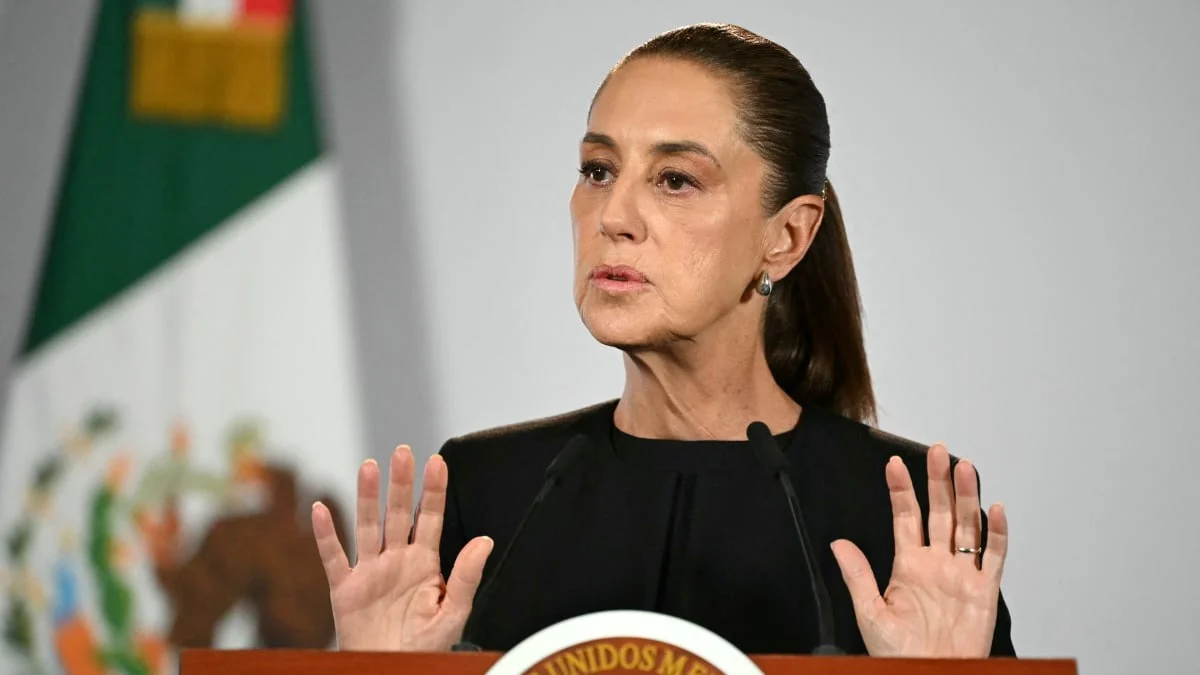
In a move that signals a seismic shift in how national governments govern the digital landscape, Mexican President Claudia Sheinbaum has signed a landmark presidential decree aimed at curbing the exposure of minors to violent, extremist, and predatory content on social media and streaming platforms. This executive action follows a harrowing tragedy earlier this month in Torreón, Coahuila, where two students perpetrated a fatal attack on a vice principal and their peers, an incident authorities have explicitly linked to the consumption of radicalizing digital content.
The decree, signed on October 14, 2026, places the onus of responsibility squarely on Big Tech, mandating that platforms prevent the display and recommendation of content that fosters hate speech, sexual exploitation, self-harm, cyberbullying, and illegal extremist activities. With a narrow one-month window for compliance, the Mexican government has effectively initiated a high-stakes standoff with some of the world’s most powerful corporations.
The Catalyst: A National Reckoning
The impetus for this aggressive legislative pivot was the violent outburst at a secondary school in Torreón. While school violence is not a new phenomenon, the nature of this particular incident prompted immediate intelligence analysis from federal authorities. Investigators concluded that the young perpetrators were not acting in a vacuum; rather, they were deeply embedded in online subcultures that celebrate and disseminate extremist ideology.
The incident ignited a firestorm of public outrage and political pressure, forcing the Sheinbaum administration to confront the reality that the digital environment in Mexico had become an unregulated playground for harmful influences. President Sheinbaum, who has positioned herself as a leader focused on the security and welfare of the next generation, viewed the tragedy as a failure of both private sector oversight and public policy.
Chronology of the Legislative Push
The road to the October 14 decree was paved by a series of swift, decisive policy changes aimed at reclaiming the attention and safety of Mexican youth:
- September 2026: Recognizing the distraction and potential for cyber-harassment within school walls, President Sheinbaum announced a nationwide education reform. This policy prohibited the use of cellphones and tablets in public schools from "bell to bell," effectively creating digital-free sanctuaries for students.
- Early October 2026: A fatal, extremist-inspired attack occurs at a school in Torreón, Coahuila. The incident provides the immediate political urgency needed to escalate discussions on digital safety.
- October 2026 (Pre-Decree): The administration holds high-level, closed-door meetings with representatives from global tech giants, including Meta, TikTok, and Google, to gauge cooperation and outline the government’s expectations.
- October 14, 2026: President Sheinbaum signs the presidential decree, legally binding platforms to implement robust age verification and content moderation filters.
- November 2026 (Upcoming): The expiration of the one-month compliance window. Failure to adhere to these mandates will trigger a secondary, punitive law, according to the President.
The Anatomy of the Decree: What Changes?
The decree is not merely a request for "better moderation"; it is a set of binding requirements. Platforms operating in Mexico are now obligated to overhaul their recommendation algorithms, which have historically prioritized engagement—often favoring high-octane, violent, or inflammatory content—over user safety.
Key requirements of the decree include:
- Strict Age Verification: Platforms must move beyond self-reporting and implement verifiable, identity-linked age checks to ensure that minors are not accessing content intended for adults.
- Parental Control Integration: Tech companies are now required to provide tools that allow parents to monitor and restrict the digital diet of their children, moving from passive settings to active, enforceable boundaries.
- Algorithmic Accountability: The decree mandates that platforms prevent the promotion of content related to eating disorders, self-harm, and illegal conduct. For the first time, the "recommendation engine"—the heart of the modern social media business model—is subject to government-imposed safety guardrails.
The Global Context: A Trend Toward Digital Sovereignty
Mexico is far from alone in its skepticism regarding the self-regulation of tech giants. Across the globe, nations are moving toward a model of "digital sovereignty," where the protection of the populace is prioritized over the unfettered expansion of social media platforms.
Australia has pioneered this movement, becoming the first nation to push for a total ban on social media access for children under 16. This approach suggests that the era of the "unregulated internet" is coming to a close. While the United States has seen sporadic, state-level bans on mobile devices in classrooms—such as in Los Angeles and various New York districts—it lacks a unified federal mandate of the scale seen in Mexico.
The global conversation has shifted from "How can we make the internet safer?" to "Should children be on these platforms at all?" By targeting the content rather than the user, Mexico is testing a middle-ground approach: forcing the platforms to change their behavior rather than entirely excluding the demographic.
Official Responses and Corporate Silence
In the lead-up to the decree, the silence from the tech industry has been deafening. Despite meetings with high-ranking officials at Meta, TikTok, and Google, these entities have yet to release formal responses to the Mexican government’s mandates.
This silence is strategic. If these companies accept the Mexican requirements, they risk setting a precedent that could be replicated by other nations, potentially dismantling the algorithmic models that drive their advertising revenue. If they refuse, they face the prospect of being blocked in one of the world’s largest and most engaged digital markets. The administration has made it clear that "non-compliance" is not an option, promising that a second, even more punitive legislative package is already in the drafting phase, ready to be "fast-tracked" should the companies fail to meet the November deadline.
Implications: The Efficacy Debate
While the government’s intentions are framed around protecting the youth, the policy faces scrutiny from tech analysts and child safety advocates alike. The central question remains: Is age verification truly effective?
Critics argue that children are remarkably adept at bypassing age-gates through the use of VPNs or by simply entering false birthdates, a flaw that has rendered many "age-restricted" sites ineffective in the past. Furthermore, there is the concern of "over-censorship." By forcing platforms to aggressively filter content, there is a risk that legitimate, educational, or artistic content could be caught in the dragnet of AI-driven moderation, leading to a sanitized, if not distorted, version of the internet for all users.
Additionally, some experts suggest that moving social media underground—or into "dark social" spaces like encrypted messaging apps—might actually make the situation worse, as children migrate away from monitored platforms to spaces where the government has zero visibility.
The Path Forward
President Sheinbaum has staked her political reputation on this initiative. By aligning the safety of the school system with the safety of the digital ecosystem, she is crafting a narrative that the physical and digital lives of Mexican citizens are inextricably linked.
As the one-month deadline approaches, the tech world is watching Mexico closely. If Sheinbaum succeeds in forcing compliance, she will have established a new playbook for middle-income nations to challenge the hegemony of Silicon Valley. If she fails, the resulting legal battles will likely consume her administration for the remainder of her term.
For the parents and teachers of Mexico, however, the legislation represents a rare glimmer of hope. In the wake of the Torreón tragedy, the state has finally decided that the digital environment is no longer a private corporate matter, but a public health crisis that requires a government-led solution. The coming weeks will determine whether the internet in Mexico remains an untamed frontier or a space subject to the rule of law.