Neng Nana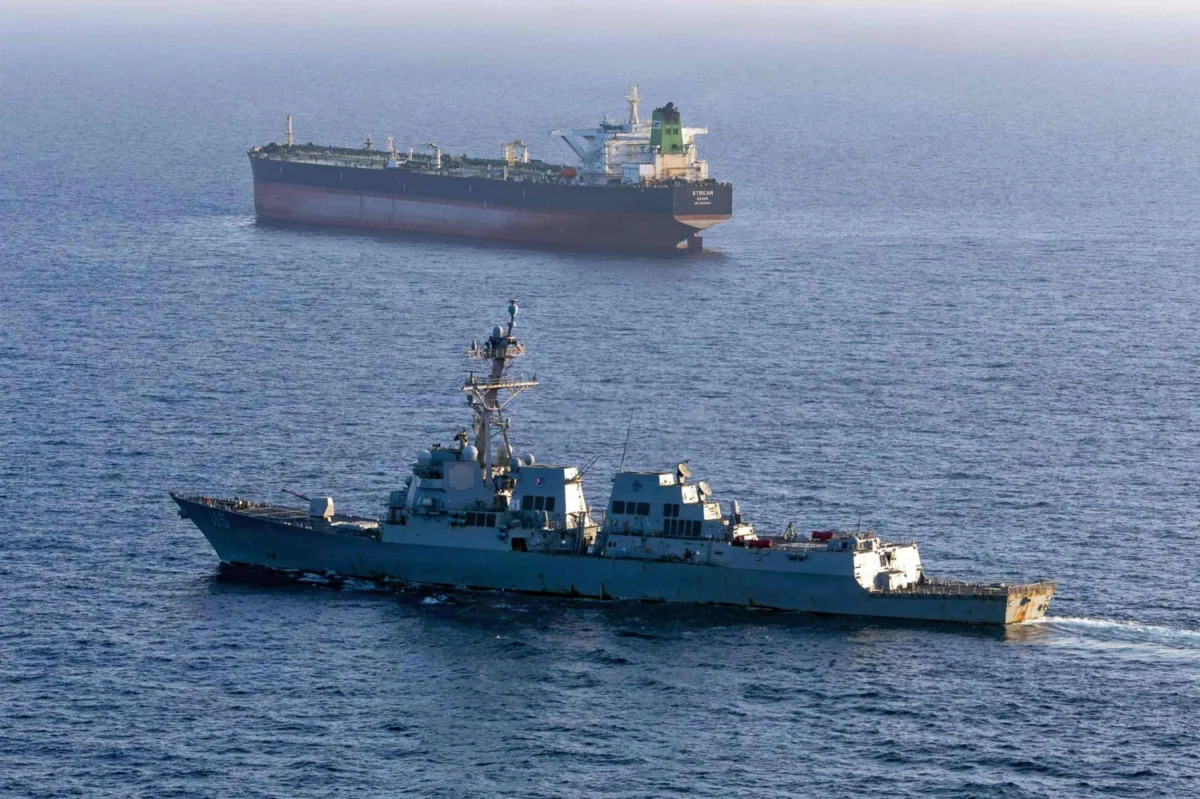
TEHRAN/WASHINGTON — A fragile regional peace is teetering on the brink of collapse following a dramatic escalation in maritime hostilities. On Friday, U.S. naval forces engaged in a direct confrontation with Iranian-flagged oil tankers, a move that Tehran has condemned as a flagrant violation of an already tenuous ceasefire. The incident, which saw a U.S. fighter jet disable two vessels, has sent shockwaves through international diplomatic circles, casting a pall of uncertainty over President Donald Trump’s ongoing efforts to broker a permanent resolution to the Middle East conflict.
The Maritime Flashpoint: A Breakdown of Events
The latest cycle of violence began in the waters of the Persian Gulf, a region that has served as the primary theater for proxy warfare for decades. On April 26, the USS Rafael Peralta, a guided-missile destroyer, intercepted the Stream, an Iranian-flagged crude oil tanker, as it attempted to navigate toward an Iranian port.
The standoff, which lasted several hours, escalated rapidly on Friday when U.S. air assets were deployed to neutralize the perceived threat. According to military sources, a U.S. fighter jet successfully disabled two Iranian tankers, effectively enforcing a maritime blockade. The military justification provided by Washington centered on the enforcement of sanctions and the necessity of preventing illicit cargo transfers that allegedly fuel Iranian-backed militias in the Levant.
Chronology of Recent Tensions
- April 26: The USS Rafael Peralta initiates a blockade against the tanker Stream, signaling a hardening of U.S. maritime enforcement policies.
- Late April: Diplomatic channels between Tehran and Washington reach a critical juncture, with President Trump reportedly tabling a new proposal for a comprehensive peace treaty.
- Early May: Reports emerge of sporadic violations of the ceasefire, with both sides trading accusations of unauthorized military posturing.
- Friday, May 8: U.S. naval and air forces strike two additional Iranian-flagged tankers, citing a breach of maritime security protocols.
- Saturday, May 9: Iran characterizes the strikes as a "hostile act," while Hezbollah launches a retaliatory barrage of missiles and drones toward Israeli military installations.
The Lebanon Front: A Parallel Crisis
While the maritime theater has captured the attention of global markets, the situation in Lebanon provides a grim reminder of the interconnected nature of this conflict. The ceasefire in Lebanon, intended to act as a stabilizing influence, is currently under severe strain.
In the wake of the U.S. strikes on the tankers, the Iran-backed militant group Hezbollah initiated a coordinated assault on Israeli military bases. The offensive, which utilized a combination of drone swarms and precision-guided missiles, was explicitly framed as a retaliation for an earlier strike in Beirut and ongoing military operations in Southern Lebanon. Lebanese health officials reported a grim toll on Friday, with 11 civilians confirmed dead following a series of retaliatory strikes.
Geopolitical Implications and Market Volatility
The decision to disable Iranian tankers is not merely a tactical maneuver; it is a profound geopolitical statement. For the United States, the blockade is a tool of "maximum pressure," intended to starve the Iranian state of the revenue required to sustain its regional proxies.
However, energy analysts warn that such aggressive tactics carry a high risk of "spillover." Crude oil prices, already sensitive to regional instability, spiked following the Friday reports. The Strait of Hormuz, a critical chokepoint for global energy supplies, has once again become a point of existential concern for the global economy.
"The U.S. is walking a tightrope," says Dr. Elena Vance, a senior fellow at the Institute for Global Security. "By targeting the economic lifeline of the Iranian state, Washington is gambling that the pressure will force Tehran to the table. But the history of this region shows that when you back a state actor into a corner, they often lash out through unconventional and unpredictable means."
Official Responses: A Dialogue of the Deaf
The diplomatic fallout from the Friday strikes has been swift and acrimonious.

The View from Tehran
Iranian officials have been categorical in their condemnation. A spokesperson for the Iranian Ministry of Foreign Affairs stated that the U.S. strike was "a clear and unmistakable act of aggression that undermines the integrity of the peace process." Tehran argues that the tankers were engaged in legitimate commercial activity and that the blockade constitutes a violation of international maritime law. Furthermore, Iranian leadership has suggested that their willingness to entertain President Trump’s latest peace proposal is now "under serious review."
The View from Washington
President Trump, speaking from the White House, maintained a posture of firm resolve. "We are waiting for Tehran to provide a constructive response to our proposal," the President noted during a press briefing. "However, the United States will not stand by while illicit trade continues to facilitate terror. Our actions in the Gulf were necessary, measured, and in defense of our core national interests."
The White House continues to emphasize that the primary goal remains a diplomatic solution. Yet, the administration’s strategy of coupling high-level diplomacy with "hard power" enforcement has drawn criticism from international allies who fear that such measures make a diplomatic breakthrough increasingly unlikely.
Assessing the Truce: Can the Middle East Hold?
The fragility of the current truce is underscored by the lack of a unified enforcement mechanism. Without a neutral third party to mediate disputes—such as the recent tanker incidents—the conflict has devolved into a series of reactive escalations.
The human cost of this cycle is becoming increasingly difficult to ignore. In Southern Lebanon, families are once again fleeing their homes, and the infrastructure of the region is under constant threat of bombardment. The 11 deaths reported on Friday are just the latest in a long string of casualties that are eroding the public support for the current ceasefire agreements.
Factors Contributing to Instability:
- Proxy Asymmetry: The U.S. and Israel are fighting state-backed non-state actors (like Hezbollah), which complicates the traditional rules of engagement.
- Economic Warfare: The use of maritime blockades as a primary diplomatic tool creates economic hardship that often triggers social unrest, further complicating the internal political stability of Iran.
- Communication Gaps: The reliance on "signaling" through military action rather than direct, transparent diplomatic negotiation has led to a series of miscalculations.
Conclusion: The Path Forward
As the world watches the Persian Gulf, the question remains whether the current diplomatic framework can survive the latest round of hostilities. President Trump’s proposal, the details of which remain largely classified, is viewed by some as the last best hope for a long-term settlement. However, for that proposal to gain any traction, both Washington and Tehran must find a way to decouple maritime security from the broader political negotiations.
The events of April 26 and the subsequent strikes on Friday serve as a stark reminder: peace in the Middle East is rarely a linear progression. It is, at best, a fragile arrangement constantly threatened by the gravitational pull of regional conflict. As we look toward the coming weeks, the international community will be looking for signs of de-escalation. Whether those signs manifest as a return to the negotiating table or a further descent into open conflict will likely depend on the restraint shown by both sides in the coming days.
For now, the USS Rafael Peralta remains on station, the tankers sit disabled in the Gulf, and the world waits to see if the fragile truce—and the hope for peace—can be salvaged from the rising tide of regional tension.



 Asro
Asro