Nana Muazin
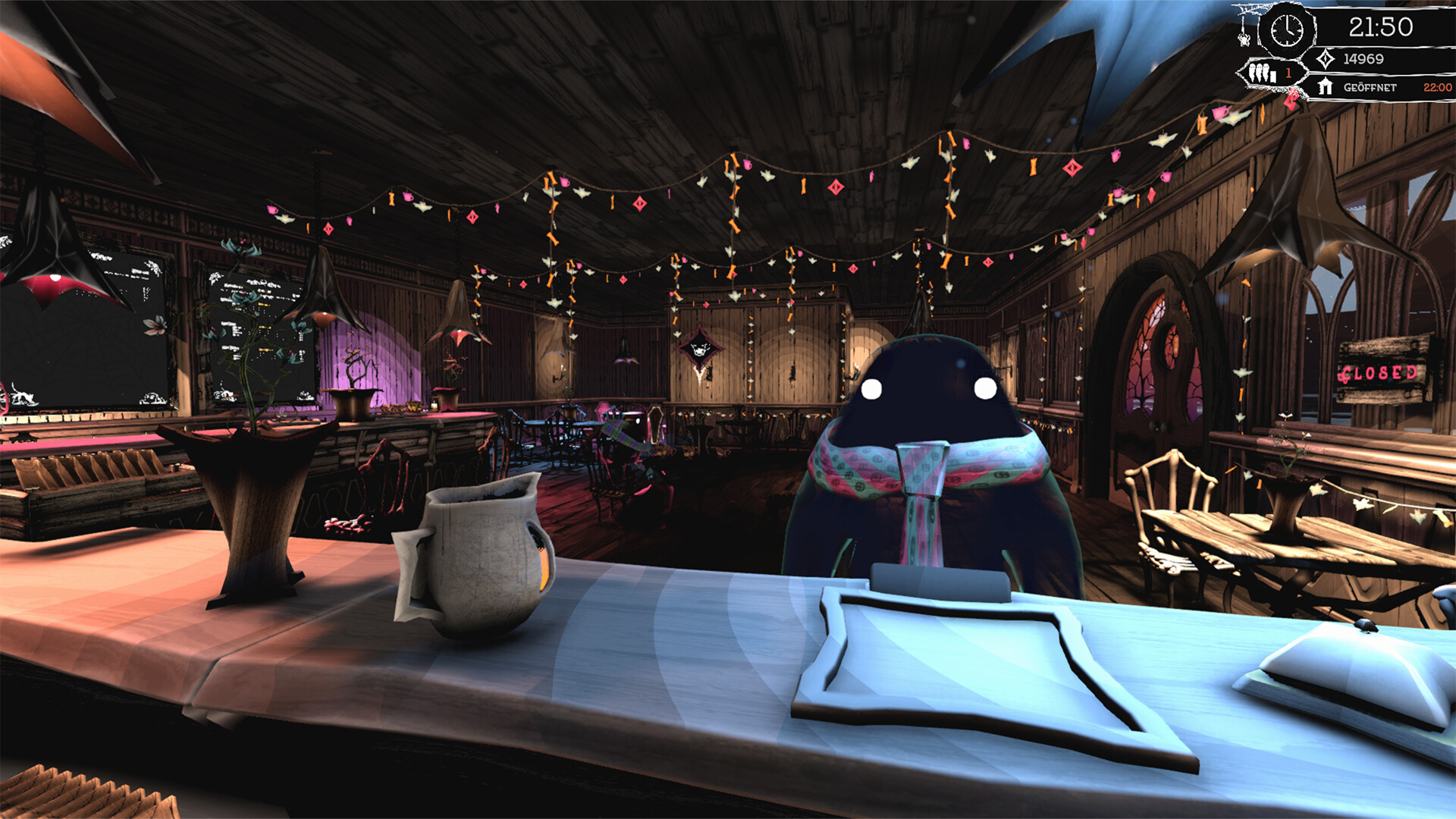
The cozy simulation genre has long been dominated by sun-drenched farms, pastoral villages, and pristine coffee shops. However, a new contender has emerged from the shadows to challenge these conventions. My Little Cafe Nightmare, a first-person management simulation currently available in Steam Early Access, invites players to step behind the counter of a spectral establishment where the customers are transparent, the decor is skeletal, and the conversation is led by a shrunken head hanging from the ceiling.
Blending the high-stress logistics of time management with a delightfully macabre aesthetic, the game forces players to reconcile their desire for a “cozy” experience with the reality of serving caffeinated beverages to the undead.
Main Facts: A Service Industry Like No Other
At its core, My Little Cafe Nightmare is a management game that tasks the player—the only living person with a functional set of arms—with the day-to-day operation of a crumbling, haunted cafe. Unlike traditional cafe sims where the goal is simply to maximize profit or popularity, here, the primary objective is to maintain a functional environment for a clientele that exists beyond the veil.
The gameplay loop is deceptively simple: take orders, brew coffee, and collect "bone tokens." However, the complexity lies in the environment itself. Players must juggle the physical needs of their spectral patrons while managing the logistics of a business that is literally falling apart at the seams. You are responsible for ordering supplies, maintaining your equipment, and navigating the spatial challenges of a workspace that refuses to stay in one place.
Chronology: From Ruin to Restoration
The development of My Little Cafe Nightmare signals a growing trend in indie gaming: the "spooky-cozy" subgenre. While the game launched into Steam Early Access in April 2026, the road to its current iteration has been one of iterative design.
Initially, the concept began as a simple mechanics-based prototype focused on the physics of serving drinks in a cramped, dark space. As development progressed, the narrative layer—the shrunken head companion, the lore of the haunted cafe, and the progression system—was layered on top.
Players start their journey in a state of disrepair. The cafe is filled with rot, dust, and cobwebs. Through the acquisition of bone tokens, players can eventually purchase upgrades and decor, transforming the dilapidated shack into a cozy haven for spirits. The chronology of the player’s experience is one of incremental improvement; what starts as a frantic struggle to keep the coffee machine running eventually evolves into a thoughtful process of interior design and customer relations.
Supporting Data: The Logistics of the Afterlife
The game’s depth is found in its management systems. Unlike titles that abstract away the labor, My Little Cafe Nightmare requires physical interaction with your environment. Players must keep track of their own equipment, ensuring that supplies are replenished and that the workspace remains accessible.
Cleaning, a staple of management sims, takes on a surreal quality here. In a world where spiders are likely welcome, the player is still expected to maintain a level of order. However, the game’s unique approach to "furniture physics" introduces a layer of difficulty that sets it apart from competitors like Coffee Talk or Cook, Serve, Delicious!.
In most simulators, redecorating occurs in a "build mode" or a paused state. In this title, however, the world is always live. Players can move any object at any time. While this provides a high level of creative freedom, it also introduces significant technical challenges. If a player attempts to move a countertop, they risk having it auto-rotate or clip into walls—a common point of frustration for players during early access. When a piece of vital equipment, such as a kettle, clips through the environment due to a misplaced piece of furniture, the game quickly transitions from a relaxing sim to a high-stakes troubleshooting exercise.
Official Perspectives and User Reception
Early access feedback has been largely positive, with players praising the game’s unique aesthetic and the refreshing, if sometimes chaotic, nature of its physics-based interaction.
Critics have noted that the rooms themselves are surprisingly large and forgiving, allowing for significant customization. The developers appear to be leaning into the "cozy" aspect of the game, emphasizing the kindness of the ghosts—who, despite their terrifying appearance, are portrayed as patient and appreciative of the player’s efforts to accommodate them.
The developers have maintained an active presence on community forums, acknowledging the "glitchiness" of the furniture placement mechanics. As the game moves through its early access lifecycle, the primary goal for the team is to refine the collision detection and camera systems, ensuring that players can customize their cafes without inadvertently banishing their equipment into the void.
Implications for the Cozy-Horror Genre
The success of My Little Cafe Nightmare speaks to a broader shift in player preferences. The "cozy" genre is no longer confined to the idyllic or the mundane; it is increasingly willing to explore the boundaries of the macabre. By juxtaposing the high-stress, precision-based requirements of a service-industry simulator with a spooky, supernatural narrative, the game creates a unique tension that keeps players engaged.
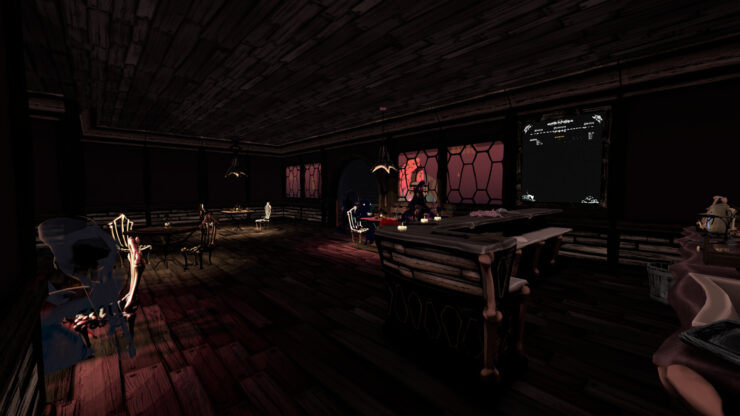
Furthermore, the game highlights the evolution of player agency. In many management games, the environment is static. By allowing players to interact with and move almost any object in the cafe, the developers are treating the environment as a dynamic character in the game. While this leads to the aforementioned technical hiccups, it also provides a sense of tactile satisfaction that is rarely found in the genre.
For the indie gaming scene, this title represents a successful marriage of high-concept design and accessible mechanics. It proves that there is a significant audience for games that don’t just ask you to work a job, but ask you to exist within a world—even if that world is a haunted cafe with a talking, shrunken head.
Looking Ahead: The Future of the Cafe
As My Little Cafe Nightmare continues to receive updates, several key areas will define its long-term viability:
- Refining Physics: The "auto-rotate" and clipping issues are the most significant barriers to entry. Future updates are expected to introduce a more "locked-in" placement mode for furniture to alleviate player frustration.
- Expanding Content: Players have expressed interest in more diverse spectral customers, each with unique preferences that could influence the menu and the decor.
- Narrative Depth: The shrunken head acts as the primary narrator and guide. Expanding this dynamic could deepen the emotional connection between the player and their haunted place of work.
Ultimately, My Little Cafe Nightmare is a testament to the creativity of the independent development scene. It takes the familiar, comforting tropes of the cafe management genre and injects them with enough personality and "nightmare" fuel to make it stand out in a crowded market. Whether you are a fan of cozy games looking for a bit of a thrill, or a horror enthusiast who wants to try their hand at barista work, the doors to this spectral cafe are wide open—just be careful where you put the kettle.
About the Author
Jupiter Hadley is a prolific indie game journalist whose work has been featured in major outlets such as Metro UK, Big Boss Battle, and AlphaBetaGamer. With a dedicated focus on the indie scene, Hadley has spent years championing smaller, experimental titles and providing a platform for developers to showcase their visions. As the creator of indiegamejams.com and a frequent judge at global game jams, she remains at the forefront of the independent gaming movement, consistently highlighting the titles that push the medium forward.

 Suro Senen
 Pevita Pearce