

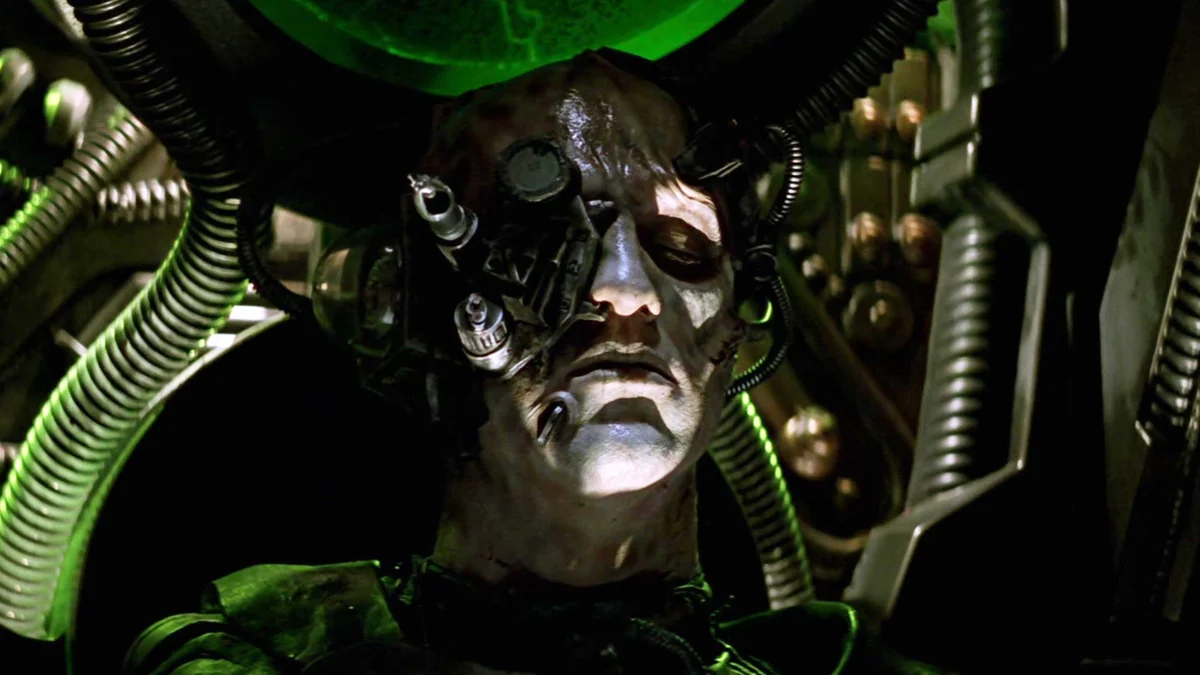
In the pantheon of science fiction antagonists, few entities have left as indelible a mark on the collective psyche as the Borg. Introduced in the 1989 Star Trek: The Next Generation episode "Q Who," the Borg represented a radical departure from the franchise’s traditional diplomatic struggles. They were not merely a rival empire or a misunderstood species; they were a relentless, monolithic force of nature. A collective of soulless cyborgs, the Borg traversed the galaxy in imposing, geometry-defying cubic ships, stripping civilizations of their individuality and technology. Their mantra—"Resistance is futile"—became a touchstone of pop culture, encapsulating a threat that was beyond negotiation or empathy.
Yet, behind the pale, tube-riddled faces of these mechanical zombies lay a visual lineage that owed a massive debt to the surrealist nightmare-scapes of H.R. Giger. The Swiss artist, world-renowned for birthing the terrifying Xenomorph of Ridley Scott’s Alien, had effectively defined the "biomechanical" aesthetic. It was perhaps inevitable, then, that as Paramount prepared to transition the Borg from the small screen to the high-budget spectacle of 1996’s Star Trek: First Contact, the studio briefly considered bringing the master of the macabre into the fold.
The Aesthetic Link: From Xenomorphs to Drones
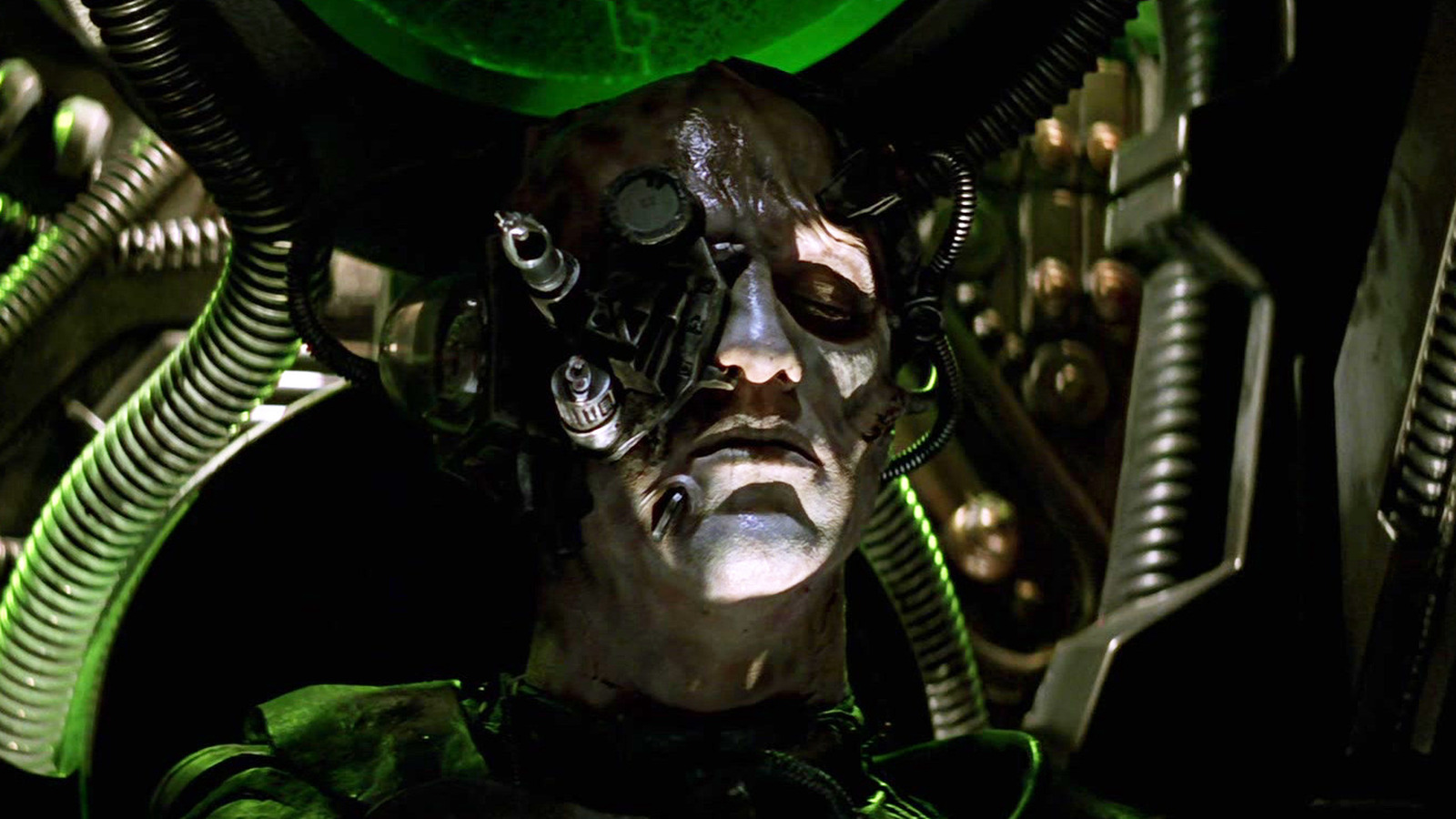
The Borg’s visual identity—characterized by grey, pigment-free skin, irregular metal paneling, and tubing that appeared to fuse seamlessly with human flesh—was a direct, if uncredited, descendant of Giger’s work. His art often depicted human figures trapped within, or becoming part of, complex, cold, and often sexualized industrial machinery.
When Star Trek: The Next Generation first aired, the Borg’s look was constrained by the limited budget and tight production schedules of weekly television. Michael Westmore, the franchise’s legendary makeup designer, did a masterful job of creating a cohesive look on a shoestring budget. However, as the franchise prepared to launch its second theatrical TNG film, the production team sought to elevate the Borg’s visual presence. It was during this phase of pre-production that Cinefantastique magazine reported an approach had been made to H.R. Giger to help revamp the Borg for the big screen.
A Collision of Worlds: Why the Collaboration Failed
The prospect of H.R. Giger influencing the Star Trek universe is, in retrospect, a fascinating "what if." However, the collaboration never materialized. By 1996, Giger was already firmly established as an auteur with very specific, often uncompromising creative sensibilities. At the time, he was coming off work on the sci-fi horror film Species and was engaged in the eccentric German horror-comedy Killer Condom.
The mismatch between Giger’s creative philosophy and the rigid, corporate-controlled environment of Star Trek cannot be overstated. Star Trek was, at the time, under the iron-clad guardianship of executive producer Rick Berman. Berman was notoriously protective of the "Roddenberry vision," a mandate that prioritized a specific, optimistic (or at least sterile) sci-fi aesthetic.
Giger was known to be difficult to manage, a man who preferred his own dark, surrealist visions over the notes of studio executives. On the set of Alien, he was reportedly referred to as "Count Dracula" by the crew due to his nocturnal habits and eerie intensity. It is highly improbable that an artist who demanded total creative control would have thrived under the oversight of a studio executive like Berman, who was focused on delivering a polished, marketable product for the masses. Ultimately, Giger passed on the project, leaving the design evolution to the in-house team.
The Evolution of the Borg: The "First Contact" Shift
Without Giger’s involvement, the design team—led by makeup artist Michael Westmore and costume designer Deborah Everton—took the Borg in a different, arguably more visceral direction. The drones in First Contact were a departure from the relatively static TV-era Borg. Their armor appeared more integrated, resembling form-fitting, cybernetic exoskeletons rather than mere metallic plating. The skin tones were more mottled, suggesting a state of biological decay, and the presence of "sweat" and rash-like textures made the drones feel less like machines and more like living, breathing, and suffering biological entities.
Beyond the physical aesthetics, the narrative function of the Borg underwent a seismic shift. The introduction of the Borg Queen, played by Alice Krige, transformed the collective from a faceless hive mind into a more traditional, villain-driven hierarchy. This decision remains one of the most debated aspects of the franchise. While the Queen provided a focal point for the drama and allowed for a more intimate conflict with Captain Jean-Luc Picard, many purists argued that it undermined the very terror that made the Borg unique—the idea that they were a mindless, unstoppable tide.
Official Perspectives: The Studio’s View
In interviews from the time, Rick Berman expressed immense satisfaction with the direction First Contact took. "We wanted to develop the Borg in a way that [was] unique," Berman stated. "We wanted to be able to put [in] the research and development time, and the cost of developing the costumes and the makeup prostheses that we could never afford to do in television… We were like kids in a candy store."
From the studio’s perspective, the goal was to capitalize on the success of the Borg as a "star" villain. By investing in higher production values, they aimed to make the Borg a cinematic spectacle. For the studio, the design choices were a success: First Contact was both a critical darling and a significant commercial hit, often cited today as the definitive Star Trek film of the 1990s.
The Implication: What If Giger Had Signed On?
One must ponder what an H.R. Giger-led redesign would have actually looked like. Giger’s work is characterized by a specific, often grotesque, fusion of the organic and the inorganic—what he called "biomechanoids." If Giger had been given free rein, the Borg might have appeared far more disturbing, potentially crossing into the realm of body horror that the Star Trek franchise has historically avoided.
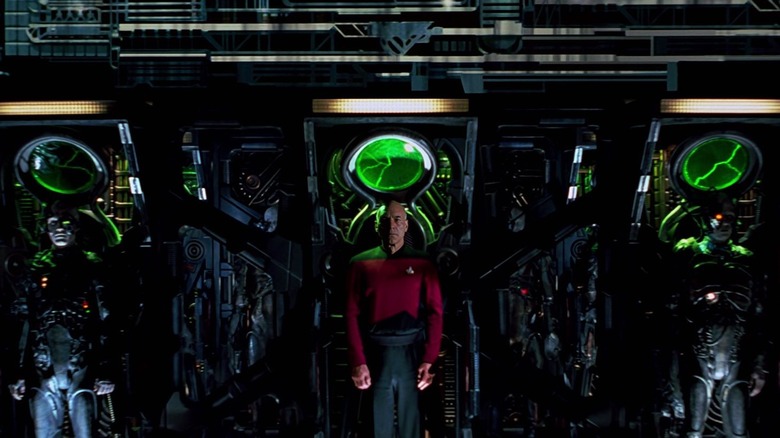
While a Giger-designed Borg would have undoubtedly been visually striking, it might have been tonally incompatible with the Star Trek brand. Star Trek has always functioned on a level of "hard" science fiction tempered by humanitarianism. Giger’s art, conversely, is deeply cynical and inherently disturbing, often focusing on the loss of agency and the violation of the body. Had the Borg been truly "Giger-esque," First Contact might have been forced into an R-rating, which, in 1996, would have been anathema to the franchise’s family-friendly distribution model.
Ultimately, the failure to recruit Giger was likely for the best. The First Contact iteration of the Borg successfully balanced the need for cinematic scale with the established lore of the series. While the "What If" scenario offers a glimpse into a darker, more surreal corner of science fiction, the version of the Borg we received became an icon in its own right—a testament to the power of a collective threat that, even without the touch of a surrealist master, remains a terrifying reflection of our own anxieties about technology and loss of self.
Conclusion
The story of H.R. Giger’s near-involvement with Star Trek: First Contact serves as a fascinating footnote in film history. It highlights the tension between visionary art and corporate production, between the desire for artistic innovation and the necessity of brand consistency. While we will never see a "Giger-fied" Borg, the legacy of his influence remains woven into the DNA of the franchise. The Borg stand as a reminder that the most effective monsters are those that challenge our humanity—whether they are born from the surrealist nightmares of a Swiss artist or the collective imagination of a television writers’ room.











No comments yet. Be the first to join the conversation!