Ammar Sabilarrohman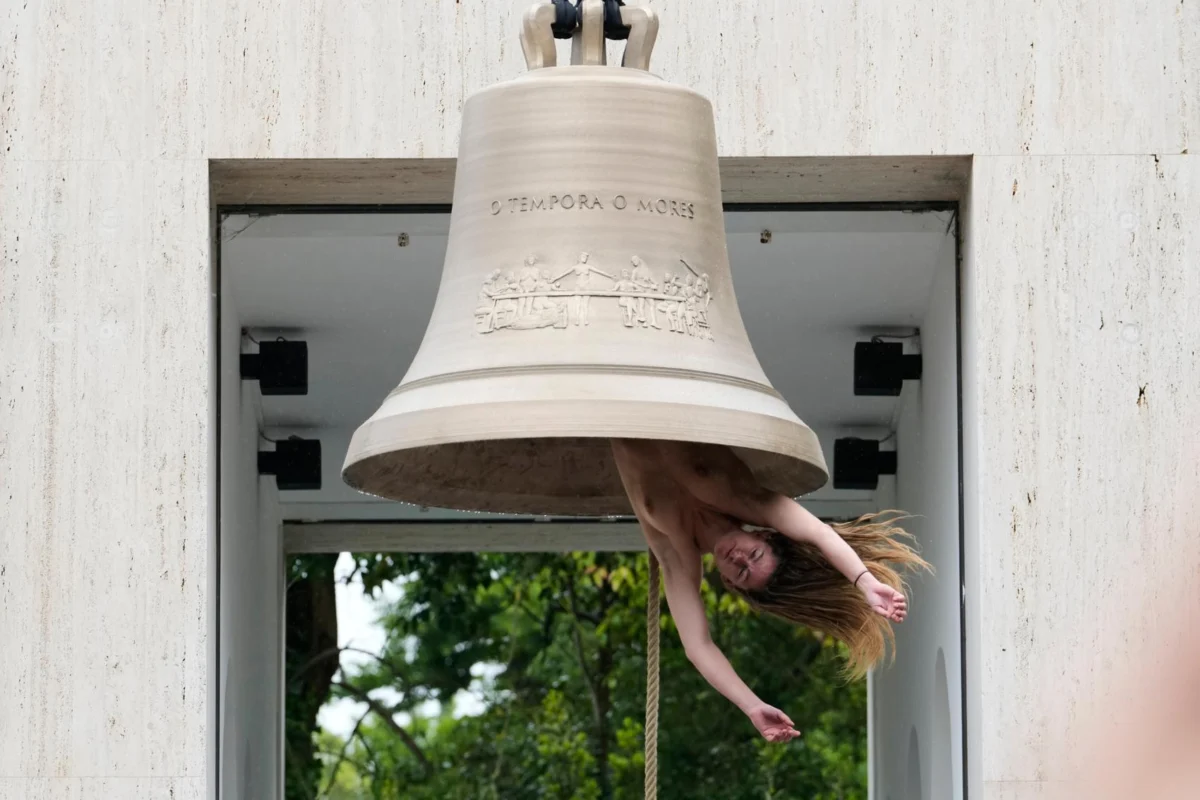
The 2026 Venice Biennale, long regarded as the "Olympics of the art world," has opened its doors this Saturday to an atmosphere not of celebration, but of profound systemic fracture. As the gates at the Giardini and the Arsenale swung open, the exhibition established itself as the most volatile and contested iteration in its storied history. With the official jury having resigned in a stinging protest over the participation of Israel and Russia, the prestigious Golden Lion awards have been indefinitely suspended, leaving the world’s most significant contemporary art showcase without its traditional seal of critical validation.
The Crisis of Neutrality: A Jury in Revolt
The Biennale’s decision to maintain an open-door policy for all nations, regardless of their current international standing, proved to be a catalyst for institutional collapse. The jury, tasked with bestowing the coveted Golden Lions, took the unprecedented step of mass resignation. Their departure was a direct rebuke of the Biennale’s leadership, specifically regarding the inclusion of pavilions representing nations currently under intense scrutiny for their geopolitical actions.
While the jury’s official statement noted they were prioritizing countries under investigation by the International Criminal Court (ICC) for human rights abuses, the move ignited a firestorm of debate. Critics argue that the selection process was inconsistent, with voices like renowned British artist Anish Kapoor publicly questioning the arbitrary nature of the exclusions. "We are witnessing the politics of hate and war, and all that has been going on now for far too long," Kapoor remarked, underscoring a growing sentiment that the art world can no longer insulate itself from the horrors of the global stage.
The vacuum left by the jury has shifted the power dynamic of the exhibition significantly. In an ironic turn of events, the power to define "excellence" has been transferred directly to the visitors. Over the course of the exhibition, which runs until November 22, the public will vote on the best national pavilion and the most impactful participant in the main curated show, "In Minor Keys." This Eurovision-style democratic experiment, while intended to engage the masses, serves as a stark reminder of the breakdown of professional consensus in an era of deep polarization.
A Legacy of Perspective: The Vision of Koyo Kouoh
Amidst the geopolitical clamor, the main curated exhibition, "In Minor Keys," stands as a monumental achievement of human spirit and scholarly rigor. The late curator Koyo Kouoh, the first African woman to ever hold the position at the Biennale, envisioned this exhibition as a radical intervention. Though she passed away a year ago, her vision was meticulously realized by a team of five co-curators, who ensured that the 110 artists and collectives featured remained faithful to her mission of centering the marginalized.
The exhibition is introduced by a towering, red feathered sculpture adorned with intricate beaded embroidery—a work rooted in the Black Masking culture of New Orleans. This piece, an evocative nod to the traditions forged by enslaved Africans, serves as a visual manifesto for the entire show. "She was someone who thought about making spaces for everyone to shine," noted co-curator Marie Helene Pereira. "We see it in her exhibition, we see it with ourselves." The show is a testament to the idea that the "minor keys"—the overlooked, the displaced, and the subaltern—are, in fact, the dominant frequencies of our time.
Navigating Displacement and History: National Pavilions
The national pavilions, often criticized for their rigid adherence to state-sponsored narratives, offer a complex tapestry of dissent and reflection this year.
The British Pavilion: The Architecture of Escape
Turner Prize winner Lubaina Himid has transformed the British Pavilion into a site of profound psychological inquiry. Her exhibition, Predicting History: Testing Translation, utilizes brightly hued, large-scale paintings to depict the existential dilemmas faced by those building a home in a new land. In one striking series, Himid portrays two architects locked in a debate over their legacy. One seeks to build a structure that proves cultural contribution, while the other advocates for something temporary—a space for escape. Born in Zanzibar and a resident of Great Britain for over seven decades, Himid’s work resonates with the modern migrant experience, where the act of building is inseparable from the fear of instability.
The Austrian Pavilion: A Satire of Tourism
In the Giardini, the Austrian Pavilion has become a site of visceral performance art. Artist Florentina Holzinger presents a challenging commentary on Venice’s own identity, characterizing the city as an "over-touristed amusement park." Her performance features a naked woman suspended as a human clapper for a bell, while elsewhere, a nude rider maneuvers a Jet Ski within a water tank. Perhaps most haunting is the installation Seaworld Venice, where a woman breathes through a scuba apparatus in a tank filled with filtered, recycled toilet water—a stark, pungent metaphor for the environmental and social degradation caused by mass tourism.
The Romanian Pavilion: A Call for Dialogue
In direct opposition to the boycotts dominating the headlines, Romanian-born artist Belu-Simion Fainaru has crafted an installation that emphasizes continuity and reconciliation. Water drips from suspended tubes into a pool, pausing for 42-second intervals—a duration tied to Jewish mysticism and the concept of divine creative power. The pavilion is adorned with locks, reminiscent of the "love locks" on European bridges, inscribed with the commandment, "Love thy neighbor as thyself" in Hebrew, alongside the sobering phrase, "This too shall pass." Fainaru remains steadfast in his position: "I am against boycott, I am for dialogue, and that is a political statement."
The Vatican: A Sanctuary of Sound
For those seeking an escape from the turbulence of the Giardini and the Arsenale, the Vatican has provided a sanctuary within the Mystic Gardens of the Discalced Carmelite order. Located near the Venice train station, this exhibition is a study in silence and spirituality. Visitors wander through vineyards and herb gardens while listening to the compositions of St. Hildegard of Bingen, the 12th-century abbess and mystic, as reinterpreted by contemporary icons like Brian Eno and Patti Smith. As Rev. Ermanno Barucco explains, the intent is to foster a "symphony that God has placed in our lives," a necessary counterpoint to the discordant political symphony playing out elsewhere in the city.
The Quotidian Feminism of Merike Estna
Estonian artist Merike Estna offers a different kind of endurance. Working within a community center gymnasium that was once a church, Estna is engaged in a continuous, live painting performance. The act of daily painting, according to curator Natalia Sielewicz, represents the "everyday feminism of sustaining life." By layering paint to build textured, ever-changing surfaces, Estna honors the undervalued, repetitive work that maintains our planet and our communities, positioning the mundane as the truly heroic.
Implications for the Future of Global Art
The 2026 Venice Biennale will likely be remembered not for the art it displayed, but for the crisis of legitimacy it exposed. By attempting to remain a neutral platform in an era where neutrality is increasingly viewed as complicity, the Biennale has forced a reckoning.
The resignation of the jury and the ensuing protest movements signal a shift in how institutions must handle international conflict. Can the Biennale continue to function as a "neutral" space when the nations it hosts are engaged in active, documented violence? The answer, as evidenced by the empty pedestals where the Golden Lions would have stood, is likely no. The 2026 edition has effectively ended the era of the "apolitical" Biennale.
As visitors traverse the venues through November, they are not merely viewing art; they are participating in an urgent, high-stakes debate about the role of culture in times of crisis. The Biennale has moved beyond the gallery walls and into the streets, proving that when the world is in turmoil, the act of showing art is, in itself, a profoundly political, and perhaps even revolutionary, endeavor. The question remaining for future editions is whether the institution can evolve to accommodate this new reality, or if the "chaotic and contested" nature of this year’s event is merely a prelude to the disintegration of the traditional national pavilion model.


 Neng Nana
 Asro
Asro