Nana
Nana
In the digital marketing landscape of 2025, video content is no longer just an "option"—it is the primary currency of engagement. With billions of daily views across platforms like Facebook, TikTok, and YouTube, brands that fail to adopt a video-first strategy risk becoming invisible. However, simply producing high-quality footage is not enough. The technical nuances of social media—specifically aspect ratios, file sizes, and duration limits—often dictate whether a campaign achieves viral success or falls flat due to poor formatting.

This comprehensive guide serves as your definitive roadmap for navigating the technical requirements of every major social media platform, ensuring your content is optimized for maximum impact.

The Evolution of Video Marketing: Why Dimensions Matter
The shift toward mobile-first consumption has fundamentally altered how content is designed. Years ago, horizontal "cinematic" video was the standard. Today, the dominance of vertical, short-form content has forced marketers to adopt a "mobile-first" mindset.

When a video is uploaded with incorrect dimensions, platforms may crop, stretch, or pixelate the content, which immediately degrades the user experience. Studies consistently show that platform-native content—videos that respect the specific UI/UX constraints of the host site—reaps significantly higher engagement rates. By aligning your technical production with platform requirements, you eliminate friction and ensure your brand message remains clear and professional.

Chronology of Social Media Video Standards (2025 Update)
The landscape of video hosting has seen rapid changes over the last 24 months:

- 2023–2024: The consolidation of IGTV into a unified Instagram Video format and the rise of Meta’s Threads as a video-compatible platform.
- Early 2025: YouTube expanded Shorts and long-form capabilities, while TikTok pushed the boundaries of organic video length to 10 minutes.
- March 2025: Bluesky introduced expanded video upload capabilities, signaling the decentralized platform’s maturation into a multimedia-ready environment.
Platform-by-Platform Technical Specifications
1. Facebook: The All-Rounder
Facebook remains the most versatile platform, supporting everything from 360° immersive experiences to high-converting carousel ads.

- Shared Video Posts: Aim for 1:1 (square) for the best mobile feed performance. Use 1080 x 1080 px as your baseline.
- Reels: The high-reach powerhouse. Always use 9:16 vertical orientation (1080 x 1920 px).
- In-Stream Ads: These require immediate impact. Lead with your branding in the first 3 seconds, as these ads are non-skippable for initial intervals.
2. Instagram: The Visual Aesthetic
Instagram has moved toward a unified video experience, but "safe zones" are crucial, especially for Stories.

- Stories/Reels: Always design with a 9:16 aspect ratio.
- Critical Safe Zones: Keep text and logos 250 pixels from the top and 340 pixels from the bottom to avoid overlapping with profile icons or UI navigation.
- Reels Length: While you can upload up to 15 minutes from your device, content between 30–60 seconds typically maintains the highest retention.
3. YouTube: The Long-Form King
YouTube continues to dominate high-intent search and long-form storytelling.

- Standard Uploads: 16:9 is the gold standard (1920 x 1080 px). Use MP4 with H.264 codecs.
- Shorts: Must be 9:16 vertical video. Unlike long-form, Shorts prioritize rapid-fire editing and loops.
- Live Streaming: Requires stable internet and high-bitrate settings (up to 4K resolution is supported).
4. TikTok: The Short-Form Disruptor
TikTok is where trends are born. The algorithm favors "native-looking" content over high-production, polished commercials.
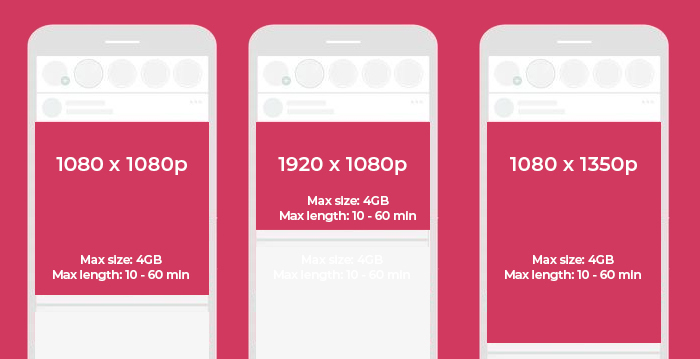
- Organic: 9:16 ratio is mandatory.
- Feed Ads: Keep these under 15 seconds for the best CPM results.
- Strategy Tip: Avoid watermarks from other platforms (like Instagram or CapCut exports). TikTok’s algorithm suppresses content that contains foreign branding.
5. Professional Platforms: LinkedIn & X (Twitter)
- LinkedIn: The algorithm heavily favors native video uploads over shared YouTube/Vimeo links. Keep professional updates under 60 seconds. Subtitles are non-negotiable, as many professionals consume LinkedIn content in silence.
- X (Twitter): Premium subscribers now enjoy up to 4-hour video uploads, but for brand marketing, brevity is king. Keep videos under 60 seconds to ensure high completion rates.
Supporting Data: The ROI of Optimized Content
Data indicates that video posts receive at least 59% more engagement than static image posts across Facebook. On Instagram, carousel video ads are 10 times more likely to be clicked than static ads. Furthermore, as platforms like TikTok expand their time limits to 10 minutes, the market is seeing a trend: while long-form content is permitted, the "sweet spot" for organic completion remains firmly between 21 and 34 seconds. This data underscores that while technical capacity has increased, human attention spans have remained finite.

Official Guidelines & Best Practices
- Prioritize Captions: Across all platforms (especially LinkedIn and Facebook), a significant percentage of users watch on mute. Hard-coded or SRT-file captions are essential for accessibility and retention.
- The 3-Second Hook: Regardless of the platform, the first three seconds determine if the viewer scrolls past. Start with a visual hook or a high-energy question.
- Avoid Watermarks: When repurposing content across platforms, use editing tools that allow you to export "clean" versions. Algorithms across both Meta and TikTok actively penalize cross-posted content that bears a competitor’s watermark.
Implications for Marketers
The technical complexity of modern social media marketing creates a significant barrier to entry. Managing individual specifications for eleven different platforms is a full-time task. This is where automation becomes an essential component of the marketing stack.

Tools like SocialPilot allow marketers to centralize their workflow. By using a unified dashboard, you can schedule native videos for YouTube, LinkedIn, and Facebook simultaneously, ensuring that your video dimensions and file sizes are pre-validated before they go live. This not only maintains the consistency of your brand voice but also prevents the logistical burnout associated with manual posting.

Future Outlook
As we look toward the remainder of 2025, expect further integration of AI-driven video optimization. Tools will increasingly offer real-time "safe zone" overlays to ensure your text doesn’t clash with UI elements. Furthermore, the rise of decentralized platforms like Bluesky suggests that video hosting will become more fragmented, placing even more importance on robust, scalable social media management systems.

Conclusion: Taking Control of Your Video Strategy
The "video-first" era is here to stay. By adhering to the technical specifications outlined in this guide—from the vertical constraints of TikTok to the 16:9 requirements of YouTube—you are doing more than just following rules; you are optimizing your brand’s path to the viewer’s screen.

Start by auditing your current video assets, ensuring they meet these updated standards, and utilize a professional management platform to streamline your distribution. The difference between a struggling campaign and a viral sensation often comes down to pixels and aspect ratios. Ensure yours are perfect.


 Pevita Pearce
 Ali Ikhwan