

By Editorial Staff
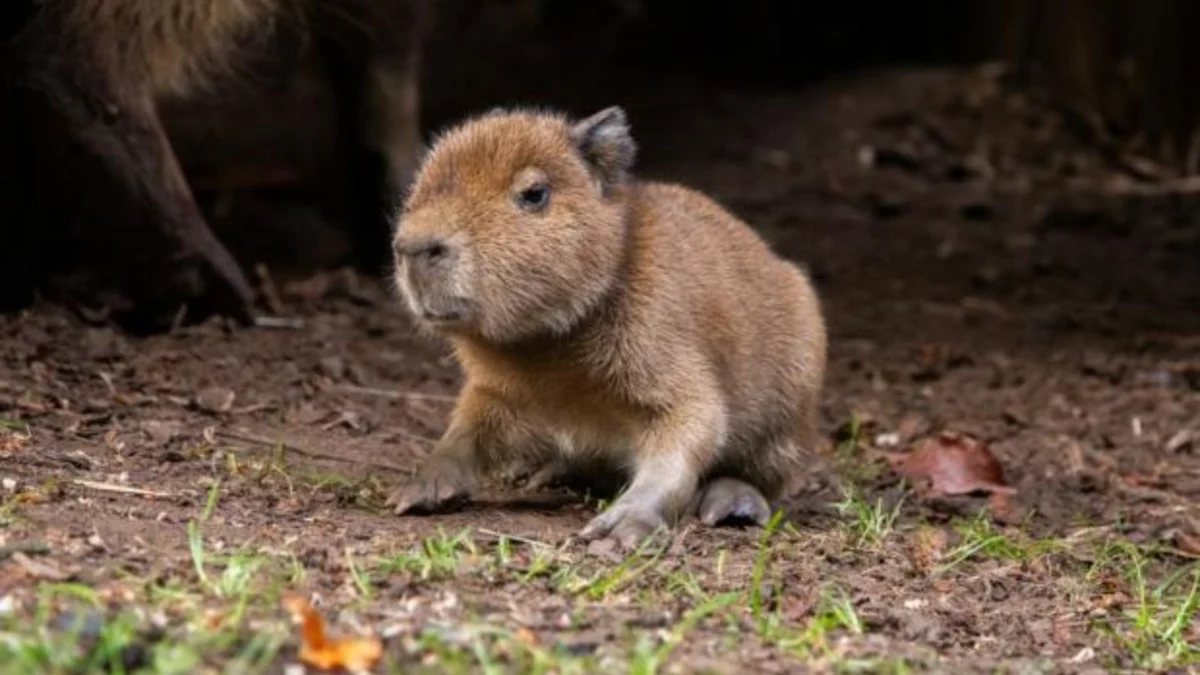
In a milestone event for Scottish wildlife conservation and public engagement, Edinburgh Zoo has officially announced the birth of a capybara pup—the first of its kind to be born in Scotland since 2008. The arrival marks a significant turning point for the Royal Zoological Society of Scotland (RZSS), effectively cementing the institution’s successful effort to reintroduce the world’s largest rodent species to its exhibits. The tiny newcomer, which is already venturing into its enclosure, represents the culmination of a rapid, 14-month expansion that has seen the zoo’s capybara population grow from zero to four.
The Main Event: A New Chapter for the Herd
The unnamed pup, currently in its most vulnerable stage of development, is being closely monitored by a dedicated team of zookeepers. While the zoo has not yet revealed the sex of the animal, a comprehensive health check is scheduled for the coming weeks. This examination will provide the first opportunity for veterinary staff to assess the pup’s weight, physical development, and general health, at which point the naming process will likely commence.
For now, the focus remains on the bond between the pup and its parents, Luna and Rodney. As first-time parents, the pair have surprised keepers with their natural instincts and attentive care. The birth is not merely a "cute" zoo headline; it is a testament to the success of the zoo’s environmental enrichment and social pairing programs, which were designed to encourage natural behaviors in these complex, semi-aquatic mammals.
A Brief Chronology of the Herd’s Formation
The presence of a capybara herd at Edinburgh Zoo is a relatively recent development. For over 15 years, the zoo did not house the species. The strategic decision to reintroduce capybaras was part of a broader push to increase biodiversity and visitor engagement within the park.
- February 2025: The reintroduction program began with the arrival of two young females, Luna and Cali. Their integration was the first phase of a carefully planned social experiment intended to prepare the enclosure for a breeding male.
- April 2025: Rodney, a male capybara with a unique backstory, joined the females. Rodney’s arrival was highly anticipated, not only by the zoo staff but by an online audience that had followed his early life at Dartmoor Zoo.
- May 2026: The birth of the pup confirms that the social dynamics between the three adults successfully transitioned into a breeding group. The transition from a quiet enclosure to a thriving family unit in just over a year is considered an accelerated success by zoological standards.
The Capybara: Nature’s Largest Rodent
To understand the significance of this birth, one must appreciate the biology of the capybara (Hydrochoerus hydrochaeris). Native to the dense forests and flooded savannas of South America, these creatures are marvels of evolution.
Adult capybaras are robust, often reaching lengths of 4.5 feet and weighing upwards of 100 pounds. Despite their size, they are primarily herbivorous, relying on a diet of grasses, aquatic plants, and tree bark. Their semi-aquatic nature is one of their most distinct traits; they possess webbed feet that make them excellent swimmers.
Perhaps most impressive is their ability to survive in the wild. Capybaras are masters of camouflage and evasion. They are capable of holding their breath underwater for up to five minutes, a trait they utilize to escape terrestrial predators like jaguars, anacondas, and caimans. In the controlled environment of Edinburgh Zoo, the pup will eventually learn to utilize its shallow-water features to practice these innate behaviors, mimicking the rhythms of its wild counterparts.
From TikTok Fame to Fatherhood: The Story of Rodney
The sire of the new pup, Rodney, is no stranger to the spotlight. Before his relocation to Scotland, Rodney was the subject of widespread social media attention. Born at Dartmoor Zoo as the only pup in his litter, he became a "TikTok famous" figure, with users tracking his growth and playful antics.
His journey from a viral sensation in the southwest of England to a breeding male in Scotland provides a unique case study in how modern zoos utilize digital presence to connect the public with conservation efforts. By maintaining a public profile for animals like Rodney, zoos have managed to foster a sense of personal investment among the public, which often translates into increased support for conservation funding and wildlife education.
Official Responses and Keeper Insight
Jonny Appleyard, one of the primary animal keepers at Edinburgh Zoo, provided a glowing assessment of the new family dynamic. "It is truly heartening to witness," Appleyard stated. "Luna and Rodney are first-time parents, yet they are already doing an incredible job of looking after their new baby. We are being very careful to give them the space they need, but everything we are seeing—the social interactions, the protective behavior—is exactly what we had hoped for."
The RZSS has emphasized that while the arrival is cause for celebration, the priority remains the welfare of the pup. During the early weeks, keepers are limiting direct interaction to minimize stress, relying on visual observations to ensure the pup is nursing properly and staying warm.
The Complexities of Capybara Life
The coming months will be a critical learning period for the newborn. Capybaras are highly social animals that live in groups, and the pup’s development will be dictated by its ability to integrate into the hierarchy of the herd.
"They are incredibly communicative animals," explains one of the zoo’s lead zoologists. "They use a range of barks, whistles, and chirps to stay in contact, especially when moving through dense vegetation or water. The pup will spend the next few months ‘learning the ropes’ from Luna, Cali, and Rodney. This includes everything from foraging techniques to the subtle body language that defines group status."
This social structure is vital for the survival of the species. In the wild, capybaras rely on the group for protection; if one animal senses danger and lets out an alarm bark, the entire herd retreats to the water. Watching this behavior emerge in a captive environment provides valuable data for researchers studying the cognitive development of rodents.
Contextualizing the News: A Broader Trend
The success at Edinburgh Zoo stands in stark contrast to recent headlines involving capybaras elsewhere in the UK. Earlier in 2026, the public was captivated by the saga of "Samba," a nine-month-old capybara that escaped from Marwell Zoo in Hampshire.
The escape, which occurred just 24 hours after the animal’s arrival, triggered an intensive search operation. Keepers utilized nets, thermal imaging, and eventually, a dart gun, while a series of false sightings—often involving local deer—complicated the mission. The incident sparked a national conversation regarding the logistics of housing exotic, semi-aquatic species in the British climate and the importance of secure enclosure design.
By comparison, the smooth transition and successful breeding at Edinburgh Zoo serve as a "best-case scenario" for how zoos can safely integrate these animals into their collections. The contrast between the two stories highlights the delicate balance zoos must maintain: providing enough space and freedom for animals to thrive while ensuring the strict security protocols necessary to prevent escapes.
Implications for Conservation and Public Education
The birth of the capybara pup at Edinburgh Zoo serves as a powerful tool for education. By observing the pup, visitors gain a tangible understanding of South American ecosystems—habitats that are currently under threat from deforestation and climate change.
Moreover, the successful birth reinforces the role of the RZSS in maintaining genetic diversity within the European zoo network. As these institutions coordinate to ensure the health of their respective populations, the arrival of a healthy pup in Scotland provides a valuable genetic contribution to the regional herd.
As the pup continues to grow, it will undoubtedly become a centerpiece of the zoo’s educational outreach. For now, however, it remains a symbol of hope and a testament to the dedication of the zookeepers who have worked tirelessly to turn a silent enclosure into a bustling, living, breathing ecosystem.
Looking Ahead
As the spring months progress, visitors to Edinburgh Zoo can expect to see the pup becoming increasingly active. Keepers anticipate that as the weather warms, the pup will begin to explore the water features of the enclosure, likely mirroring its parents’ comfort in the pond.
While the naming of the pup remains the next big milestone, the true victory lies in the stability of the herd. In a world where many species face declining numbers and habitat loss, the sight of a young capybara thriving in the heart of Scotland is a reminder of the enduring importance of wildlife conservation. Whether through viral social media posts or quiet, professional observation in the field, the story of the Edinburgh capybaras is one of resilience, adaptation, and the enduring wonder of the natural world.












No comments yet. Be the first to join the conversation!